





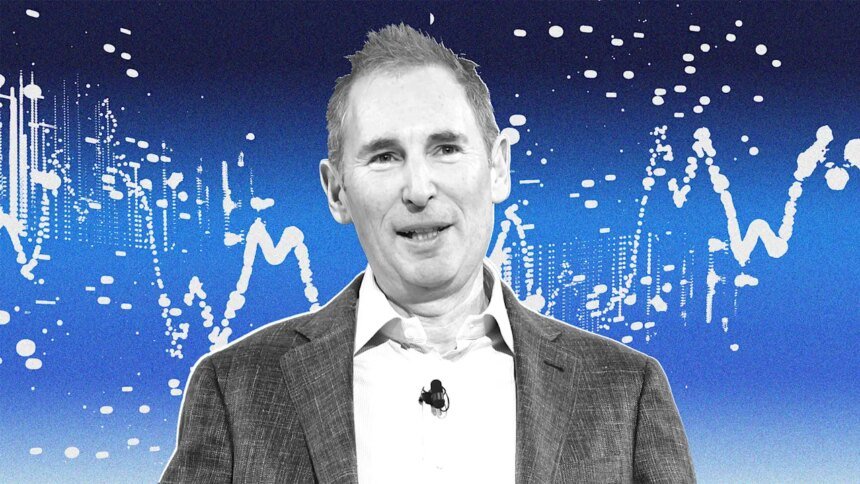

Last year was full of talk about tariffs. Are they coming up or going down? On which products and countries? How could businesses handle all the uncertainty? But while there was a lot of discussion of these fees, paid on imported goods and raw materials, there wasn’t actually that much evidence of their price impact at stores. According to Amazon CEO Andy Jassy, that’s about to change.
Tariffs had a modest impact on prices in 2025
Tariffs are a tax on businesses, which means you’d expect that if tariffs go up, so do prices. But the effect of President Trump’s ever-changing but always aggressive tariff policies didn’t cause the huge price hikes and widespread economic damage many feared in 2025.
Economists offer several likely explanations. One is all the exceptions and carve-outs the government made after announcing the tariffs. What Trump threatens and what ends up being charged are often very different.
“The actual tariffs are much lower than what were announced, and that is one of the reasons why the effects have not been as big as feared,” Harvard economist Gita Gopinath told The New York Times.
Another big reason is timing. Trump hasn’t been shy about his love of tariffs. That means many people got ahead of the new taxes by stockpiling goods before they came into effect.
“Consumers and business time very-short-run purchases to try to minimize tariffs,” according to the Budget Lab at Yale University. “This can reduce the amount of imports of higher-tariffed goods and countries for a time.”
But Jassy says this tactic to keep prices down may have reached its expiration date.
Amazon’s CEO warns of big pricing changes to come
Jassy spoke to CNBC’s Becky Quick at the World Economic Forum in Davos, Switzerland, and said that so far, Amazon has seen “some of the tariffs creep into some of the prices, some of the items.” He continued: “And you see some sellers are deciding that they’re passing on those higher costs to consumers in the form of higher prices, some are deciding that they’ll absorb it to drive demand, and some are doing something in between.”
But the days of these modest impacts may soon be over. “I think you’re starting to see more of that impact,” he continued.
Many sellers simply don’t have much of a choice but to pass on the cost of tariffs. “At a certain point—because retail is, as you know, a mid-single digit operating margin business—if people’s costs go up by 10%, there aren’t a lot of places to absorb it,” the Amazon CEO said. “You don’t have endless options.”
No white knight is riding to consumers’ rescue
No matter what you might hear coming out of the White House, realistically, those options do not somehow magically include getting foreign suppliers to shoulder the cost of tariffs. A new study by the Kiel Institute in Germany found that a whopping 96% of the costs of tariffs are passed on to U.S. importers and consumers.
Nor can smaller businesses that are already squeezed keep shielding consumers indefinitely. When large retailers raised prices, smaller firms said, “we’re going to try to not raise prices, giving them a competitive edge,” Kyle Peacock, founder of Peacock Tariff Consulting, explained to Harvard’s Institute for Business in Global Society. But, he continued, “they can only absorb it for so long.”
Jassy’s comments suggest that the breaking point for many sellers is fast approaching. The Amazon CEO is far from the only business luminary issuing such warnings.
On a recent investor call, Nike cautioned tariffs could add about $1 billion in costs during its 2026 fiscal year. Mattel warned it may need to raise prices on toys, while Walmart likewise said it may be forced into “selective” price increases on imported goods.
Add to these existing pressures Trump’s latest threats to slap further tariffs on European countries if they fail to go along with his weird neo-colonialist demand that they hand over Greenland, and the picture looks worrying.
Economists fret Amazon’s CEO is right
The Peterson Institute for International Economics worries all this could spell higher—rather than lower—inflation this year.
“The pass-through of tariffs to consumer prices has been modest to date, suggesting U.S. importers have been absorbing the bulk of the tariff changes. That will change in the first half of 2026,” Lazard CEO Peter Orszag and PIIE president Adam Posen predicted.
“The many reasons for the lagged pass-through include businesses pricing based on when their inventories arrived (and have since run out) and concerns around being seen as raising prices too rapidly (so they are instead gradually increasing them). This won’t last,” they continued.
Of course, who knows what Trump might do in the end. His track record has, to put it mildly, been inconsistent and changeable. But if he doesn’t chicken out and change course, many economists clearly fear Amazon CEO Andy Jassy is right.
Hard-pressed U.S. consumers are hoping life gets more affordable in 2026. They’re likely to face the opposite.
—Jessica Stillman
This article originally appeared on Fast Company’s sister website, Inc.com.
Inc. is the voice of the American entrepreneur. We inspire, inform, and document the most fascinating people in business: the risk-takers, the innovators, and the ultra-driven go-getters that represent the most dynamic force in the American economy.

