





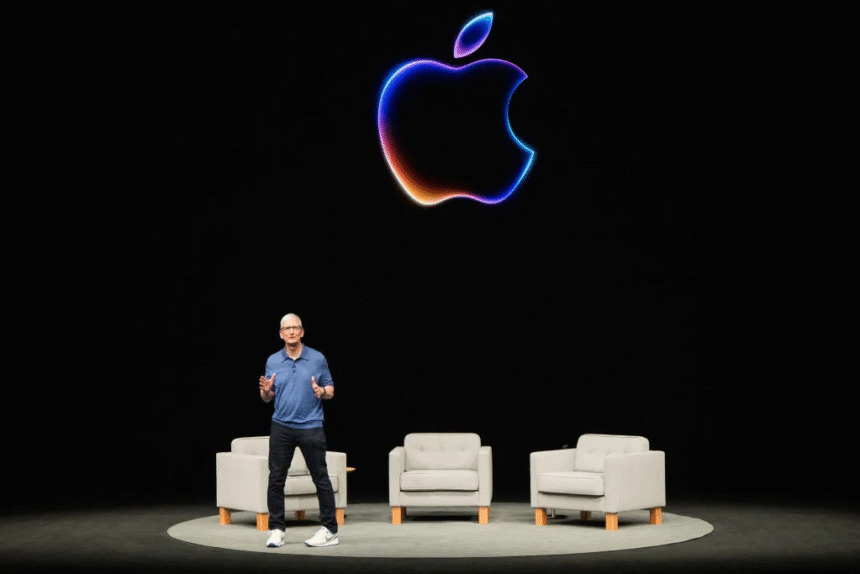

Apple reported a historic quarterly performance, demonstrating the enduring strength of its ecosystem and global brand. Yet despite the strong financial results, investor focus has increasingly shifted toward one pressing question: Apple’s role in the rapidly accelerating artificial intelligence race.
The company’s revenue performance underscored continued demand for its hardware, services, and integrated platform. However, as competitors aggressively roll out generative AI features and cloud-based intelligence tools, Apple faces mounting expectations to articulate a clearer vision for how AI will shape its products and services.
Unlike some of its rivals, Apple has historically taken a cautious and deliberate approach to emerging technologies. Its strategy emphasizes on-device processing, privacy protections, and seamless user experience rather than rapid public deployment. While this approach has earned consumer trust, critics argue it risks leaving Apple behind in a market increasingly defined by AI-driven innovation.
The pressure is not solely about technology leadership but also market perception. Investors are looking for signals that Apple can maintain growth momentum in a world where AI is becoming central to productivity, communication, and digital services. Without visible breakthroughs, concerns may grow about Apple’s ability to compete with companies integrating AI deeply into search, software, and cloud platforms.
Apple executives have emphasized that AI has long been embedded across its products, from photography and voice recognition to predictive text and device optimization. However, these incremental advancements contrast with the more visible generative AI offerings unveiled by competitors, which have captured public attention and fueled market enthusiasm.
The challenge for Apple lies in balancing innovation with restraint. A misstep in AI could undermine its reputation for reliability and privacy, while excessive caution could limit its relevance in a fast-moving market. This tension places the company at a strategic crossroads.
Looking ahead, analysts expect Apple to gradually introduce more AI-driven features, potentially integrated tightly with its hardware and operating systems. Rather than competing directly on scale, Apple may focus on differentiated experiences that align with its ecosystem-first philosophy.
While the recent quarter confirmed Apple’s financial resilience, the coming years may prove more decisive. The company’s ability to translate AI advancements into meaningful consumer value will play a critical role in determining whether it remains at the forefront of the next technological era.

