



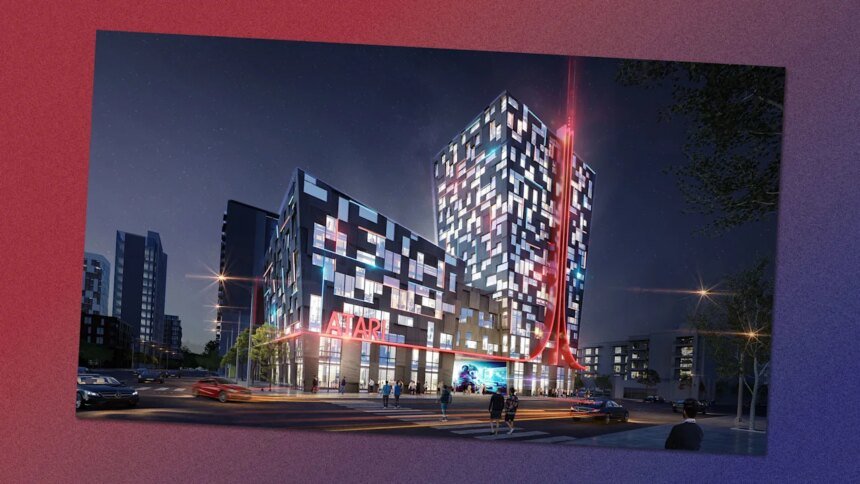

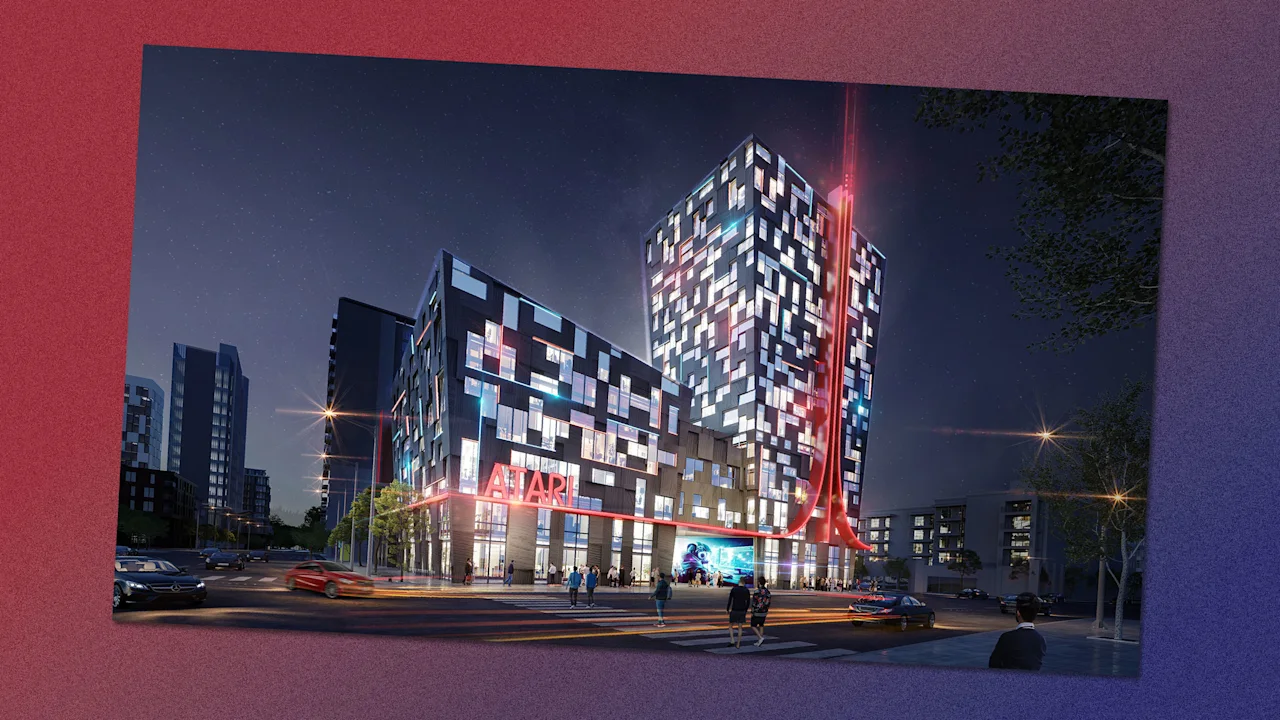
Six years ago, Atari announced ambitious plans to build a gamer-themed hotel in Las Vegas, featuring an e-sports studio and a movie theater. The legacy video game company’s management at the time saw hotels as a way to revitalize the brand’s name, which was largely a nostalgia play.
“I love the idea. It’s something I’ve always wanted to do,” said then-CEO Fred Chesnais. “I always wanted to make an amusement park, and hotels could be the first step.”
But now the company tells the Las Vegas Sun that the project has been shelved after “the deal didn’t come to fruition.” It’s the latest in a series of disappointments for Atari’s lodging ambitions. Only one of what the company had hoped would be at least eight hotels across the U.S. is still in any stage of development. And construction has yet to begin on that project.
Chesnais bought Atari in 2013 for just 400 euros following the company’s Chapter 11 bankruptcy filing (inheriting with it a debt load of 34 million euros). But he was replaced as CEO in 2021 and formalized his exit from the company in 2022.
Despite his departure, the hotel plans pushed forward. Atari continued to look for potential land partners through 2024—planning to make announcements in the first half of that year—but was unable to secure a deal.
Other planned hotels in Austin, Chicago, Denver, San Francisco, San Jose, and Seattle also are no longer being discussed publicly and have shown no progress since the company first revealed those locations.
That leaves Phoenix, where Atari Hotels (now being run by Intersection Development) is still hoping to salvage at least part of the project. Originally expected to open in 2022, that location is now slated for a late-2028 grand opening, although even that date is hardly set in stone.
The developer is appealing to Atari fans to help pay for the project. A fundraising page for the Phoenix hotel says the facility has raised $14 million and secured land (for a project with a total development budget of $124 million). Participants can make a minimum investment of $500, for which they will be part of the hotel’s loyalty program. Those who cough up $50,000 will receive a physical brick in the gaming-area walkway of the hotel, the builders say. (A “digital brick” runs $25,000.)
Intersection aims to raise between $35 million and $40 million from investors as part of its next phase.
Atari never positioned the hotels, even the Las Vegas one, as casinos, though the investment deck does mention a “state-of-the-art sports betting arena with immersive screens and premium gaming experiences.” Instead, it hoped to blend video games, music, and entertainment in an immersive, tech-heavy facility, with a rooftop pool and “sci-fi inspired rooms” being promised for the Phoenix location.
In recent years, hotels were just one of the ways Atari considered in its effort to revitalize the brand. In 2018, the company announced plans to launch its own cryptocurrencies: the Atari Token and the Pong Token. The company acquired a minority stake in Infinity Networks, which was developing a decentralized blockchain for digital entertainment platforms, and recruited Anthony Di Iorio, who cofounded Ethereum and Jaxx, to assist with the launch. The Atari Token peaked in 2021 at around 78 cents. Today, it trades for $0.0001935.
Founded by Nolan Bushnell and Ted Dabney in 1972, Atari has been bought and sold numerous times through the years, often balancing on the precipice of becoming nothing more than nostalgia. In its fiscal 2025 earnings report released in July, the company reported a 14 million euro loss. Half-year results for fiscal 2026, released in December of last year, showed a net loss of 6.4 million euros.

