



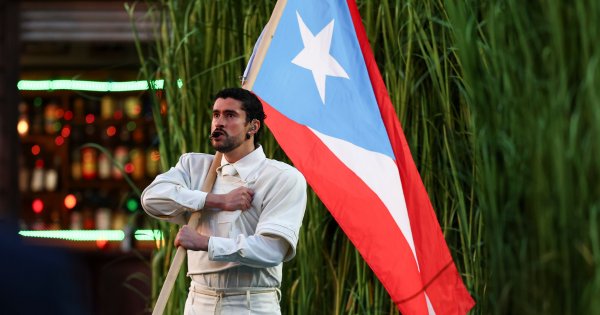

In this way, the halftime show reimagined Puerto Rico as the author of its own story: a place shaped by colonial violence and resource extraction, but driven by an uncompromising cultural lineage that continues to influence the world beyond the island’s coastline.
From PR to the globe
In an unexpected moment, Lady Gaga took center stage amid a real wedding, performing a salsa-infused version of “Die with a Smile,” before joining Bad Bunny to dance to the hit “Baile Inolvidable.” Wearing an ensemble in the light blue associated with Puerto Rican independence and a red flor de maga, the island’s national flower, the artist’s appearance bridged Puerto Rican and American culture and stood as an allegory for Bad Bunny’s transcendence on the global stage.
Acknowledging New York City as the original epicenter of salsa, the artist performed “NuevaYol” while dancers moved through bodegas, barber shops, and everyday community scenes, including a representation of “Toñitas,” one of the few remaining Puerto Rican Social Clubs in the city — spaces that have been fundamental to the identity of many Latino immigrants in the United States.
This scenery follows Bad Bunny’s appearance in the Grammys last week when he declared “ICE out.” That political message continued as he handed his Grammy for Album of the Year to a child watching the historic moment with their family on television.
To the rhythms of plena, accompanied by the local group Pleneros de la Cresta, Bad Bunny closed the show with a parade of flags representing every country in the Americas, calling out each nation by name.

The imagery woven throughout his performance bring together cultural affirmation for Puerto Ricans while serving as a point of recognition for broader Latin American audiences and an educational entry point for viewers unfamiliar with the island’s history.
By placing Puerto Rican musical genres at the center of the narrative, Bad Bunny demonstrated these rhythms as exportable cultural assets. When he said “We’re still here” in Spanish, he affirmed the continent’s cultural and linguistic diversity on a national stage.
Nonetheless, the world’s most-watched entertainment stage also became a showcase for Puerto Rico, using every element to project the island as a recognizable and authentic identity to millions of viewers.

