





This post was created in partnership with EightPM
In a world where audiences skip ads, brand product placement is becoming an increasingly important tool, but it needs to be deployed delicately.
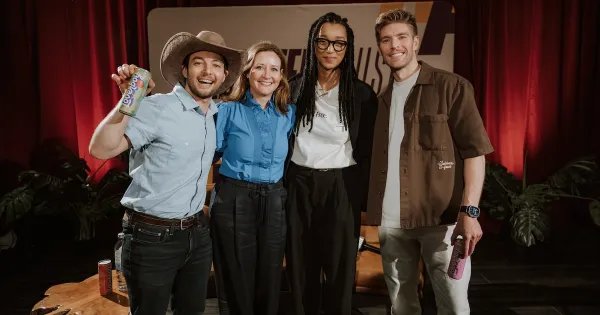
During an ADWEEK House Austin panel co-hosted with EightPM, marketing and agency leaders made the case for choosing authentic integration over in-your-face product placement so brands can become part of the narrative and capture coveted consumer attention.
Taking a hands-off approach
The session began with a dose of harsh reality: “Brand-owned messaging isn’t moving the needle in the same way in the ‘skip ad’ era,” said Kenya Peters, global operations manager for EightPM, a brand integration agency. As such, brands are relying on a mix of strategies, including authentic product placements.
To maintain that all-important authenticity, though, brands have to be willing to step back and trust the storytellers, said Marissa Eddings, head of brand, advertising, and media at 7-Eleven. “Where I have seen integrations really fail is when the brands are too involved,” she shared.
One recent branding win for 7-Eleven was an integration on the hit show Heated Rivalry, where its branding was included on the show’s hockey rink. Eddings says it happened organically, but only because of the groundwork laid down months prior. “It was a property that we had approved through our team at EightPM,” she said. “We try to approve as many as possible because you never know what’s going to hit big.”
EightPM works with a network of global production partners to showcase the brands they work with and find integrations that fit, Peters said. “So, that’s how we worked on Heated Rivalry before anybody even guessed that it was going to be something worth being involved in,” she said.
Launching and integrating a brand
Kyle Cooke, founder and CEO of Loverboy, an alcoholic beverage brand, used his role on the reality TV show Summer House to create awareness for his brand. “We conceived the brand and launched it on TV, and our show has a ton of product placement opportunities, because it focuses on a house that has full surveillance,” Cooke explained.
The idea for Loverboy came about because the show was giving other beverage brands like Twisted and Truly free product placement (before they were well-known), while blurring out larger brands that the network didn’t want to give free exposure to.
“That’s when I just was like, ‘all right, I’m gonna launch my own brand,’” said Cooke. “All of our awareness came from the show, and there might be 50 to 100 different product placements in a given episode.”
Staying relevant with short-form content
While brand integrations in movies and shows can drive cultural relevance at scale, they can take a long time to air, acknowledged Eddings. Short-form placements on social media can fill in the gaps. After all, there are about 13,000 7-Eleven locations in the U.S. and Canada, and converting top-of-mind awareness into sales at all those locations requires a diverse product placement strategy.

