



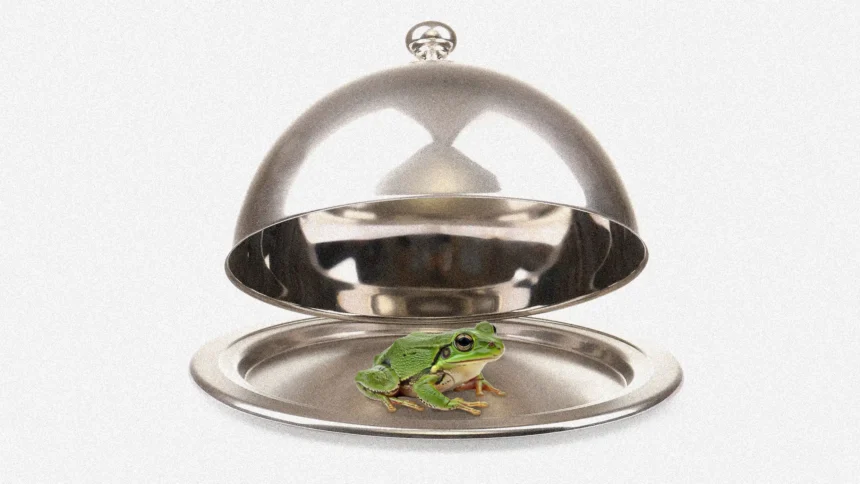

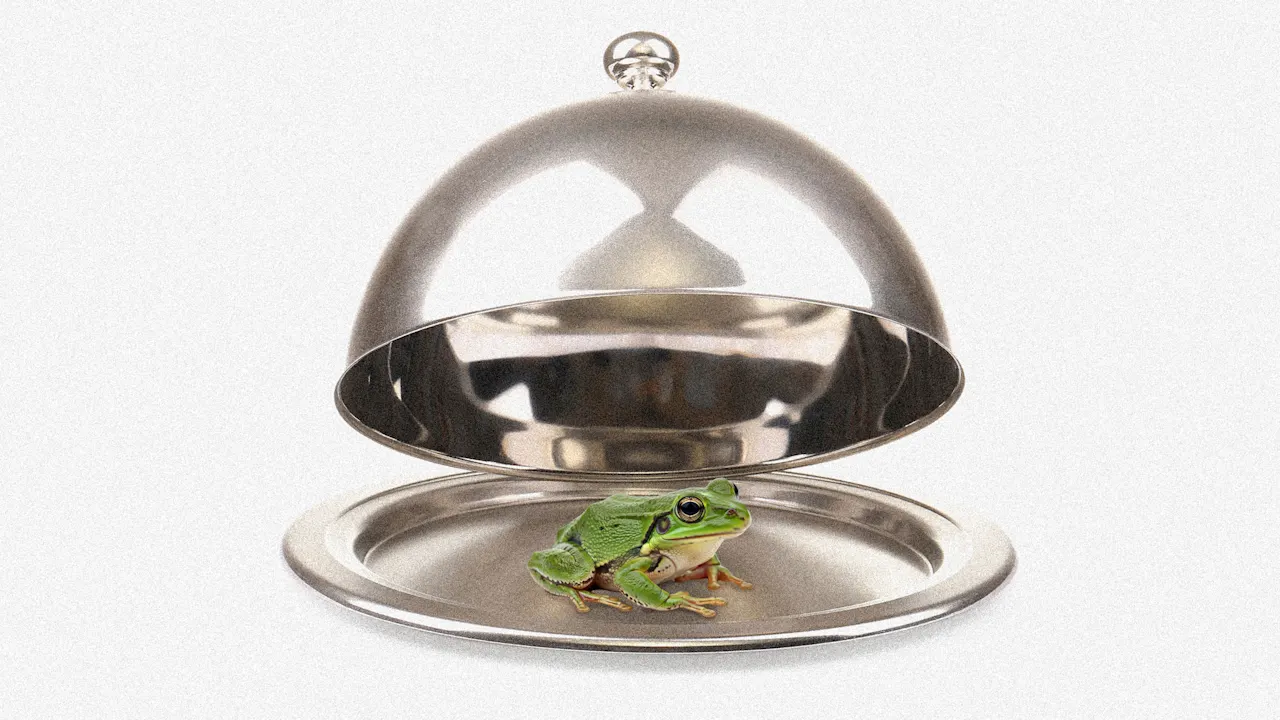
Revolutionary France may seem like a strange place to find a life hack, but in the 1790s, the French satirist Nicolas Chamfort offered some stark advice to cope with our daily travails.
“One should swallow a toad every morning, so as not to find anything disgusting for the rest of the day,” he wrote. In other words, start with the thing you dread most, and the following obligations will feel far more pleasant.
Chamfort’s name has largely been forgotten by the English-speaking world, but his unsettling phrase has endured as a popular productivity mantra: “Eat the frog.” The idea has even inspired a best-selling self-help book from the 2000s. But does it actually work?
It is only within the past few years that scientists have investigated the strategy, and they have found that “eating the frog” can be surprisingly powerful, boosting our satisfaction, motivation, and performance in the workplace, while helping us to begin our evenings feeling more refreshed. We just need to gird our stomachs and get on with it.
Biased expectations
You may be skeptical. The very idea of “eating the frog” runs against the widespread intuition that we should ease ourselves into a job with the simplest possible task. Most of us think that we can build up confidence as we progress, but it turns out to be completely wrong. Rachel Habbert and Juliana Schroeder at the University of California, Berkeley, first exposed this bias in 2020.
In a series of experiments, the researchers first asked participants to consider different word games, and to say which order they would like to tackle them—with the vast majority of people opting to work their way up to the hardest challenges. They seemed to believe that this would allow their confidence to grow.
To test whether those preferences were justified, Schroeder and Habbert then asked the participants to perform the tasks in order of either ascending or descending difficulty. Contrary to their predictions, the participants who started with the most demanding task ended up feeling considerably more confident than those who worked the other way. Eating the frog at the beginning of the task, it seemed, had allowed them to finish on a high.
The “easy addendum effect”
The results chime with a later finding by Edward Lai, an assistant professor of marketing at the Hong Kong Polytechnic University. He was inspired, in part, by the “peak-end rule.” Put simply, this is the principle that our memories of an experience are biased by its most intense moments, and by the way it ends—while neglecting its overall duration.
In the original experiments describing this phenomenon, the late Daniel Kahneman, Nobel Prize-winning psychologist at Princeton University, asked participants to plunge one of their hands into unpleasantly cold—14°C (57°F)—water for 60 seconds. After they had dried off, they then plunged the other hand into water of the same temperature for the same length of time, followed by a further 30 seconds at 15°C (59°F)—before being asked which trial they would like to repeat. The logical answer would seem to be the first, but most went for the second, since it ended on a more pleasant note.
Lai and his colleagues wanted to test how this might apply to our work.
They tasked some participants with common administrative jobs, such as filing books alphabetically or answering customer inquiries. Some of the participants were given a single block of tasks, while others were asked to complete the same number of jobs while also taking on a second block of easier tasks. (The people answering customer queries were given a few extra emails asking for straightforward clarifications, for example.)
Despite doing more work overall, the people who had been given the additional problems felt that they had made less overall effort than those who had simply tackled the core task, and they were more satisfied as a result. They also showed greater persistence.
“They were less likely to want to take a break, and more likely to opt in to additional tasks, and actually complete them,” Lai says.
To double-check that the sequence mattered, they also tried placing the simpler tasks at the beginning, or at the middle of the sequence. “But the only way that people felt happier and more satisfied was when we put the easy ones at the end,” he says—leading the researchers to call it the “easy addendum effect.”
We can only conclude so much from laboratory experiments, but the finding has since been replicated in real-life companies.
In one weeklong study, Chen Zhang, an associate professor in leadership and management organization at Tsinghua University in Beijing, and his colleagues encouraged 83 knowledge workers at an IT company to change their schedules so that they focused on the day’s biggest challenges during the morning.
As Schroeder’s and Lai’s findings would have predicted, they ended the day more positively, with less fatigue as they left work. A second survey at an e-commerce company found that this approach could also increase productivity. The participants’ supervisors reported that they were more likely to go above and beyond their everyday responsibilities after completing their most daunting tasks first, for example.
Reflection and planning
Putting all this into practice will take a little forethought. In Zhang’s study, the participants spent the first moments of each morning rating the difficulty of each task before deciding on their schedule. In some cases, there will only be one logical order to do things. Whenever we have a bit of flexibility, however, we can choose to tackle the biggest challenges as early as possible.
I frequently apply this strategy myself. I’ve just started writing a new book, for instance, and some of the more technical sections will require particularly heavy lifting. Knowing about the easy addendum effect, I focus on these more demanding tasks before lunch and spend the afternoon working on the connective tissue and the personal anecdotes, which are often far more pleasurable to write, before spending the final hour revising what I have written. I arrange work calls and meetings in a similar manner, placing those with the potential for conflict in the first half of the day, and friendly catch-ups toward the evening.
Simply categorizing your emails can make a real difference, Lai says. Clearly, some will need to be answered urgently, but once you have prioritized those that need immediate attention, you can eat the frogs first and leave the quickest responses until last.
Lai is sure this simple habit has enhanced his own happiness. “If I do that, I feel like it hasn’t been such a bad day when I walk out of the office,” he says.
Nicolas Chamfort, we can guess, would heartily approve.

