





San Francisco restaurant Mister Jiu’s is kicking off its 10th anniversary celebration next month with a three-part dinner series in its Chinatown kitchen. The restaurant will host 10 celebrated Chinese chefs from around the world, including Dan Hong from Sydney, Australia’s Mr Wong, and ArChan Chan from Ho Lee Fook in Hong Kong. Guests, seated in tables of four or eight, pay $285 each for 16 dishes from four chefs, all inspired by classic banquet-style dining.
The even is nearly sold out, and, according to executive chef and owner Brandon Jew, an exciting creative collaboration that the restaurant couldn’t afford to produce on its own.
The extravaganza is sponsored by Resy, the reservations provider used at Mister Jiu’s and one of two reservations platforms owned by American Express. The payments company acquired Resy in 2019 and competing service Tock in 2024 to help its card members access both tables and special events at top restaurants, like the dinner collabs at Mister Jiu’s. (Amex card members were able to secure bookings to the event 48 hours before everyone else.) The series is among hundreds of events that Resy will put on this year to try to coax more diners into restaurants—and more restaurants onto Resy.
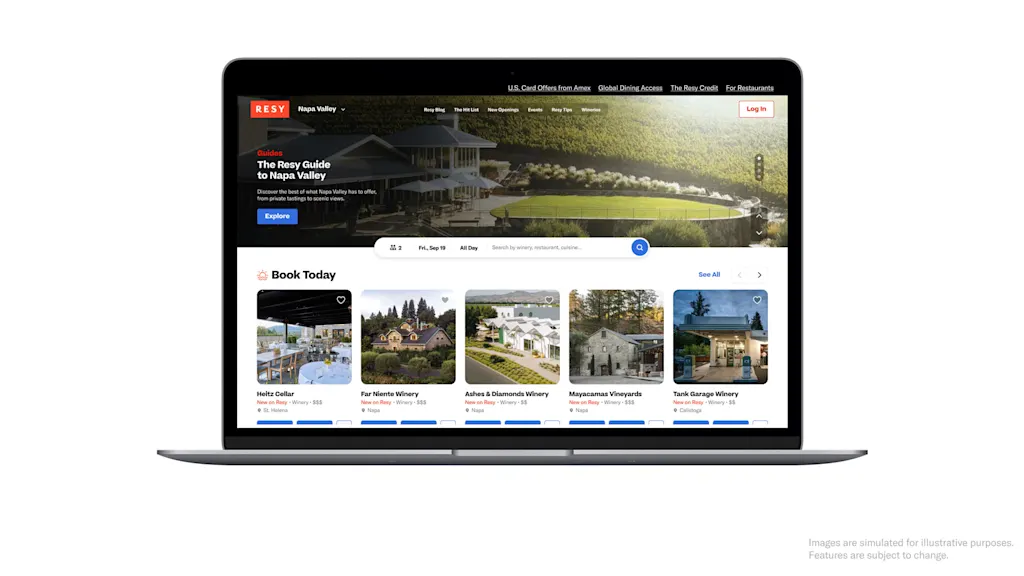
That platform is about to get a shot in the arm. This summer, Amex will merge Tock’s restaurant inventory with Resy’s, adding roughly 8,000 bookable venues—including 1,200 wineries, a handful of tattoo parlors, and at least one goat farm—to Resy’s app and website. The move boosts Resy’s venue count to 25,000, but will sunset the Tock brand, formally uniting two onetime startups against reservations market leader OpenTable, the incumbent provider they each hoped to disrupt.
Crucially, it also bolsters Amex’s position amid increased competition: Delivery company DoorDash spent $1.2 billion to acquire reservations platform SevenRooms last year and offers diners delivery credit for booking tables, and Chase Sapphire linked up with OpenTable last spring as part of its larger Visa partnership to offer exclusive restaurant bookings. Chase also has a longstanding partnership with DoorDash, offering Sapphire holders credit.
“Resy will be the singular app for the best culinary experiences used by the hospitality world’s most ambitious operators, with a membership benefit for card members,” says Pablo Rivero, CEO of Resy and Tock and SVP and head of American Express global dining. “And all of that will come together under the umbrella of a new era for the Resy ecosystem.”
Behind the Resy-Tock merger
The merger follows efforts by American Express to link its cards to reservations services that provide valuable access to restaurants. When the card issuer raised its Platinum card fee by $200 last September, it added a $400 annual credit for diners to use in Resy restaurants. This summer, Tock restaurants will start to become eligible for the credit, with the majority eligible by the end of 2027.

It was a powerful move; in the three weeks following the announcement, there was a 36% increase in Resy reservations made by users with a U.S. Platinum card linked to their account—and a five times increase in the daily average number of accounts being linked. People using the Resy credit are spending, on average, 25% more, according to Rivero. Resy wants its restaurants to notice; in January, it sent partner restaurants a Spotify Wrapped-style digest that included the value of Resy credits earned by Amex users at their business. “Look out for more of these card members in your seats in 2026,” it promised in its note to restaurants.
Amex is already seeing results: In the fourth quarter of 2025, global restaurant spend by American Express card members was up 9% overall, but spending by American Express card members at Resy restaurants was up more than 20%.
Both Resy and Tock launched in 2014 with new approaches to restaurant reservations. Resy challenged OpenTable’s longtime model of charging restaurants per reservation. Instead, it offered a monthly subscription to its reservations and table management software.
Around the same time, Tock pioneered a new model, prepaid ticketing, with the thesis that diners should book and pay for dinner the same way they’d buy tickets to a Broadway play or a football game. Founder and CEO Nick Kokonas, a former derivatives trader, launched the tech inside Alinea, the Chicago fine dining restaurant that he cofounded.
One platform, two systems
Tock’s structure immediately attracted fine dining restaurants drawn to a fresh idea. Kokonas, meanwhile, seemed to relish antagonizing chief competitor OpenTable, which he accused of peddling outdated technology and a stale business model. In one memorable marketing stunt, he planned to distribute 5,000 plastic dinosaurs at an industry trade show, each branded with the URL OpenTableSaurus.com, which then led to Tock’s homepage. A cease-and-desist letter from OpenTable thwarted the plan, and Tock eventually gave them the domain. But Kokonas, refusing to accept defeat, pointed a second URL, DinosaurTable.com, at Tock’s homepage to underscore his position. (Both URLs still work.)
Kokonas wanted the restaurant industry to embrace the prepaid model that eliminated nearly all of the dreaded and expensive no-shows at its restaurants. Eventually, Tock’s competitors added prepaid ticketing to their platforms, and Tock started offering free reservations.
By the time American Express acquired Tock from website-building platform Squarespace for $400 million in 2024 (Squarespace paid the same amount to acquire the business in 2021), its diner-facing products—free reservations, deposits, tickets—had become standard across providers. But Tock maintained an impressive roster of high-end restaurants, which bought into the platform’s adaptable technology and the company’s reputation for serving them well, something that Tock’s restaurant customers hope won’t vanish when the brand does.
“It’s so clear [Tock] was built by restaurant people that understand service,” says Anya Abrams, managing director at Blue Hill in upstate New York.
Blue Hill operates the two-Michelin-starred restaurant Blue Hill at Stone Barns, alongside the more casual Cafeteria, which serves lunch and communal-style dinner. It uses prepaid ticketing on Tock for both. It also uses the platform to facilitate experiences like farm tours and cocktail demonstrations. Abrams says that at her request, Tock has added product features and changes that fit the company’s complex needs.
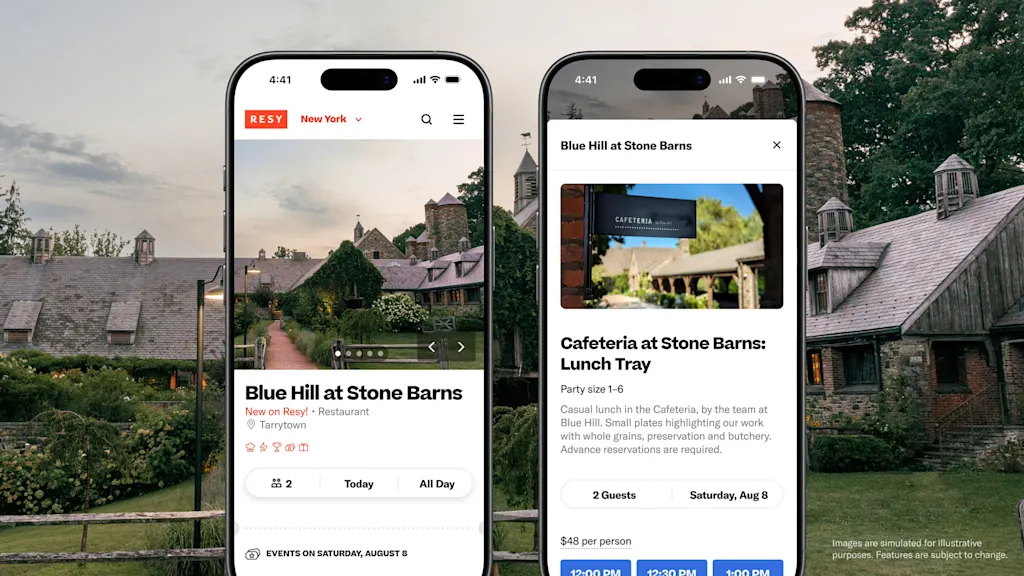
Once bookings at Tock restaurants are moved to Resy, Rivero says that diners will see and be able to book the exact same tables and experiences that they would on Tock, cocktail tastings and farm visits included. Restaurants using Tock’s software to manage their venues won’t notice any tech changes on their end besides a switch to Resy’s logo. Restaurants already using Resy won’t see any changes—though if they prefer to switch to Tock’s operating system, which many say offers better tech, they can.
“Tock has built an incredible product that so many restaurants have come to use and love, and we don’t want to mess with that,” Rivero says.
Eventually, Rivero says, Amex will combine Resy and Tock’s restaurant-facing tech, made up of “the best of both, along with new features and integrations.” He didn’t share a timeline, but restaurants have been told to expect the change in 2027.
A battle for restaurants
Amid this heightened competition between platforms and credit cards, restaurants have gained more negotiating power.
Over the last year or so, reports and rumors have surfaced of restaurants receiving five-, six-, or even seven-figure payments to switch between booking platforms including Resy, Tock, OpenTable, and SevenRooms. The services and their deep-pocketed owners and partners are hoping that the cash infusions, along with promises to fill dining rooms with people eager to spend, will net them the most desirable restaurants.
In San Francisco’s Chinatown, Brandon Jew is happy the platforms, including Resy, see the value in restaurants like his, which work to create great experiences for diners.
“Restaurants have a very natural way of being able to storytell and provide experiences, entertainment, and food and beverage that contribute to memorable events,” he says. “I think that’s what the reservation systems are interested in providing, especially for their elite users.”
“It’s such a weird era,” he adds. “I feel like we’re so used to paying for their products.” For now, at least, the tables have turned.

