





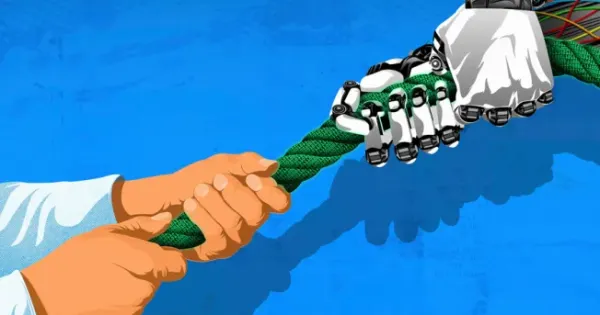

Artificial intelligence may not eliminate work altogether, but it could still cause deep disruption to workers, according to Facebook co-founder Chris Hughes.
At a panel on AI and the future of work alongside economist Simon Johnson, entrepreneur and former presidential candidate Andrew Yang, and AI researcher Rumman Chowdhury, Hughes said he expects AI to have a “meaningful effect” on labor markets—even if fears that machines will eliminate jobs entirely are overstated.
“I’m concerned about the welfare of those workers and how they find a new job,” Hughes said.
While he isn’t worried about the growing number of companies building tools designed to automate tasks traditionally performed by people, Hughes pushed back on the idea that AI will make human work obsolete.
“AI attempts to replace human cognition at times,” he said. Still, intelligence is multidimensional, encompassing emotion, anticipation, empathy, and judgment—qualities he believes will remain uniquely human.
The debate comes amid a wave of corporate layoffs tied—at least rhetorically—to AI.
Companies, including Meta and Amazon, have cut thousands of roles while ramping up their investments in AI infrastructure. Jack Dorsey’s fintech company, Block, slashed its workforce in half citing “intelligence tools” as a reason for reducing headcount.
However, other panelists said the narrative is more complicated, raising questions about whether AI is truly replacing workers or simply providing a convenient explanation for broader corporate restructuring.
“[Block’s] stock went up over 20% within 24 hours,” said Yang, after Dorsey made his announcement. “Regardless of whether you question the true nature of whether it is intelligent tools—there’s a term for it now, ‘AI-washing’—but to me, it’s indisputable that it’s now going to be the narrative playbook that CEOs of public companies crip from.”


