





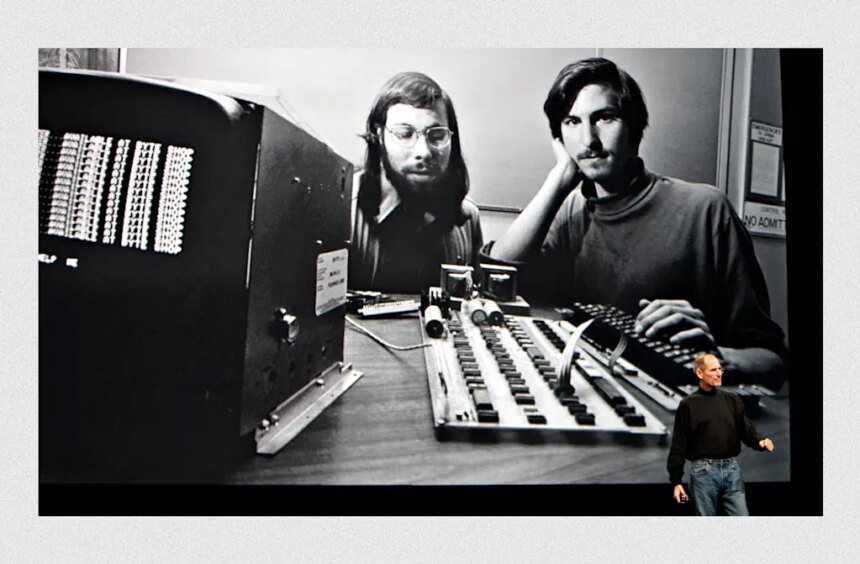

Before there was an iPod, an iPhone, an iPad, or an Apple Watch—before there was a Macintosh or Apple II or even an Apple-1—there were a couple of kids who came of age in Silicon Valley in the late 1960s and early 1970s.
Steve Jobs and Steve Wozniak were brought together by a shared fascination with electronics. Supported by friends, family, and a burgeoning community of hobbyists, technologists, and entrepreneurs, just as the microprocessor was ushering in a new era, they channeled their strikingly different skills into joint projects.
On April 1, 1976, along with Jobs’s former coworker Ronald Wayne, the two Steves formed a partnership to market Wozniak’s latest invention, a microcomputer kit for electronics hobbyists. They called it Apple Computer Company.
Today, as Apple turns 50, its presence in our lives is so pervasive—2.5 billion of the company’s devices are in active use—that its unlikely origin story is more resonant than ever. To tell it, I turned to the people who lived it:
- Apple’s two living cofounders, Wozniak and Wayne
- Mike Markkula, the early retiree from Intel whose guidance and money turned the garage startup into a company
- Some of Apple’s earliest staffers, including Bill Fernandez, its first full-time employee, and Chris Espinosa, who’s still there today
- Regis McKenna, the Silicon Valley marketing guru who established Apple as a brand
- Liza Loop, the educator who became Apple’s first user
- Ron Rosenbaum, the Esquire writer whose article inspired Wozniak and Jobs’s first business venture
- Nolan Bushnell, whose Atari provided Jobs with most of his pre-Apple work experience
- Lee Felsenstein, moderator of the Homebrew Computer Club, the user group that prompted Wozniak to build Apple’s first machine
- Dan Bricklin and Bob Frankston, the creators of VisiCalc, the spreadsheet that gave the Apple II its killer app
- And many others
Their memories show that both pluck and luck played a part in Apple’s initial success. But so did an unshakable faith in the transformative power of personal computers—a vision that set the company on a course to change history.
Comments have been edited for length and clarity.
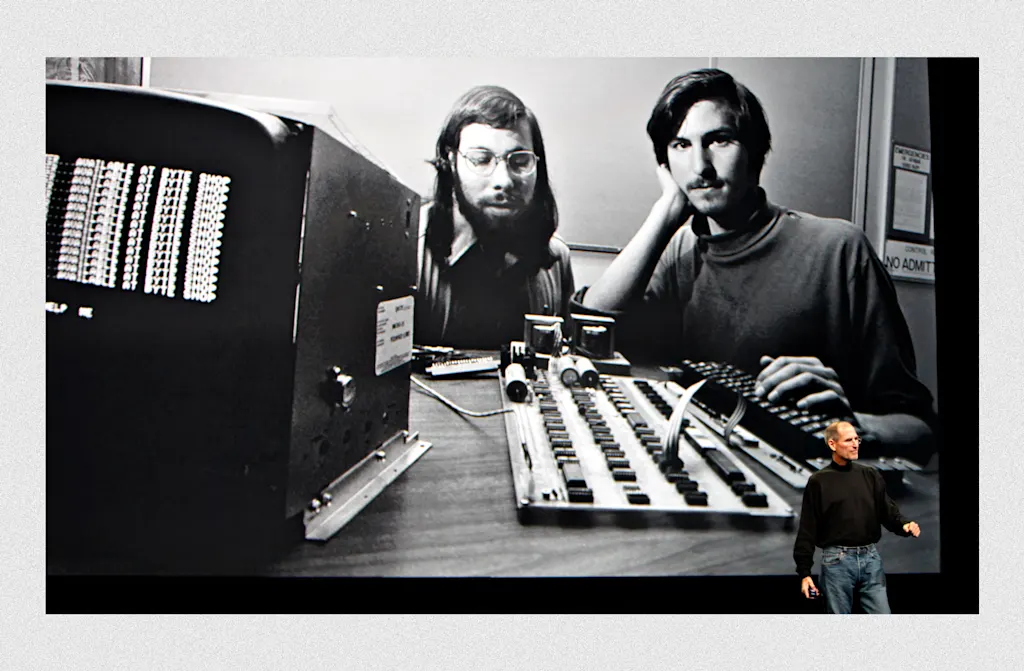
1. Born in Cupertino
As Jobs, Wozniak, and other members of their junior high and high school circles become obsessed with electronics, Silicon Valley is not yet known as Silicon Valley. Still, these young geeks are definitely in the right place at the right time.
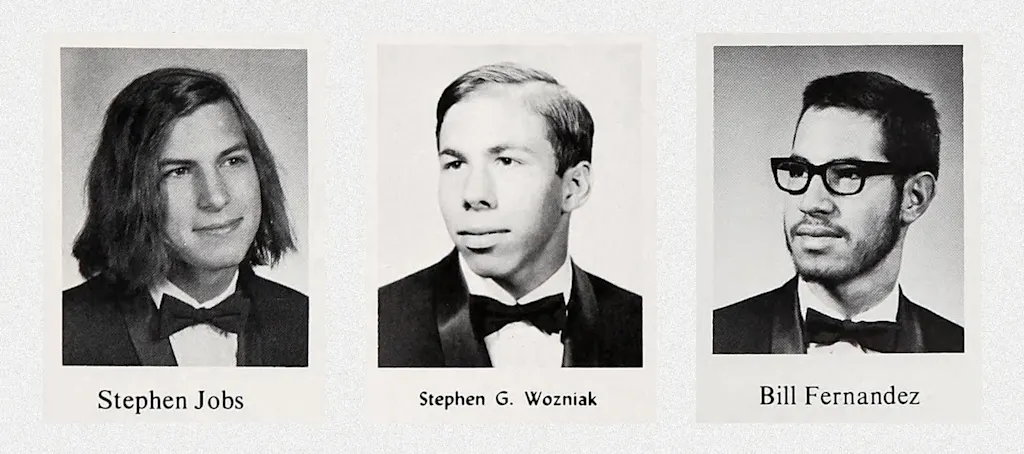
Bill Fernandez, Apple’s first full-time employee: When Steve Jobs moved into the area and started going to the same junior high school as me, Cupertino Junior High School, we became friends. We were in the eighth grade, class of 1968. I got him interested in electronics. We would bicycle over to each other’s houses and work in each other’s garages on pretty trivial electronics projects—buzzers, flashing lights, sirens, and so forth.
I was also going across the street to ask questions of—and get mentored by—Steve Wozniak’s father, Jerry Wozniak [an engineer at Lockheed]. I knew of Steve Wozniak, but he was four years older than I was, so there was no real social contact until the middle of high school at Homestead High School.
Steve “Woz” Wozniak, cofounder, Apple: I told my dad when I was in high school, “I’m going to own a computer someday.” My dad said, “It costs as much as a house.” And I sat there at the table—I remember right where we were sitting—and I said, “I’ll live in an apartment.” I was going to have a computer if it was ever possible. I didn’t need a house.
[paywall_insert]
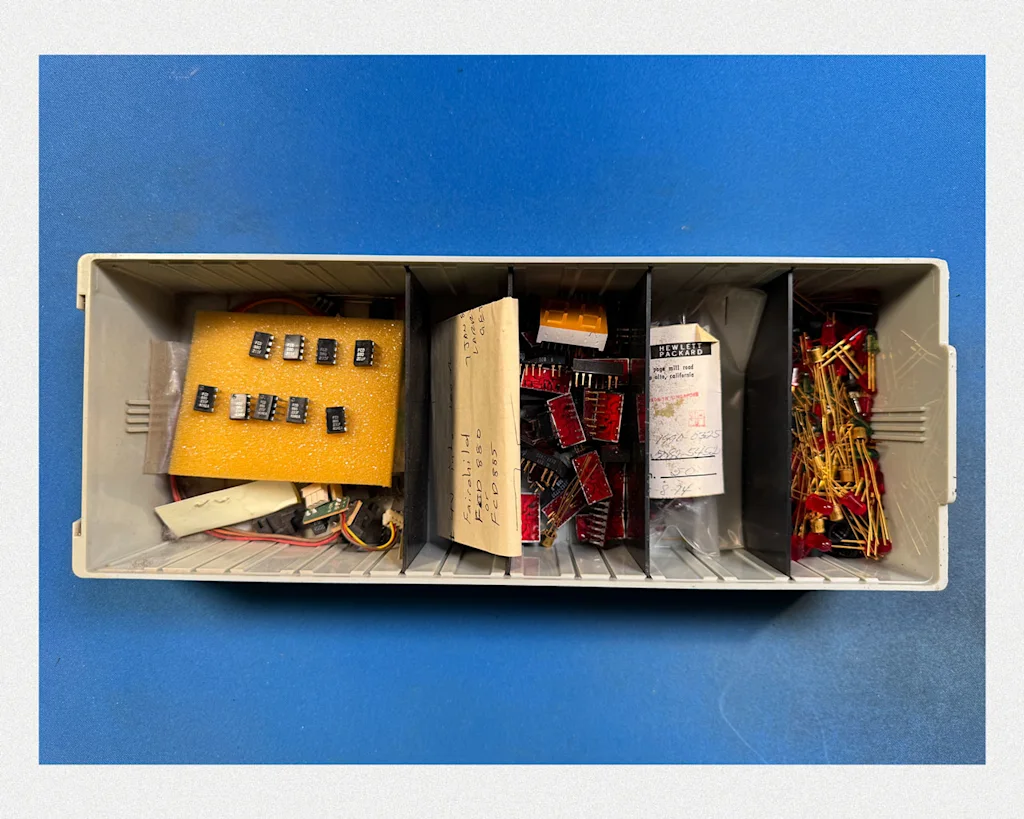
Fernandez: All of these electronics companies had bins full of reject parts. The pins were bent, or the part number on top was smudged, or a part didn’t pass some critical test. It was possible to contact these people and say, “Hey, I’m studying electronics. Do you have any spare parts? And they’d reach into a bin and grab a handful and give them to you.
Woz came over one day, and he had a half a shoebox of integrated circuits from Signetics, which at that time was one of the major manufacturers of small-scale and medium-scale integrated circuits. He dumped them out on the living room carpet, and we got out the Signetics catalog and looked up the part numbers. We started sorting them into little manila envelopes that my mom had hanging around. Woz says, “We’ve got the parts here. We need to build a computer.”
Wozniak and Fernandez do build a computer, though an ill-fated one.
Fernandez: I had a workbench in my garage that my parents had set up for me, and that’s where I did all my electronics projects. So I’d work on it, and Woz would come over and look at it, and we’d make decisions. I’d be down there with a soldering iron and he’d come up behind me and clap real loud to try to shock me, because Woz has always been a prankster. And I’d turn around and say, “How would you like one nostril to be larger than the other from a hot soldering iron?”
The computer was very basic. It was working, and we were starting to talk about how we could hook a teletype up to it. Mrs. Wozniak called a reporter from the San Jose Mercury, and he came over with a photographer. We set up the computer on the floor of Steve Wozniak’s bedroom.
Well, the core integrated circuit that ran the power supply that I built was an old reject part. We turned on the computer, and the power supply smoked and burnt out the circuitry. So we didn’t get our photos in the paper with an article about the boy geniuses.
Wozniak: We were proud of having done it. The doing is the important part.
Electronics as a shared interest continues to fuel Wozniak’s social life, in ways that would prove fateful.
Wozniak: I was too shy to talk to people. The only way I could communicate was to design something cool. And people, other geeks, would talk to me about it.
Allen Baum, another classmate, who later roomed with Steve Jobs, helped with the Apple-1 and Apple II, and became an official Apple employee a decade later: I was at Homestead High School, and I walked through the library one morning. There was a guy [Wozniak] sitting in a corner with a pile of papers, and he’s drawing these pictures. I was curious, and went over to look. I said, “What are you doing?” And he said, “Oh, I’m designing this computer.” I went, “That’s really cool. I want to do that.” He taught me.
Fernandez: Around 1971, Steve Jobs bicycled over to my house, and we were going to hang out. Steve Wozniak was out in front of his house washing his car. And I thought to myself, Well, Steve Jobs is an electronics buddy and Steve Wozniak is an electronics buddy. Maybe they’d like to know each other. And so out there on the street, I introduced them.
Wozniak and Jobs bond over not just their mutual electronics hobby but also a love of mischief. One early collaboration is inspired by an October 1971 Esquire article by Ron Rosenbaum, “Secrets of the Little Blue Box.” It chronicles the shadowy exploits of geeks known as phone phreaks—some of them blind—who’d figured out how to place free calls and otherwise hack the phone system using homemade tone-generation gadgets called blue boxes.
Fernandez: They started doing some projects together, like the blue boxes, for example.
Ron Rosenbaum: Doing the blue box story was maybe the most fun I’ve had as a writer, and I’m still a bit stunned at the impact it had. And also the trust that the blind phone phreaks had put in me, as well as characters like Captain Crunch and the still mysterious “Midnight Skulker,” the Johnny Appleseed of the whole West Coast phreakdom. It was all, looking back, about more than free calls. It was about freedom. That box seemed to attract some of America’s most idiosyncratic geniuses.
Wozniak: My mom and dad had Esquire. I was home for a day and picked up this magazine that I never read and flipped through it. “Secrets of the Little Blue Box” sounded like an interesting story. And as I read it, it was obviously fiction—these engineers running around, setting up their own networks, and taking over Ma Bell.
Halfway through the article, I had to call Steve Jobs, my technical friend that I met that summer. I just started reading it to him, and I said, “The trouble is, it sounds too real.” I didn’t know it was written by Ron Rosenbaum. Later on, he was a little upset that I thought it was fiction.
Fernandez: Woz read the Esquire article that talked about this technology. He started working on a design for it. I was working on my own design. Mine was going to be based upon phase-lock loops, which is a hybrid analog-digital solution, and his was totally digital.
Wozniak: Every tone was exactly precise and accountable, and I was so proud of that. Matter of fact, that was maybe a more clever design than I ever did with my Apple stuff.
Fernandez: He got his done first, and it worked really well, so I just gave up on mine. And then, after he got one working, he started experimenting with it, making free long-distance phone calls and doing pranks and things.
Wozniak: I would do it just to show off when I called my relatives down in Southern California. I made sure that I paid for my long-distance calls from my dorm phone.
Fernandez: Steve Jobs and [Wozniak] started building a small number of blue boxes to sell to people. That was their first business venture.
Wozniak: Steve designed a little printed circuit board himself, probably with a pen. We got a number of sales in the dorms.
Daniel Kottke, who accompanied Jobs on a life-changing trip to India in 1974, assembled the Apple-1, and became Apple employee No. 12: Steve and I became friends as freshmen at Reed College in 1972. Our friendship developed over many, many books that we were interested in, including Ram Dass’s Be Here Now; Carlos Castaneda; Zen Macrobiotics, about diet; and The Secret Life of Plants, about biology and technology.
Steve was secretive. He was already an entrepreneur when he showed up at Reed College, and that whole topic never came up at all, which is just curious. I was the closest friend he had.
I was walking across campus one day, and he introduced me to his friend Woz, who had driven all the way up from Silicon Valley, which was a very long drive. I had no clue that the two of them were doing these blue boxes and selling them.
Wozniak: I was never secretive, and I thought that Steve Jobs did tell people like Dan Kottke. Maybe I just assumed. I was so enamored by it.
2. Gadget freaks
In 1973, Wozniak gets a job as an engineer in Hewlett-Packard’s calculator division, though he funnels much of his ingenuity into personal engineering projects of increasing ambition, culminating in a full-blown microcomputer. Meanwhile, Jobs finds work as a video game technician at Atari in 1974.
Baum: I was working at HP at the time. I think I got Steve Wozniak his job at HP.
Wozniak: I told everyone that I was going to be an engineer for life at a company where you could be an engineer for life, Hewlett-Packard, and never move up the org chart. If you move up in org charts, you get a little bit political. I just didn’t like that whole side of life.
Nolan Bushnell, cofounder, Atari: We felt that excellence sometimes came from outliers, that there are brilliant minds who don’t come as a whole package, that sometimes people who are personally objectionable, rude, impolite, and stinky can be really capable.
Steve Jobs basically showed up and said, “I’m not leaving until you hire me. You’ve got a really cool company.” Jobs wasn’t a good engineer, but he was a great technician. He was pristine in his ability to solder, which was actually important in those days.
I liked how Steve thought—he was an out-of-the-box thinker from day one that I knew him. Some of the people he worked for didn’t like him that much, but it was a time when we needed any warm body that we could get. After he came back from India, I hired him again [as a consultant]. I put him on the engineering night shift, which didn’t exist.
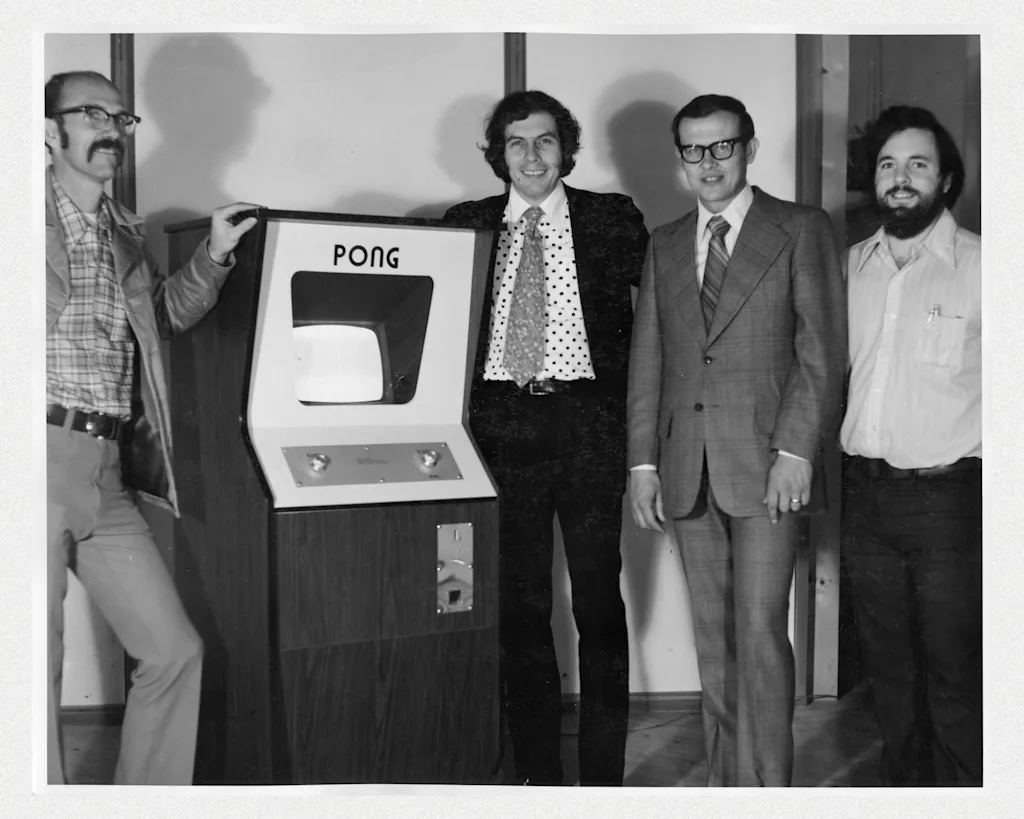
Fernandez: Atari had come out with a Pong game that you’d find in arcades and pizza parlors. Woz designed his own version. He figured out a way to interface it with a TV set, because there were no computer monitors in those days. And so he was able to play Pong on his own TV set.
Captain Crunch, one of the phone phreaks who’d inspired Wozniak’s blue box, resurfaces to provide inspiration for a new project.
Wozniak: I saw John Draper—“Captain Crunch”—typing on a teletype in an engineer’s basement in Cupertino. John was playing chess with a computer in Boston, and he told me about this thing called the Arpanet [later better known as the internet]. I had to be on it. So I built a TV terminal. You could type on a keyboard and, on your TV, talk to a computer far away on the Arpanet.
As Wozniak gins up his TV terminal, a community of kindred spirits is forming in Silicon Valley. One gathering place is People’s Computer Co. in Menlo Park, where anyone can walk in and use a terminal hooked up to a Digital PDP-8 minicomputer.
Liza Loop, founder of Lo*op Center: As far as I know, it was the first storefront public access computer center in the world, and Lo*op Center was the second.
Baum: I heard about it, and went over to see what it was like. There was a poster on the wall or on a telephone pole nearby that said something like, “Hey hackers, if you’re interested in homebrew computing, come over to this address at this time and this date.” I told Woz about it.
The poster promotes a new organization called the Homebrew Computer Club. Formed in response to the January 1975 cover story of Popular Electronics on the MITS Altair 8800—a do-it-yourself microcomputer kit at an unheard-of price—the group first meets in a garage. Soon, it’s convening twice monthly in an auditorium at the Stanford Linear Accelerator Center.
Lee Felsenstein, computer designer and moderator of the Homebrew Computer Club: Steve Wozniak was at the very first meeting in [engineer and programmer] Gordon French’s garage on March 5, 1975.
Wozniak: Allen said, “This club is starting for people who design things like TV terminals.” I wasn’t even aware of other ones, but I took mine down to the club thinking, Good, I’ll show it off and I’ll be real important.
But no, they were all talking about the Altair computer, and there was so much interest: “You can have your own computer for 400 bucks.” It wasn’t really a computer. It was kind of a processor with switches and lights.
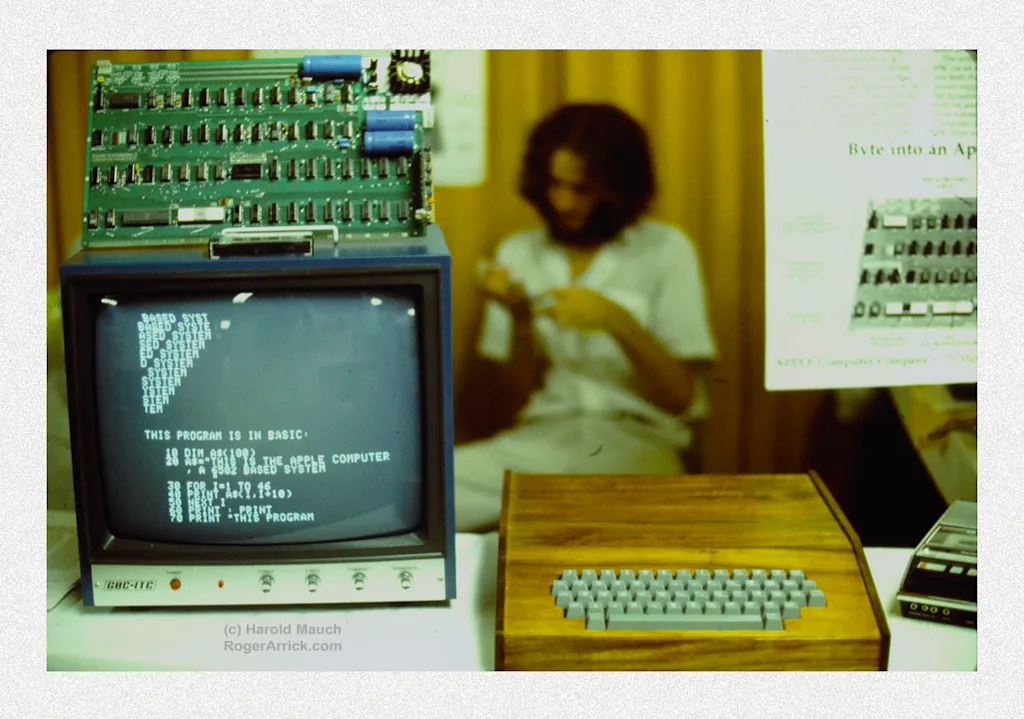
All the excitement over the Altair moves Wozniak to begin turning his TV terminal into a true computer. He also begins coding his own version of the microcomputer world’s most popular language, BASIC. Eventually, the machine will be dubbed the Apple Computer and then the Apple-1, and his BASIC will be known as Integer BASIC.
Wozniak: The Homebrew Computer Club totally inspired me to build a computer. Steve Jobs was not around. People were talking about great things that would happen to society, that we would be able to communicate like we never did [before] and educate in new ways. And being a geek would be important and have value.
Baum: Woz’s stockroom at HP wasn’t as complete as my stockroom at HP. And HP had a deal that employees were allowed to take parts out of the stockroom for private projects because they figured, well, that’ll help them be better engineers. When he needed some parts, even if we didn’t have them, I could order them. It’s not like they were super expensive. We were talking about $2 and $3 parts.
Fernandez: There were things like the Intel 8080, an 8-bit microprocessor chip, but they were hundreds of dollars per chip, and Woz couldn’t afford that. But when MOS Technology came out with the 6502 chip that had roughly the same characteristics, Woz could go down to the local surplus store, Halted Specialties, and buy one for under $30.
Baum: Woz said, “Well, all I have to do is attach the microprocessor, and I’m done.” And there was a serial/parallel chip, and he just sort of plugged that onto the bus, and it all worked. And, of course, there was a simple matter of software, and I actually helped with that.
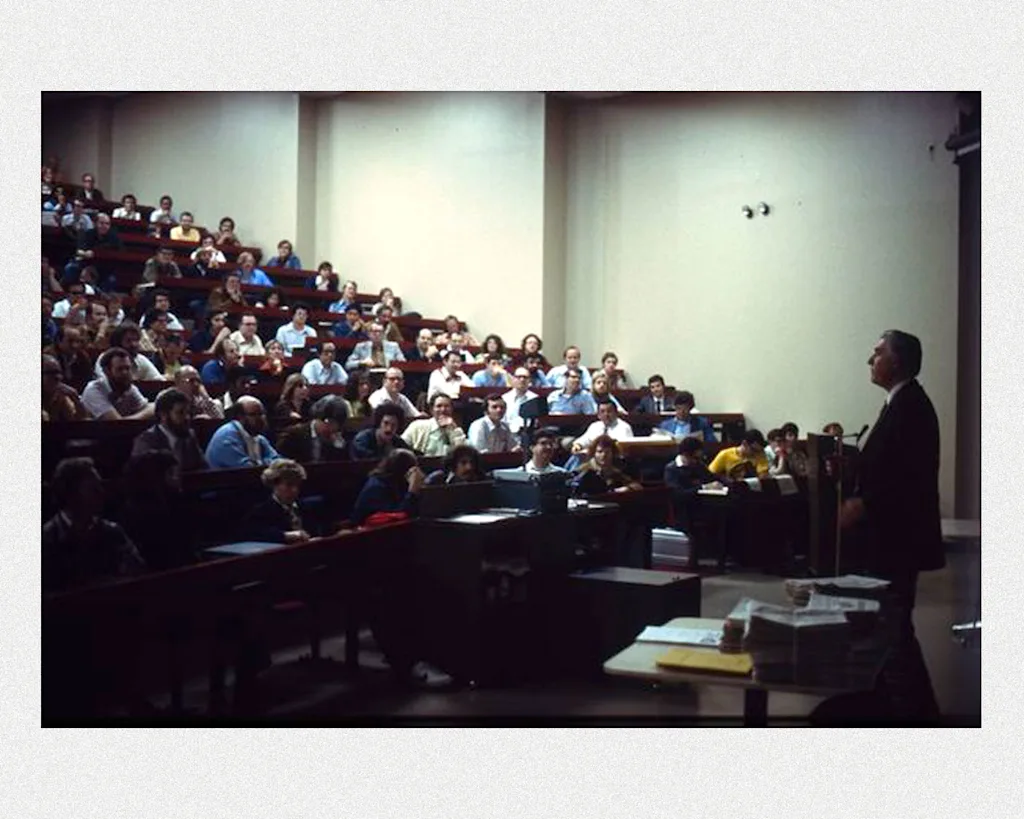
Felsenstein: At Homebrew meetings, Wozniak always sat in the same seat, which had access to an electrical outlet. That’s a strange thing to say, because today every seat has electrical outlets, for laptops. But the electrical outlet in that room was only for the floor polisher. He grabbed it, because he needed power for a soldering iron and test equipment, as well as for the unit under development.
At first, the Apple-1 is not a product—just a set of schematics that Wozniak happily shares with other Homebrew attendees.
Wozniak: I wanted these people to help create the revolution. And so I passed out my designs with no copyright notices—public domain, open source, everything. A couple of other people in the club did build it.
Felsenstein: You may ask, where was Steve Jobs in all this? He did not show up until the spring of 1976, when they were just about ready to introduce the Apple-1. I knew what Jobs looked like, because I had applied for a job at Atari in 1974, and he was the young man in a thin beard and a thin tie and white shirt who conducted me back to [Atari chief engineer] Al Alcorn’s office and immediately right back again, because Al wasn’t looking for design engineers. He had not yet gone to India and become Steve Jobs.
Randy Wigginton, Apple employee No. 6: Steve wasn’t a regular Homebrew Computer Club attendee. He would go occasionally, but mainly he was interested in the business side of it, not the nerd side.
Wozniak: It’s the opposite of the movie with Ashton Kutcher [2013’s Jobs]. That movie shows Steve Jobs finding me in a basement on the computer and he says, “Take it down to the club and show it off.” What? He’d never been to the club. I’d been there every day since it started, and it was the most important thing in my life. So I took him down and showed him all the interest. And he saw people gathering around my computer.
Felsenstein: Jobs turned up standing behind Wozniak in the Homebrew audience and never raised his hand. When we broke up into random access [a period of mingling and information exchange], he frantically ran around the floor of the auditorium trying to listen in on all of the discussions that were going on. Nobody else had done this that I knew of.
As Wozniak makes progress with his computer and Jobs engages with the project, they realize that it has potential to be more than a free set of schematics for do-it-yourselfers. Wozniak’s employer, however, remains unconvinced.
Wozniak: I wanted Hewlett-Packard to have the personal computer. I showed them what it would cost and how it would work and what it could do with my little demos. They had all the engineering people and the marketing people, and they turned me down. That was the first of five turndowns from Hewlett-Packard. Steve Jobs and I had to go into business on our own.
3. The partnership
Wozniak has built a personal computer. Jobs wants to build a company. The result: Apple.
Wozniak: I never, ever once tried to start a business or an industry. I just wanted other engineers to look at my designs and say, “Whoa, he thinks differently. He has a clever mind.”
By contrast, Jobs had been hatching ideas for businesses for years, one of which springs from a summer job he had at HP as a high schooler.
Baum: He had worked on assembling HP frequency counters. He wasn’t completely devoid of engineering talent—it wasn’t his strong suit, but he wasn’t an idiot. So he kind of understood how this stuff worked.
He said, “Hey, we can design something to do this, and sell it super cheap.” And so we started to design it, and we would say, “Oh, if we just add this one chip, we could have it be a timer as well as a frequency counter.” I call that engineers’ disease, where you just say, “Oh, I could do this one more thing.” And we never finished it.
At Atari, Jobs befriends Ronald Wayne, a colleague more than 20 years his senior. Wayne had wound up at the company after his own startup, which manufactured slot machines, had collapsed.
Bushnell: Ron Wayne was a circuit board layout maven, and that was a term of art at the time, because it really tested your topological skills.
Ronald Wayne, cofounder, Apple: Steve Jobs came in a couple of months after I went to work for Atari and looked at me as kind of a mentor. We had interesting conversations and chats and lunch and dinner.
One day, he walks into my office and says, “You used to build slot machines?” I said, “Yes, I did.” He says, “Well, look, I can get my paws on $50,000. Why don’t we go into the slot machine business?” I said, “That would be the quickest way I could think of to lose $50,000.”
Jobs soon lands on a different venture: selling Wozniak’s computer, initially as a bare circuit board to techies who’d install their own chips. Funding the project requires a sacrifice that would become the stuff of Silicon Valley legend: the sale of his Volkswagen bus and Wozniak’s HP calculator.
Wozniak: Steve Jobs came up with an idea for this computer of mine. If we make printed circuit boards and build them for $20 each, we can sell them for $40 each. And we might not get our money back, ever. But we sold our most valuable possessions. I sold my HP 65 calculator for 500 bucks, and I only got paid half of it.
Wayne: Jobs came to me and said he and Steve Wozniak were going to go into business manufacturing personal computers. I told him, “That’s a pretty good idea. I can’t see why that wouldn’t work.”
Wozniak: When you don’t have money, you look for the cheapest way to do things. That was a partnership.
Though Wayne’s previous foray into entrepreneurship had ended badly, the 41-year-old has far more business experience than Jobs and Wozniak, who are 21 and 25, respectively.
Wayne: We sat down and talked. I think it took me about 25 minutes to get Woz to understand the importance of having his circuit designs be a part of the company after he had created them. Jobs said he and Woz would have 45% each. And to my astonishment, he says, “Wayne’s going to have 10% as a tiebreaker,” in case they had any disputes. I typed up three copies of the founding contract for Apple, and the three of us signed all three copies. And Apple was born.
Wigginton: I witnessed the signing of those papers, which is pretty funny, because I was 15 at the time. I asked, “Is it okay that I’m only 15?” Everybody goes, “I guess so.” I didn’t understand what was going on. I mean, what 15-year-old does?
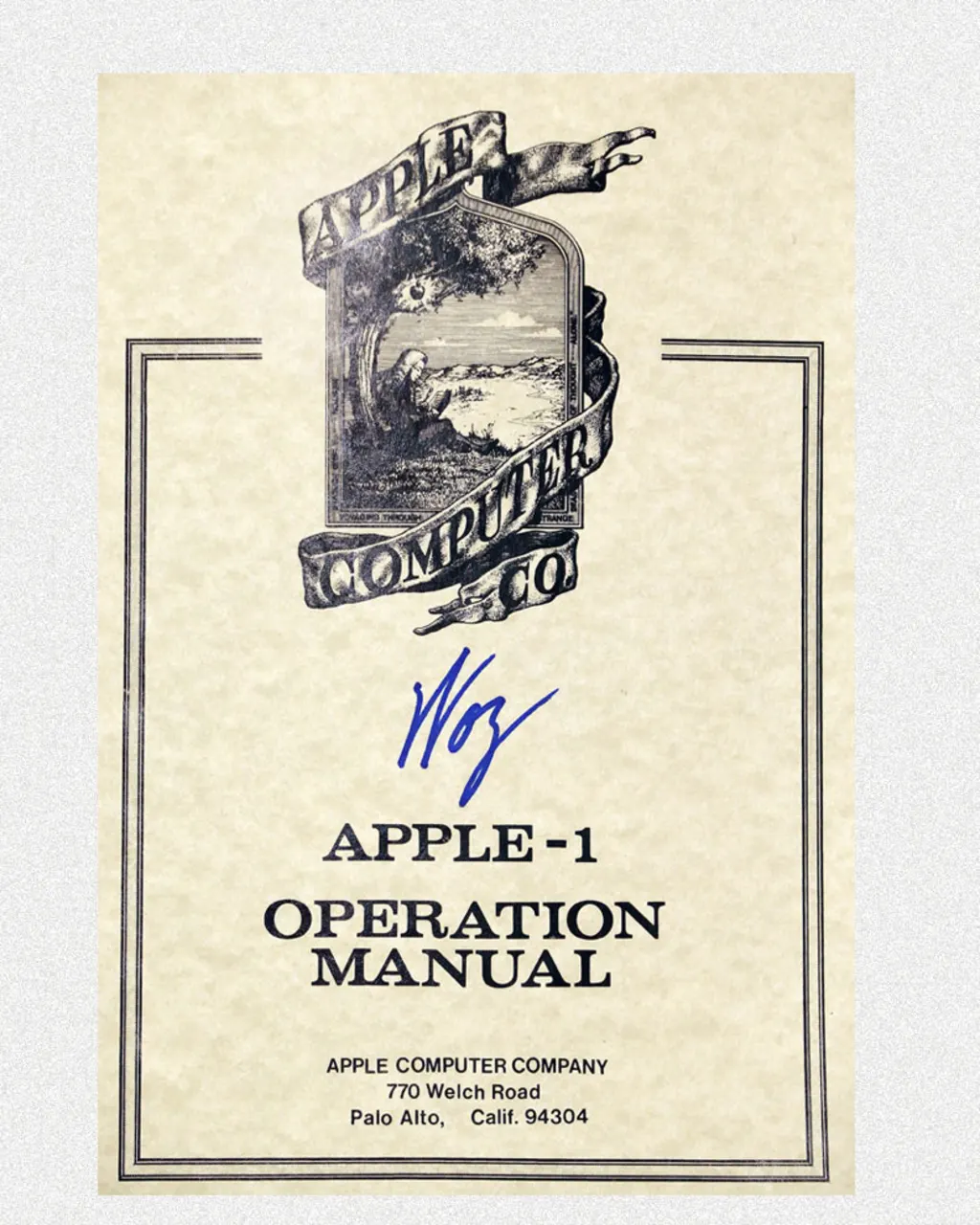
Wayne: Wozniak was a very whimsical character, and I caught a bit of that when I designed the first logo for the company. It wasn’t a 20th-century logo. It was a 19th-century logo. But it just fit the whole situation: Newton under the apple tree with the apple ready to fall, and underneath a line that says, “A mind forever voyaging through strange seas of thought . . . alone.” That’s a line from Wordsworth.
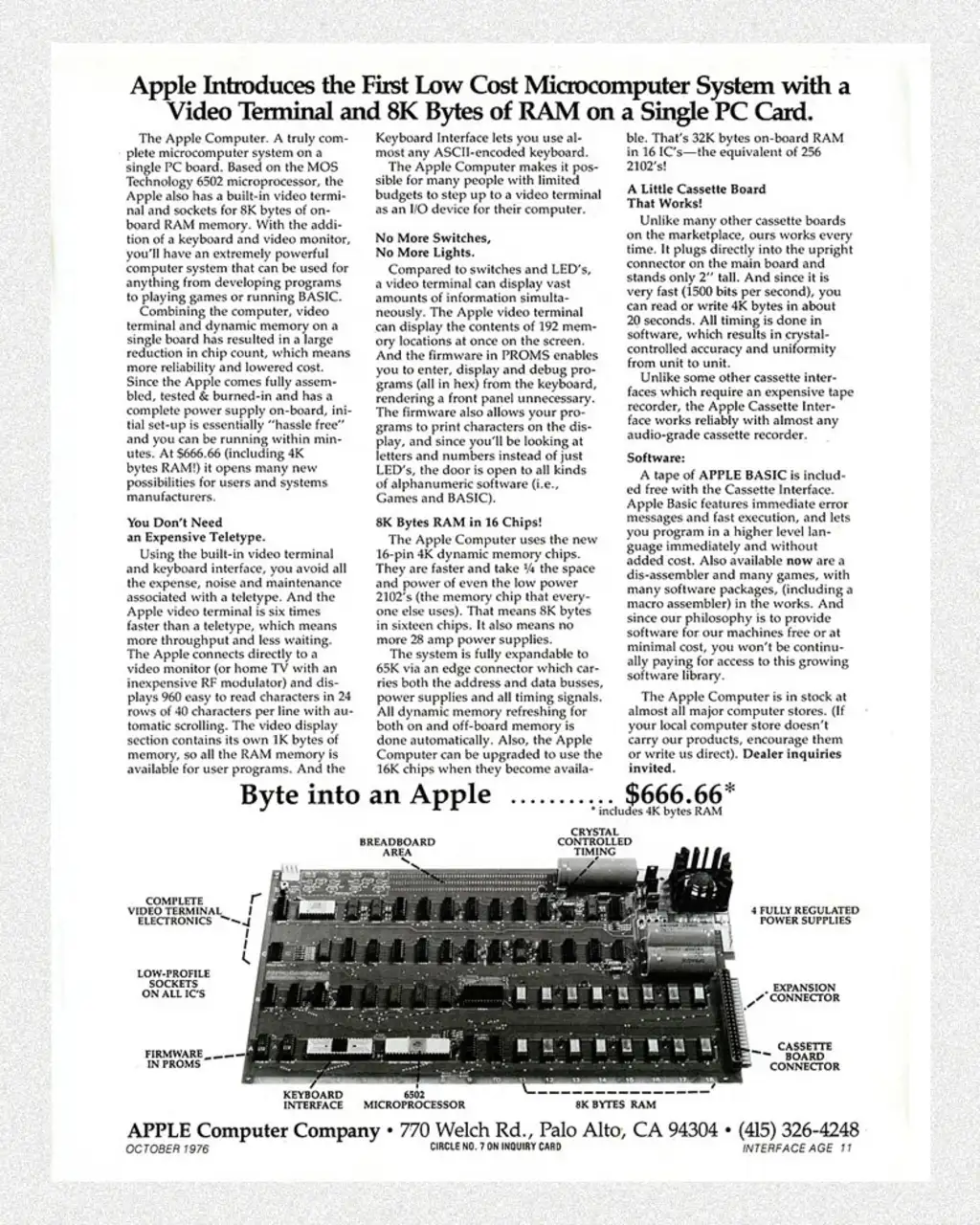
Kottke: When it was time to make the first Apple-1 flyer, Steve and I sat at the kitchen table and crafted the wording together, with him supplying the technical specs, written by hand on a yellow tablet. I never saw Steve using a typewriter, so maybe he took the handwritten copy directly to a typesetter.
Still shaken by his previous startup’s failure and uncertain about Apple’s prospects, Wayne quickly reconsiders his commitment. Twelve days after the partnership’s formation, he signs an amendment stating that he will receive $800 for his 10% ownership—though today he denies giving up his share.
Wayne: I was there at the beginning. I played a significant part. I was doing all sorts of work for them over a span of a few weeks. And that was about it as far as my involvement with them. But all along, from then to now, I still held and now hold, as far as I’m concerned, a 10% stake. I never sold my interest in Apple to anyone at any time for any amount of money whatsoever.
4. The making of the Apple-1
Contrary to conventional wisdom, Apple does not quite start in a garage. But as the company ramps up operations and begins assembling Apple-1 boards, it does rapidly take over the Jobs household in Los Altos, with the assistance of Steve’s parents, Paul and Clara, and sister Patty.
Fernandez: They had to form a company. That kind of happened in Steve Jobs’s bedroom.
Kottke: When the Apple-1 boards first arrived in spring 1976, they were all stacked in Patty’s bedroom, since she was living elsewhere. So really, Apple started in her bedroom, not the garage.
Fernandez: Woz did a lot of his work in his apartment or after hours in the Hewlett-Packard engineering lab, where engineers were allowed to do personal projects.
Wozniak also continues to demo and tinker with his machine at the Homebrew Computer Club, which leads to Apple finding its first user and first dealer. Gradually, the Apple-1 evolves from a kit for the nerdiest of electronics enthusiasts into a slightly more approachable product.
Felsenstein: [Wozniak] had two high school kids, his acolytes, Chris Espinosa and Randy Wigginton, accompany him.
Chris Espinosa, Apple employee No. 8, still at the company today as a tvOS software engineer: I couldn’t drive. Randy didn’t have a car yet. So Woz would drive us back and forth to Homebrew, and then we’d hang out in the Denny’s or Bob’s Big Boy in Cupertino afterwards.
Wigginton: We would carry his monitor and equipment up to the meeting for him to set up and use. He was a touch typist, and would type in probably 2,000 bytes of hex code before the meeting so that he could demonstrate Integer BASIC. Once he got the cassette working [for software storage], then he would just use that to read it in.
Loop: Woz was sitting in the corridor writing BASIC for his prototype Apple-1. And he came in for the sharing session to say he was building this new personal computer. I stood up and said, “I’m taking computers into schools.” So Woz came to me and said, “If I gave you one of my computers, would you take it into schools?” And I said, “Of course.”
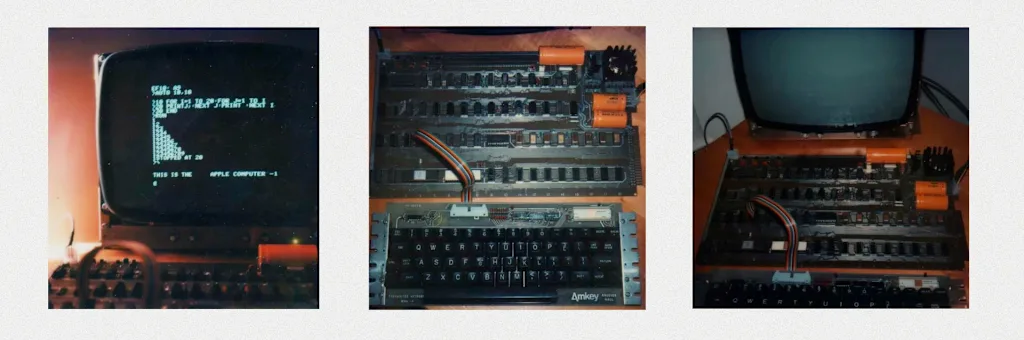
Wozniak: I had two principal interests in life. I told my dad in sixth grade that first, I was going to be an electrical engineer, and second, I was going to be a fifth grade teacher. So when [Loop] said she was taking computers into schools, I drove for two and a half hours with Steve Jobs to visit her in Cotati, California. And she explained that she’d gotten a grant for a minicomputer that she’d wheel into schools.
All the way back home, I pleaded with Steve Jobs to give her the first Apple-1. He wouldn’t do that. But he let me buy the first one for $300 so that I could give it to her.
Loop: He brought Apple-1 number one to the Sonoma County Computer Club. He had it in a pizza-like box. It was not literally a pizza box. And he opened it up, and here’s this motherboard. There was no case. I said, “Okay, what do I do with it? And he said, “Well, you get one of these guys to build you a case, and you get somebody else to build you a power supply. And I can give you the specs for the power supply.” So my computer club members came together and built the Apple-1.
I got in touch with the math teacher at Windsor Junior High School, who asked me to come and teach BASIC in his class. If you unplugged the power supply, you had to reload the operating system and BASIC from a cassette tape. It took 20 minutes to do that. I finally went back to Woz and said, “I really appreciate you giving me this computer, but I cannot use it in schools, and here’s why. It crashes too often, and has no battery.”
Paul Terrell, cofounder, the Byte Shop, the first chain of computer stores: Steve Wozniak was showing off his Apple-1 prototype at the Homebrew Computer Club. It was running in the foyer outside the auditorium, hooked up to a monitor and keyboard. I mentioned to Steve Jobs that I was interested in buying some of them. We made arrangements to meet at my Byte Shop computer store the following day.
When Steve Jobs came over, he wanted to know what kind of deal we could put together. I wasn’t interested in getting another kit product like his board. I was interested in getting a completely assembled and tested computer. I had a lot of potential customers coming in who wanted to buy a personal computer, but they wanted it already built. They didn’t have the ability to solder the components on it like some of the more electronic-technician-type customers that I had.
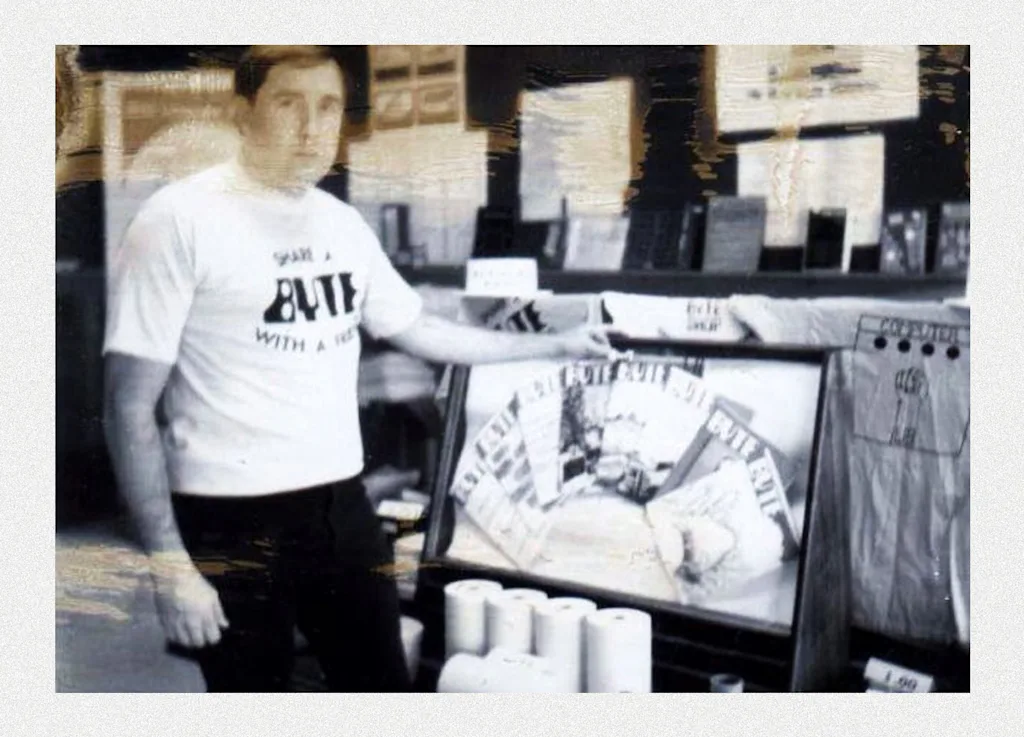
Wozniak: The Homebrew Computer Club was a community. But the store was an even bigger step. “They’re really willing to sell these, and maybe it’ll sell someday. Maybe we’ll even get our money back.”
Terrell: I ordered 50 units and offered them $500 a unit. So my purchase order was for $25,000, cash on delivery. They felt that they could build the computers in a 30-day time frame. And the standard terms of sales in those days was net 30 days. So they could go out and purchase component parts to build the computers and then within 30 days build the computers, deliver them to me, and have $25,000 to pay the distributors for the component parts that they needed to do that.
The computers Terrell ordered may have been assembled and tested, but they were still far from plug and play.
Wozniak: Paul probably wanted something you could pull out of the box and use, like today’s computers. But we had no money, no resources, no business experience.
So Steve worked out a deal. It was sort of an Ikea computer. You got the board with all the parts in it from us to put in your store. We’d put you in touch with people that had wooden cases, and you had to buy a keyboard and attach it. And you had to have a certain power supply from Radio Shack, and a monitor. Or a regular TV if you had a little modulator that would put the video on channel 3.
With Terrell’s promised payment, Apple can acquire parts and ramp up production. Soon thereafter, as it’s making its second batch of computers, a modest infusion of cash from Allen Baum’s father, Elmer—later Apple employee No. 34—also proves crucial.
Terrell: I was at a conference in Pacific Grove, and the person at the podium asked if Paul Terrell was in the audience. I raised my hand, and the person at the podium said, “You have a telephone call.” I was married and had four kids, and thought there must be a problem at home. It turned out that it was the corporate controller for Cramer Electronics calling me that Steve Jobs and Steve Wozniak were there with a purchase order for $25,000, and he wanted to know if it was valid or not. I told him that it was.
Baum: They didn’t have the money to actually buy the parts. They needed, basically, just a bridge loan. I don’t remember if I had to convince my father to do it, or I just said, “Hey, Dad, let’s do this—it’s a no-brainer.” We loaned them $5,000. They paid it off about a month later.
Once Apple has computers to build and orders to fulfill, the Jobs garage becomes a production facility.
Kottke: The day I arrived at Steve’s house, in June 1976, Patty was sitting on the couch watching TV while she plugged chips into Apple-1 printed circuit boards on the coffee table. Steve was paying her $1 a board. Steve offered me $3 an hour to do it instead—a cost reduction for him, since I could do more than three boards an hour.
Steve’s parents were so supportive. His mother was a wonderful lady who did payroll at Varian, the microwave company. His father was a machinist for Spectra-Physics, where he was making the spinning mirror balls for the very first laser barcode readers. He was a very prolific tinkerer, and emptied out all his stuff from the garage in support of his son to get started with the Apple-1.
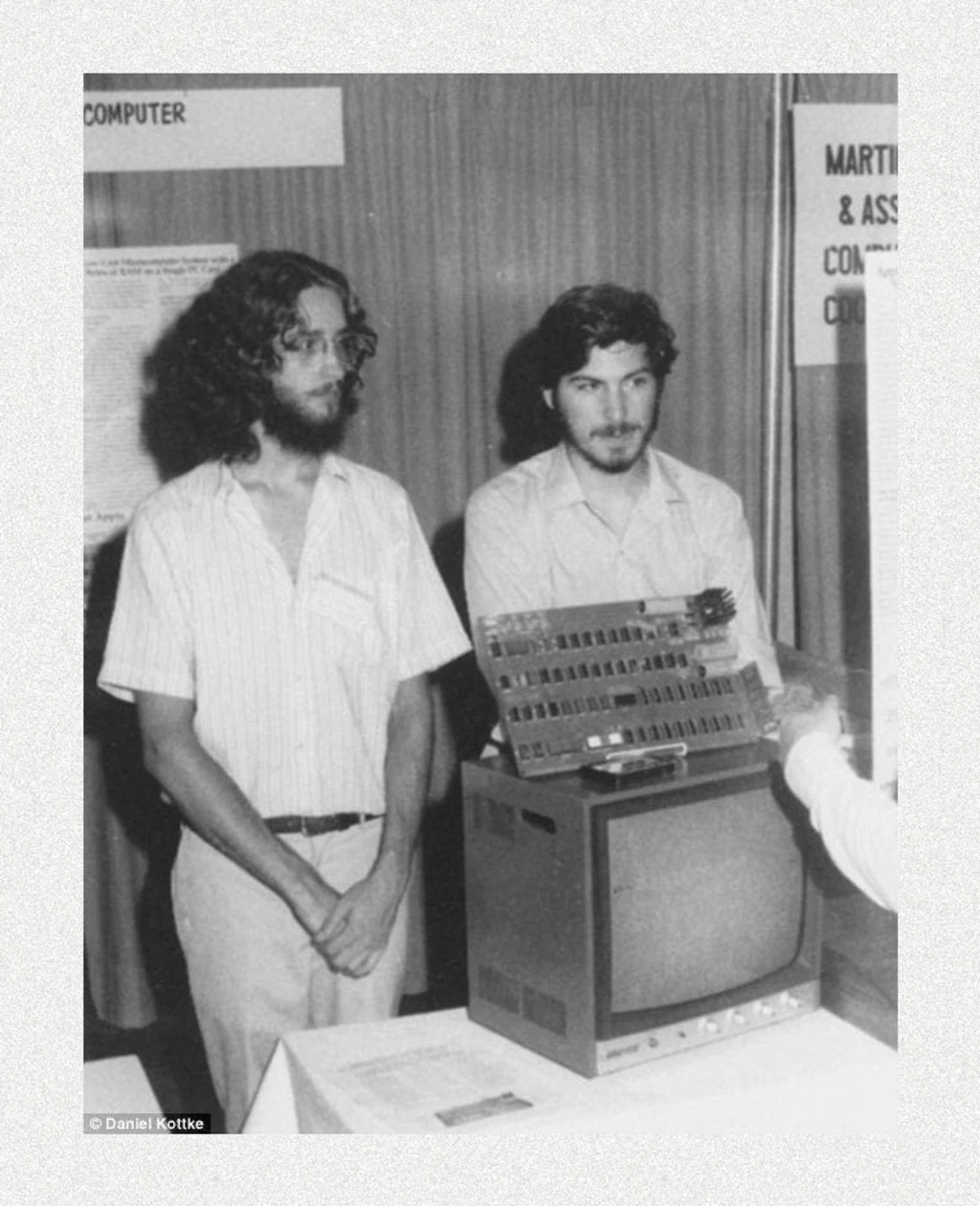
Baum: Paul’s hobby was rebuilding cars, so he had a lot of stuff he had to move out.
Kottke: I didn’t have to set up anything. The lab bench was there, and there was an oscilloscope and power supplies and monitors and so on.
Baum: Paul built a burn-in rack out of wood so that they could burn in the Apple-1s before they shipped them to make sure they worked. Before they shipped any, they were going to put them in boxes, and Steve wasn’t sure they would survive the postal service. So he put a board in a box, went out to the middle of the street, and threw it as high up in the air as he could. And it survived just fine.
Kottke: I slept on the couch the entire summer. I was pretty much the only person who worked in the garage. You’ve got to take care not to bend the pins and make sure the chip’s not backwards, and make sure the right chip is in the right socket. And there were like 60 chips on that board. When Woz came over, there would be a few boards that didn’t work, and he and Steve would look at them together and see if they could find the problem.
Woz still had a full-time job at Hewlett-Packard, and Steve was pretty much always on the phone in the kitchen. On the rare occasion when someone came to the house, they wouldn’t come to the front door. We left the garage door open a little bit. Somebody would knock on the garage door.
5. Serious business
The Apple-1 gets Apple up and running, but it doesn’t become a breakout hit, even by 1976 standards. It does, however, give the company enough momentum to start thinking bigger.
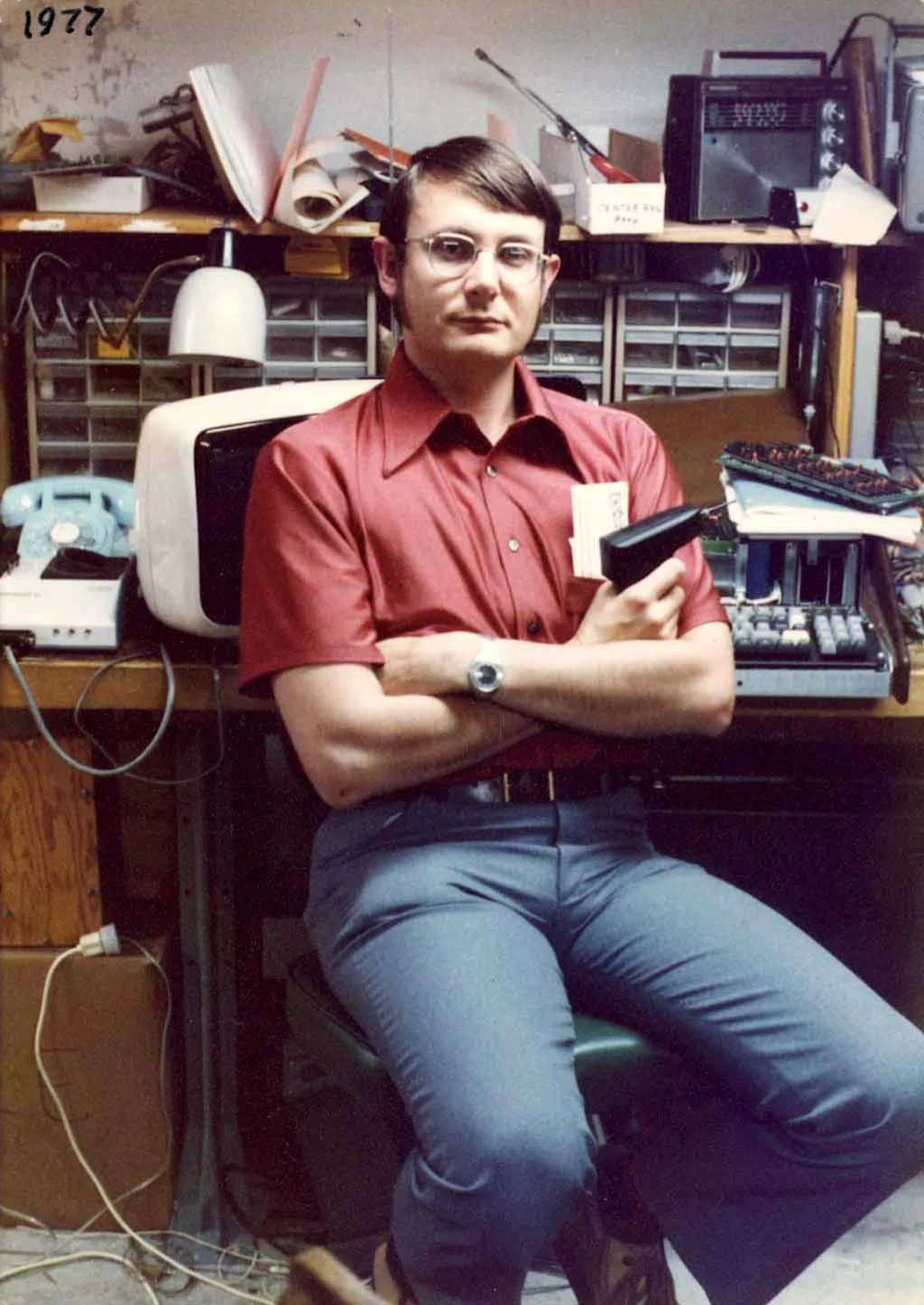
Felsenstein: In 1976, I was developing the Sol-20 terminal computer. [The Apple-1] could only display 60 characters a second, because of the architecture. It was uppercase only. It would never do graphics. I didn’t consider it to be a significant competitor to what I was working on.
Wigginton: People were amazed at how few chips it had. But it wasn’t exactly consumer-friendly, even for the nerds who were there. And there were lots of other computers.
David H. Ahl, founder, Creative Computing magazine, which began publishing in 1974: It wasn’t seen to be any more important than the SWTPC 6800, Heathkit H8 and H11, KIM-1, or Sphere 310.
Still, the Apple-1 gets some attention—including a February 1977 magazine feature by Kilobaud magazine’s Sheila Craven, née Clarke, “The Remarkable Apple Computer.” It’s the first article about Apple that’s more than a few paragraphs long.
Sheila Craven: I flew to San Jose, where the two Steves picked me up in a little truck. We tossed my bag into the truck’s bed and off we went to lunch, me with my camera and tape recorder. After lunch, I was driven to the garage. There was a workbench in a dark corner where sat a printed circuit board. Above that, a 13-inch TV perched on a shelf.
Jobs asked Woz to start it up. I think he probably joined two hot wires, and the TV screen flickered to some imagery. Okay, so what? Well, Jobs was so excited, and, while bouncing on his tippy-toes in his tennies, shared his dreams of the future of Apple Computer.
By the time the article appears, Apple’s future centers on the Apple II, which is already deep into development.
Wozniak: Even while designing the Apple-1, I had this idea in my head of a way to get color onto a television signal for free. But you’d have to design it from the ground up.
Fernandez: Jobs wanted the Apple II to be fully integrated—one unit, as much as possible. Very consumer-friendly from a purchase, operational, and visual standpoint. Woz always wanted to make things easy to use, so people were able to sit down, turn it on, and start running BASIC.
Terrell: Shortly after I got my first 50 Apple-1 computers, Wozniak was showing up in my Mountain View computer store with his Apple II design. It was going to be a color computer versus the [monochrome] Apple-1. Color monitors were very expensive in those days. They were being used in high-end applications like medical electronics. We had some, and Woz would come over and plug in his prototype and work with it.
Wozniak: Nobody in those days would’ve taken the computer into the home as a computer. It had to play games. Building the Apple II in color was a huge step.
As Wozniak engineers the Apple II, Jobs looks to give Apple’s brand a sheen befitting a far larger company.
Espinosa: [Jobs] aspired from the very beginning to be a Disney, to be a Mercedes, to be a Sony—to be an incredibly respected brand from day one.
Kottke: When Steve was looking for an ad agency, he was flipping through some computer mag looking at ads and came across an Intel ad that had colorful graphics with some kind of flowchart imagery. He just called Intel asking for the marketing department, and managed to get the referral to Regis McKenna, who’d come up with the ad.
Regis McKenna, founder, Regis McKenna Inc.: He heard “Regis McKenna” and thought that there was a Regis and a McKenna.
Kottke: Regis turned Steve down at first.
Bob Martinengo, Apple employee No. 21: My mother, Gloria Martinengo, worked for Regis McKenna. She was the office manager and was tasked with keeping Steve at bay.
McKenna: I didn’t turn them down. But I had so much work. Steve kept calling me, and he became insistent on talking. He and Woz came to see me. They were in Birkenstocks and beards. It’s not that they were strange. The tech industry has always been sort of strange.
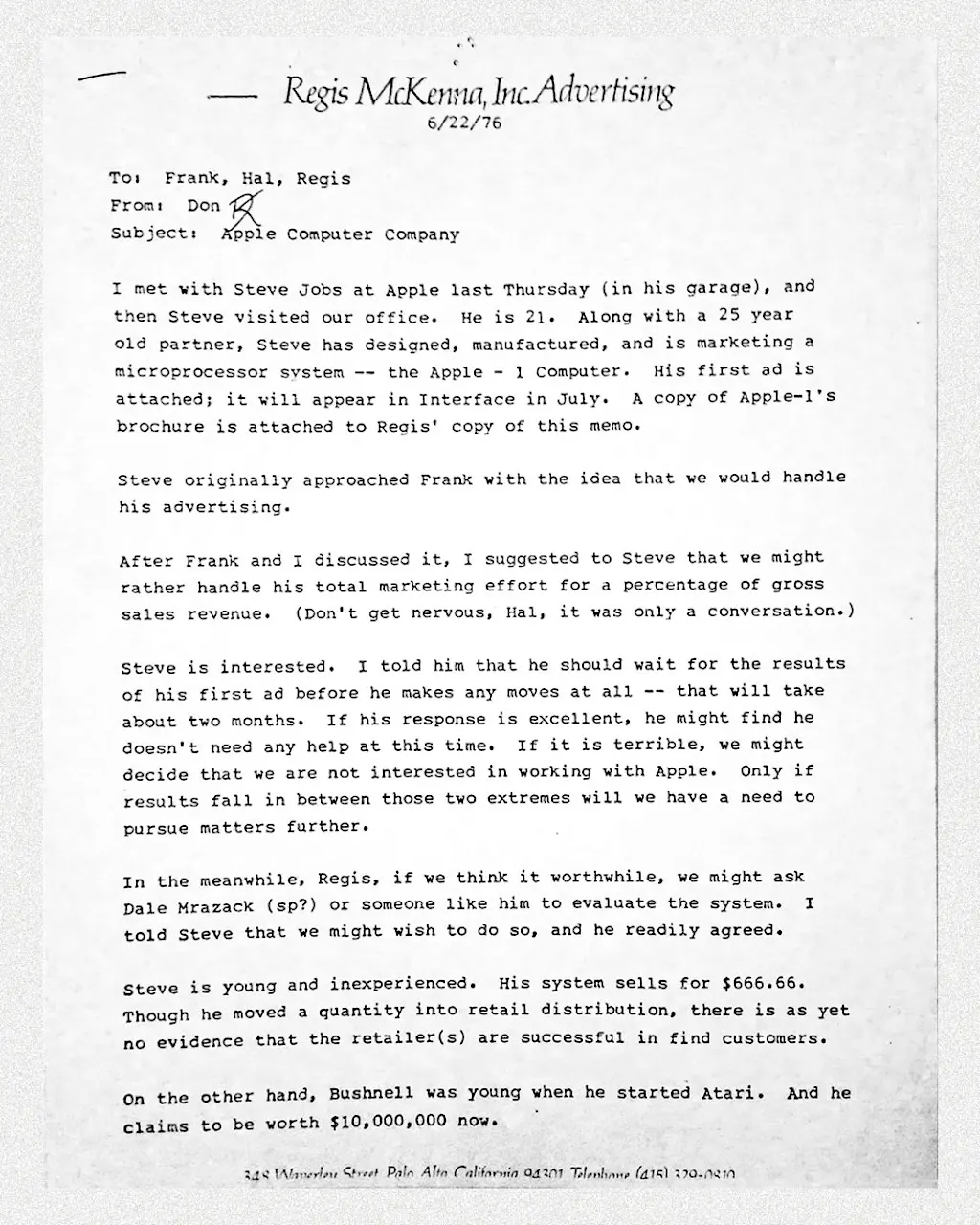
Woz had written an article on the Apple II, and he wanted it placed in Byte magazine. I had long conversations with Steve about that, because Byte was more for hobbyists, and I thought he wanted to expand to different audiences, maybe consumers. And that’s really when Steve started perking up.
Even after McKenna agrees to take on Apple as a client, it isn’t obvious how to market a computer to the masses.
Terrell: Apple was positioning their Apple II computer to become a personal computer rather than a hobby computer.
McKenna: The Apple II was different than Tide. Steve and I talked about someday having Apple stores. That was a natural, because we were going to get into the consumer business, and it was going to be cheap enough and reliable enough. I thought, Well, people are carrying their own tape recorders and typewriters and everything else now.
Courting the investors whose money Apple needs to bring the Apple II to market proves even tougher than getting McKenna on board.
Kottke: When Steve was in New Jersey for the Atlantic City show [PC ’76], I brought him up to New York. He stayed overnight at my parents’ house, and I took him into Manhattan to meet my uncle, who was a big bigwig banker. Steve is giving my uncle this pitch that we’re looking for funding for this computer startup company, but he had really no demo. We had a one-page flyer, and that was it. My uncle was very polite and said, “Okay, we’ll get back to you,” which he never did, of course.
Both Bushnell and McKenna remember brokering introductions between Apple’s founders and Don Valentine of Sequoia Capital. However the meeting transpires, Valentine is skeptical about what he sees.
Bushnell: One of my major regrets in life was turning down a third of Apple Computer for 50 grand. I had the money, but I didn’t think that Jobs could succeed as a CEO. But I introduced him to Don Valentine. He was probably the most important mentor that I ever had, and was on my board.
McKenna: Don hired me at National Semiconductor, and we became very close friends. Don could be terse and he could be insulting. But he was very bright.
Bushnell: Don had the ability, in the Socratic method, to ask me a question that I couldn’t answer. And the minute I heard the question, I knew that I should know the answer. As a result, I used to cram before the board meeting. I’d say, “That bastard’s not going to get me this time.” And he always would.
McKenna: I sent Steve and Woz to see him. He called me back and he said, “Why did you send me these renegades from the human race?”
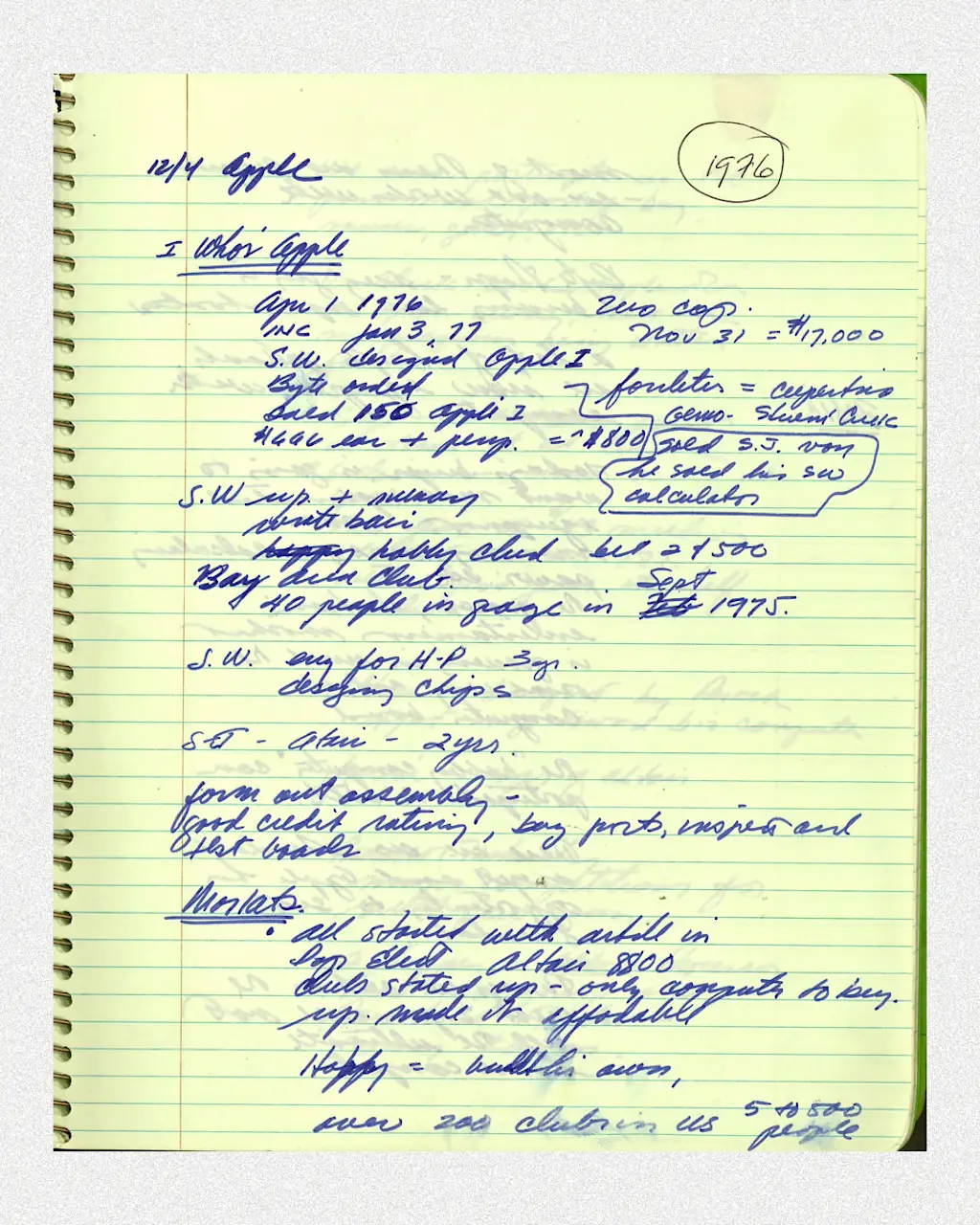
Unconvinced that Apple is investment-worthy, Valentine suggests that Jobs and Wozniak seek advice from Mike Markkula, a 33-year-old early retiree from Intel. After visiting the Jobs garage and seeing the Apple II in prototype form, Markkula gradually turns from adviser to partner. He invests $91,000 in Apple, guarantees a $250,000 loan, and convinces Wozniak to quit his HP job. On January 3, 1977, Apple incorporates, with Markkula as chairman.
Wozniak: Mike Markkula came in. He invested enough money to make a thousand Apple IIs. He believed there was a vision.
Mike Markkula: What struck me immediately was that Steve Jobs understood how to package advanced technology for the next generation of consumers, while Steve Wozniak had already demonstrated extraordinary technical creativity. I was watching two hobbyists rapidly evolve into world-class innovators and future cornerstone employees.
Equally memorable was the team itself: brilliant, demanding, unrefined, sometimes difficult, but relentlessly focused on building the best, most reliable product, with the most intuitive user interface. My entire professional life had been centered on microcomputing and semiconductor technology, so I recognized immediately where this was headed. The technical foundation, market timing, and team capability all aligned. It was one of those rare moments where the trajectory was unmistakable.
Espinosa: The thing that got Markkula engaged was that he was one of our customers. He wanted [an Apple computer] for himself. So he wasn’t just the marketing guy or money guy or venture capital guy. But he also had worked at Intel. He knew people in the industry. He was highly respected.
Terrell: He came in and wrote the business plan for Apple. He also talked his friend Mike Scott into coming on board as the president of Apple. The two of them became the management. Woz, of course, was always the engineering guy. And Steve Jobs took on the role of marketing.
Espinosa: Everybody talks about the two Steves, but the two Mikes made it a company.
The growing startup finally inspires confidence in investors other than Markkula. In January 1978, Arthur Rock—a founding father of venture capital in the 1950s who’d helped catalyze Fairchild Semiconductor and Intel (Markkula’s former employers), puts in $57,600. The round also includes funds from the Rockefeller family’s Venrock Associates and Valentine’s Sequoia.
Arthur Rock: The people looked like winners.
6. Hello, Apple II
In 1977, as Apple finishes designing the Apple II and brings it to market, the new machine becomes part of a wave of user-friendly personal computers—and goes head-to-head with Tandy/Radio Shack’s TRS-80 and Commodore’s PET 2001.
Jonathan Rotenberg, who cofounded the Boston Computer Society in 1977 at age 13: Prior to 1977, the only person who could realistically buy a personal computer was a very skilled engineer ready to undertake a homebrew project. With the Apple II, TRS-80, and PET, any nontechnical consumer could now buy a real computer, plug it in, and have it work. That may seem so obvious today. But it was world-changing at the time.
Steve Leininger, who designed the TRS-80: My chore, and that of Steve Wozniak and [Commodore PET designer] Chuck Peddle, was to provide all of the parts in one device. The list looked something like this: a keyboard, a video display, the microprocessor, RAM, a programming language (BASIC was our go-to at the time), a power supply, and usually a cassette tape interface for which there were few real standards at the time, so each machine had its own design.
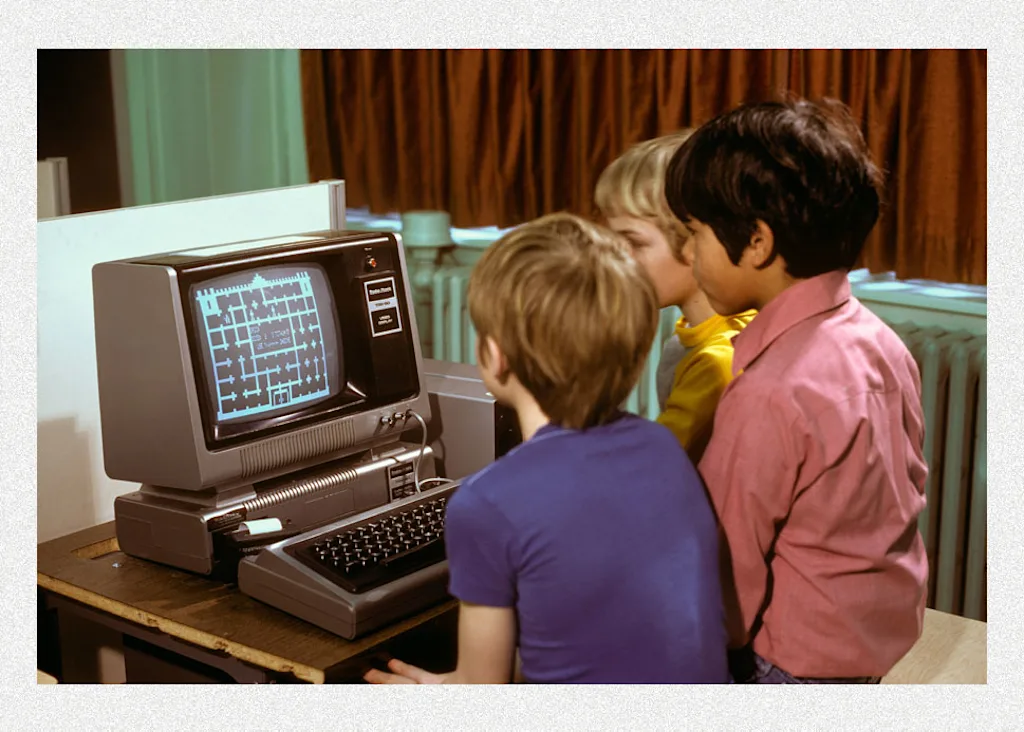
Ahl: Probably the biggest factor was that two of the three computers were brought out by well-established companies, Tandy and Commodore.
Wozniak hasn’t forgotten about the flaky Apple-1 that Liza Loop had deemed unusable for education. His quest to get her a working computer leads to her becoming one of the first Apple II users.
Loop: For five to seven months, [Wozniak] had the Apple-1 and was trying to fix it. Then he said, “I have something else for you.” He sent the Apple II, serial number 10. When I said, “What do I do with that?” he said, “It’s another motherboard. You just unscrew the Apple-1 from the case and drop in the Apple II, and all the cards will work in it.”
One of the Apple II’s defining features, however, is that it will come in a slick custom case of its own. Though no longer an active partner, Ron Wayne pitches in.
Wayne: Jobs asked me to design the enclosure for the Apple II. He failed to tell me that they had come upon a stack of money, and I thought that they were, as I had met them, two kids without two nickels to rub together. So I came up with a design that required no tooling whatsoever.
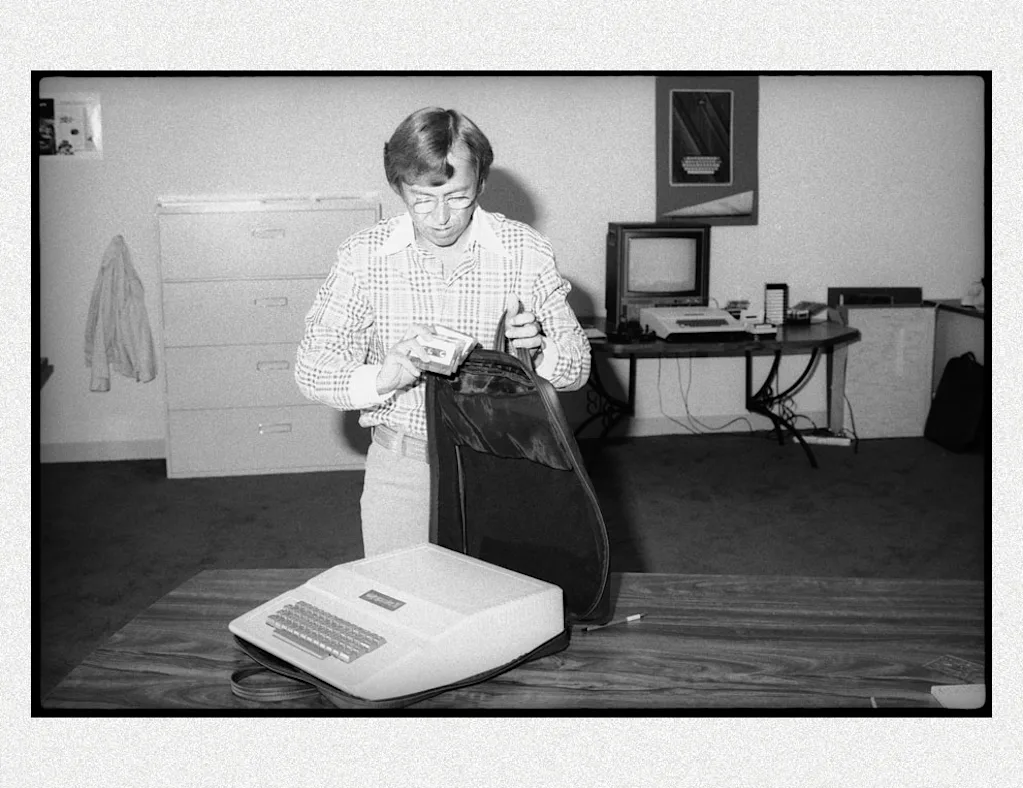
I set the circuit board logic electronics horizontally and put an integral keyboard into the cabinet itself. I designed it so that a monitor would sit on top, so it was monitor, keyboard, and circuit board, all in one cabinet, getting rid of all those external wires.
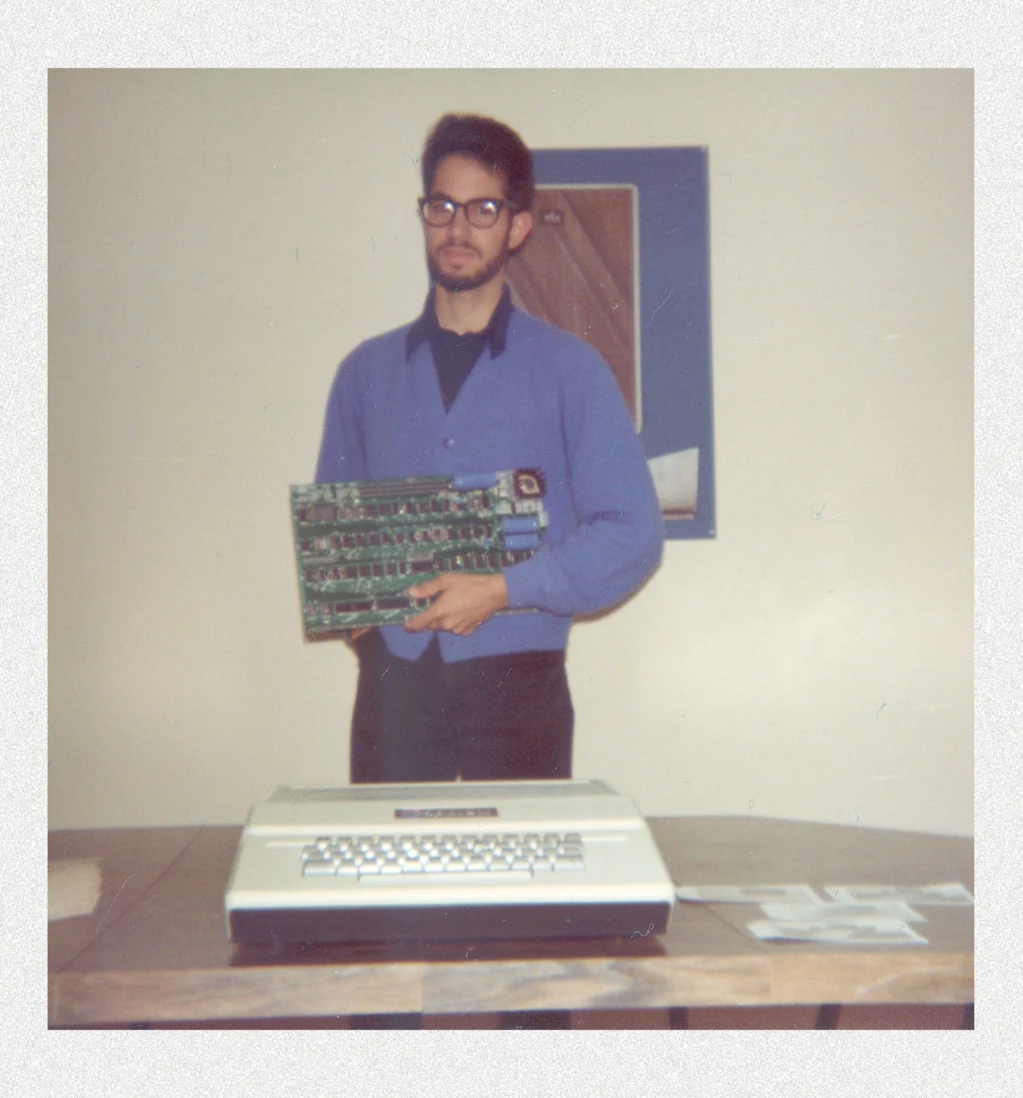
Fernandez: I remember being outside of Jobs’s bedroom in this little hallway. There were three renderings up on the wall that Ron Wayne did of potential cases for the Apple II. Jobs was always picking at little details: “What is this for? What do you want this for?” And I remember one of them had an escutcheon and it had some little mechanical detail, a shape or something, and Jobs says, “What is that for?” And Ron Wayne says, “It legitimizes my escutcheon.”
[Wayne’s case designs] were all beautiful, but Jobs wasn’t satisfied. He eventually cast about and found this freelance industrial designer who had been at Hewlett-Packard and had set up his own design shop. That was Jerry Manock, who ran Manock Comprehensive Design. He’s the one who designed the case that Jobs was satisfied with.
Manock’s case accommodates seven slots for add-ons such as input-output cards, extra memory, and storage—making it more readily expandable than the TRS-80 or PET—and an advanced power supply. The Apple II also comes with BASIC burned into ROM, eliminating the need to laboriously load it from cassette tape.
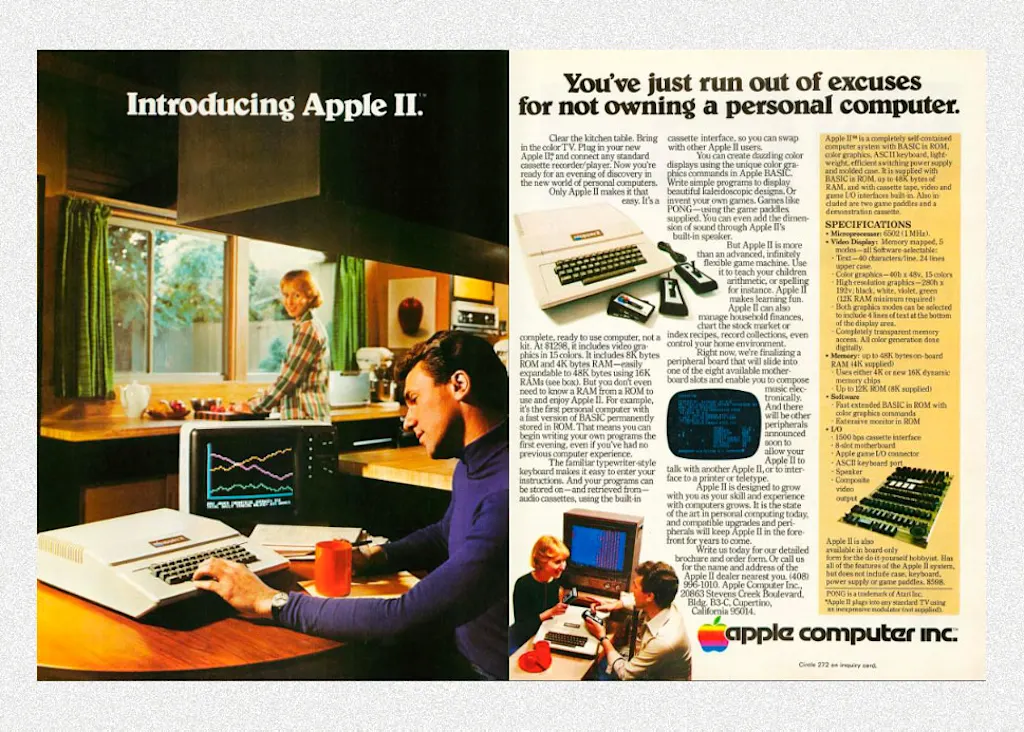
Baum: One of the things that made the Apple II compelling was you could plug boards into it, which Steve Jobs didn’t want at all. I’m the one who suggested the way of doing that to Woz—how the slots were decoded and the ROM driver built in and the chip to use to decode it. All because somebody had come out with this new chip which was absolutely perfect for this kind of thing.
Leininger: I liked the Apple case. Jealous, actually. The expansion slots were a nice addition.
Fernandez: Jobs had been talking with Rod Holt, the engineering manager at Atari [and later Apple employee No. 5]. He designed a switching power supply for us that used a small amount of circuitry and was highly efficient, so it generated very little heat and didn’t need a big transformer. It was very small, very light, very cool running, inexpensive to make, and could be put in this little box that we could screw into the Apple II case.
Espinosa: I was sitting there in the Byte Shop in Palo Alto on an Apple-1 writing BASIC programs, and this guy with a scraggly beard and no shoes came in and looked at me and conducted what I later understood to be the standard interview, which was “Who are you?” I said, “I’m Chris.” And he said, “What are you doing?” I said, “I’m writing BASIC programs on this Apple-1 for the owner.” And he said, “Are you any good?” I showed him my BASIC programs on the Apple-1.
He told me, “I’ve seen you around Homebrew. Woz is working on this second-generation computer, and instead of loading BASIC from cassette tape, we want to put it in ROM. And so it has to be perfect. I want you to come and test Woz’s BASIC, and I’ll give you 4K of RAM for that when you build your own computer. ”That sounded like a good deal. Steve Jobs’s idea back then of recruiting was to grab a random-ass 14-year-old off the streets.
The Apple II also represents the debut of McKenna’s firm’s single best-known contribution to the Apple brand: the familiar, rainbow-striped apple.
McKenna: One of the guys who worked for me, Tom Kamifuji, was an artist who did kabuki figures in multiple colors all through that psychedelic age in the ’60s. He came over when [designer Rob Janoff] was working on [a logo]. Basically he drew the apple with a bite in it, and he put the name of the company, Apple, halfway in. Tom says, “That needs some color,” and so he stripped in all the colors.
The next thing was to sell it to Steve. I showed it to him for the first time on my kitchen table, and he loved it. He said—and this is, again, him thinking ahead—“We’ve got to be able to print that on metal.” And so we had to find a metalworking shop and get them to print it out.
It represented vitality and life. It certainly caught everybody’s attention.
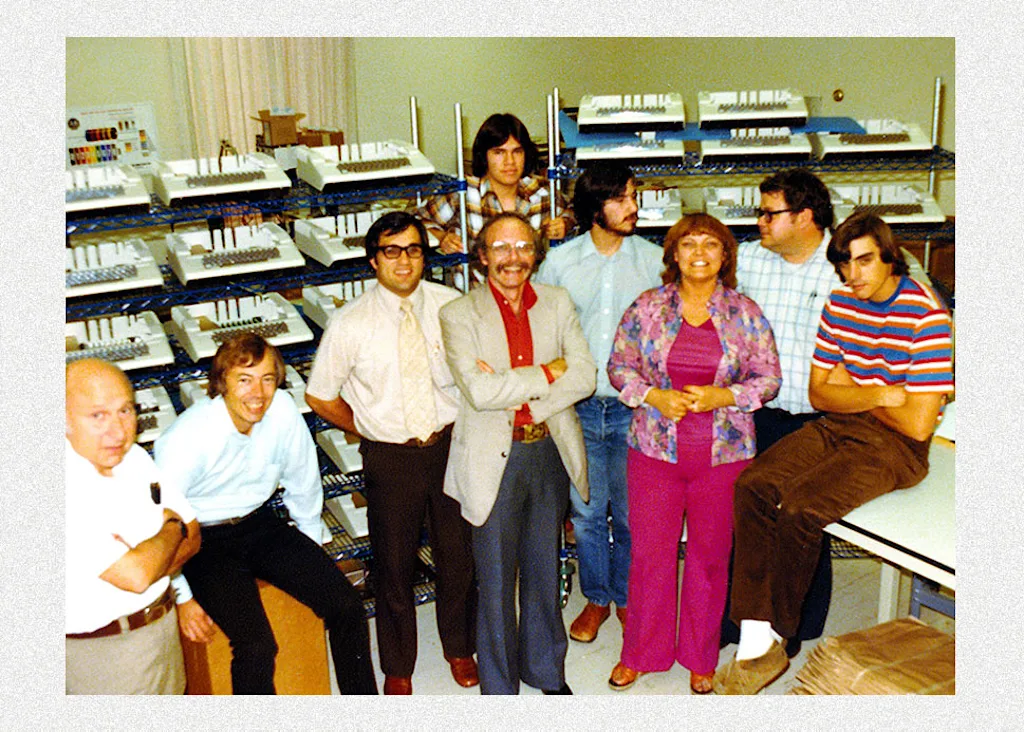
As the Apple II nears production, Apple finally proves too big to run from the Jobs home and Wozniak’s apartment. It moves into its first corporate headquarters, in a Cupertino office park on Stevens Creek Boulevard.
Martinengo: I started at the original office, not the garage. It was extremely modest. We’d assemble the Apple IIs and put them on these racks—the kind you would have in a bakery.
Mark Johnson, Apple employee No. 13: The first room was all business, and the back room was testing and final assembly. At first, we were only producing 13 units a week.
In April 1977, Apple shows off the still-unreleased Apple II at the first West Coast Computer Faire in San Francisco. Memories vary on how much of an impact it made.
Ahl: They got their share of attention, but no more or less than any of the other exhibitors. Their display was nice, but didn’t stand out.
Espinosa: I worked the booth. I was there in my three-piece rust-brown Levi’s panatela suit, wide-wale corduroy. I mean, it was 1977.
It was a huge splash. We secured a double booth right at the front entrance. We weren’t two guys at a card table anymore. We had these giant Lucite signs, “Apple Computer Inc.,” on three sides of the booth elevated up high, and it just looked sharp. Markkula had worked with Regis McKenna’s exhibits group to put together something that looked like we had a million bucks behind us, when we actually didn’t yet.
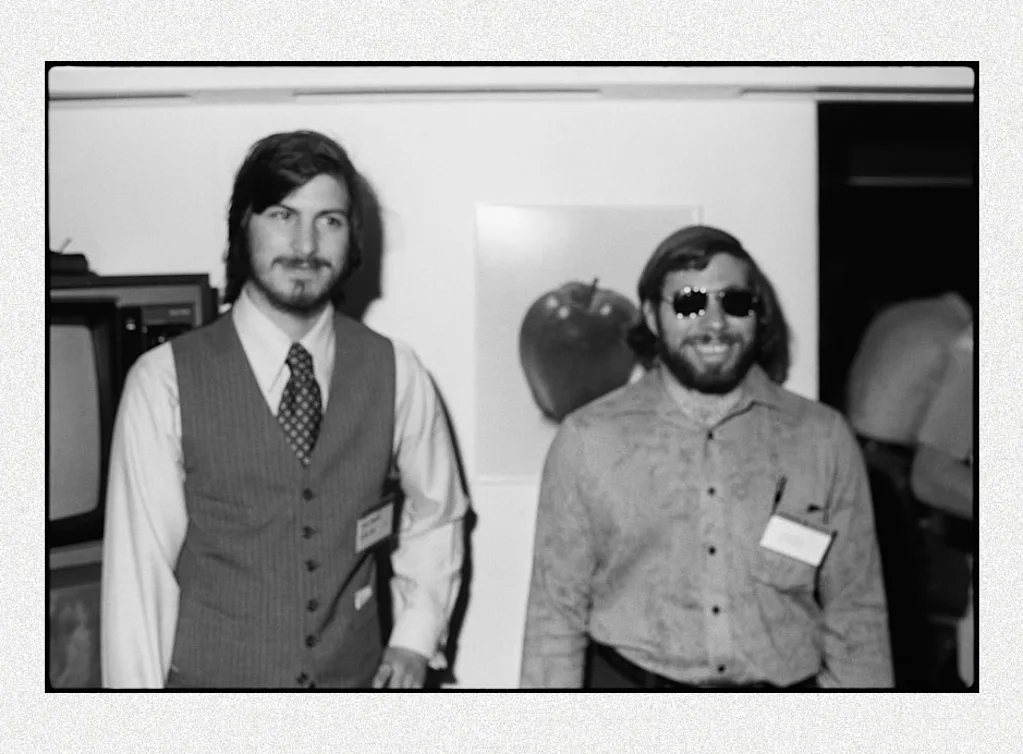
Felsenstein: The Apple booth had a color projection display. Nobody else had that. There was a crowd around it all the time.
It was very clear to me that what they were making was a media machine, which no one else was doing. They wanted something that would sort of give the user the equivalent of television, and the ability to program for it.
Markkula: I advocated for the use of color graphics displayed on standard consumer television sets as the primary interface, a radical idea at the time that dramatically lowered cost and expanded accessibility.
Wozniak: Basically, I said, “The computer has to be fun, or else nobody would want it.” That’s even why I wrote the BASIC language. Young people had to be able to write their own programs and move things on a screen.
7. Enter the killer app
The Apple II ships in June 1977, but is dependent on balky cassette storage. A year later, Apple beats other computer manufacturers to market with its first floppy disk drive. The company closes out the 1970s on a high note when the most important piece of personal computer software released thus far debuts on its computer.
Wigginton: We had a party up at Mike Markkula’s. I think it was our first $250,000 quarter. In other words, we’d shipped over 250 Apple IIs.
Growth prompts the company to relocate again, just a year after moving into its first real headquarters.
Johnson: It was just half a mile down the road from the old Stevens Creek office to the new Bandley Drive office, which was massive. We played Frisbee in it.
Wigginton: It seemed to be going well. But the big inflection point was the disk drive, that’s for sure. Without those, the Apple II would’ve been a fun hobbyist machine for people like me, but it never would have gone into the classroom or all the businesses that it did.
The first thing about the cassette drive is it’s slow. Secondly, you can’t really find things. Imagine an old mixtape. How would you ever find the Donna Summer song that you wanted? You would forward 10 minutes in and try and find it.
Kottke: There was, I would almost call it, a fatal error in Woz’s cassette interface. He should have put in a couple of LEDs to say if it was too loud or not loud enough. Because if you’re swapping tapes between players, you could get all the way through the loading process and it would fail.
Wigginton: The floppy allowed actual bulk storage, so you could boot up and have a full program loaded into memory and running.
Wozniak: Apple was going to be allowed into the Consumer Electronics Show in Las Vegas. I’d never been there, but anybody who read stories about the great new things introduced in televisions and hi-fis wanted to go to CES.
Apple was only going to send three marketing people. I’d never done any work with disk hardware or software in my life, but I raised my hand and said, “If we have a floppy disk drive in two weeks, can we show it at CES?” Mike Markkula said, “Yes.”
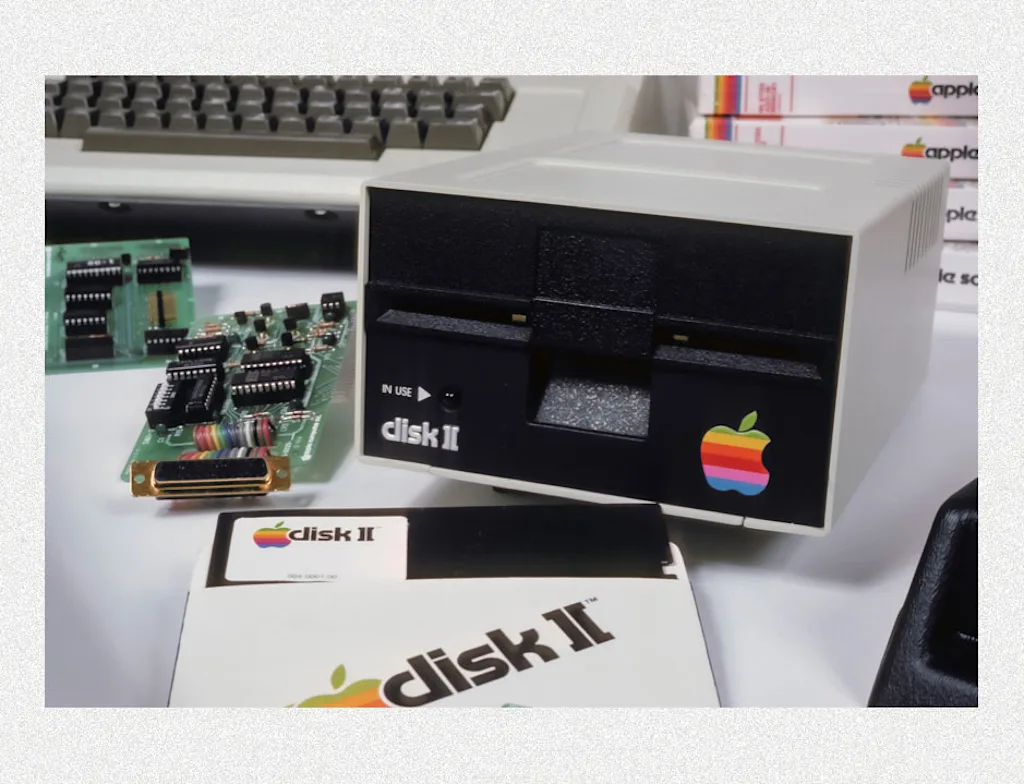
Bushnell: Computers are little transmitters. And so in order for us to sell the Atari 800, we felt we needed to pass FCC [Federal Communications Commission] inspection. Woz, in his brilliance, was able to get the floppy disk drive to work on the Apple II in three days. He pulled two all-nighters, and put [the interface] onto a board that fit into one of the slots. It took Atari a year and a half, but Apple couldn’t pass the FCC on its best day. We did it right, but they did it smart.
Wigginton: We launched the drive at CES in January of ’78. Most people didn’t even know what the heck it was. Those who did would look at it and say, “Well, where’s the rest of the drive?” Because there were a bunch of wires sticking out from the drive that weren’t connected to anything. We had basically bypassed a lot of the integrated circuits that were on the drive.
Wozniak: That was one of the neatest designs in my life.
Felsenstein: I was shocked to see how few chips there were on it. Everybody else knew what a disk controller board had to have, and their thinking was constrained by that.
With the floppy drive’s arrival, it becomes practical to distribute and run more sophisticated Apple II software—a crucial element in making the computer broadly useful.
Bushnell: Nobody buys hardware. They buy software, and they reluctantly have to buy the hardware to run the software. And the killer app was the spreadsheet.
That spreadsheet is VisiCalc, which Dan Bricklin conceives as a student at Harvard Business School and then turns into a product in collaboration with Bob Frankston. It ships for the Apple II—and only the Apple II—in October 1979.
Dan Bricklin: My finance professor looked up from his Fortran listing and said, “Dan, there already are financial forecasting tools. Why would anybody want yours? But I have a second-year student named Dan Fylstra who is working with personal computers. He’ll tell you why real estate agents won’t buy a personal computer to use your thing.” And the rest is, well, history.
Fylstra’s firm, Personal Software, signs a deal to publish Bricklin and Frankston’s software.
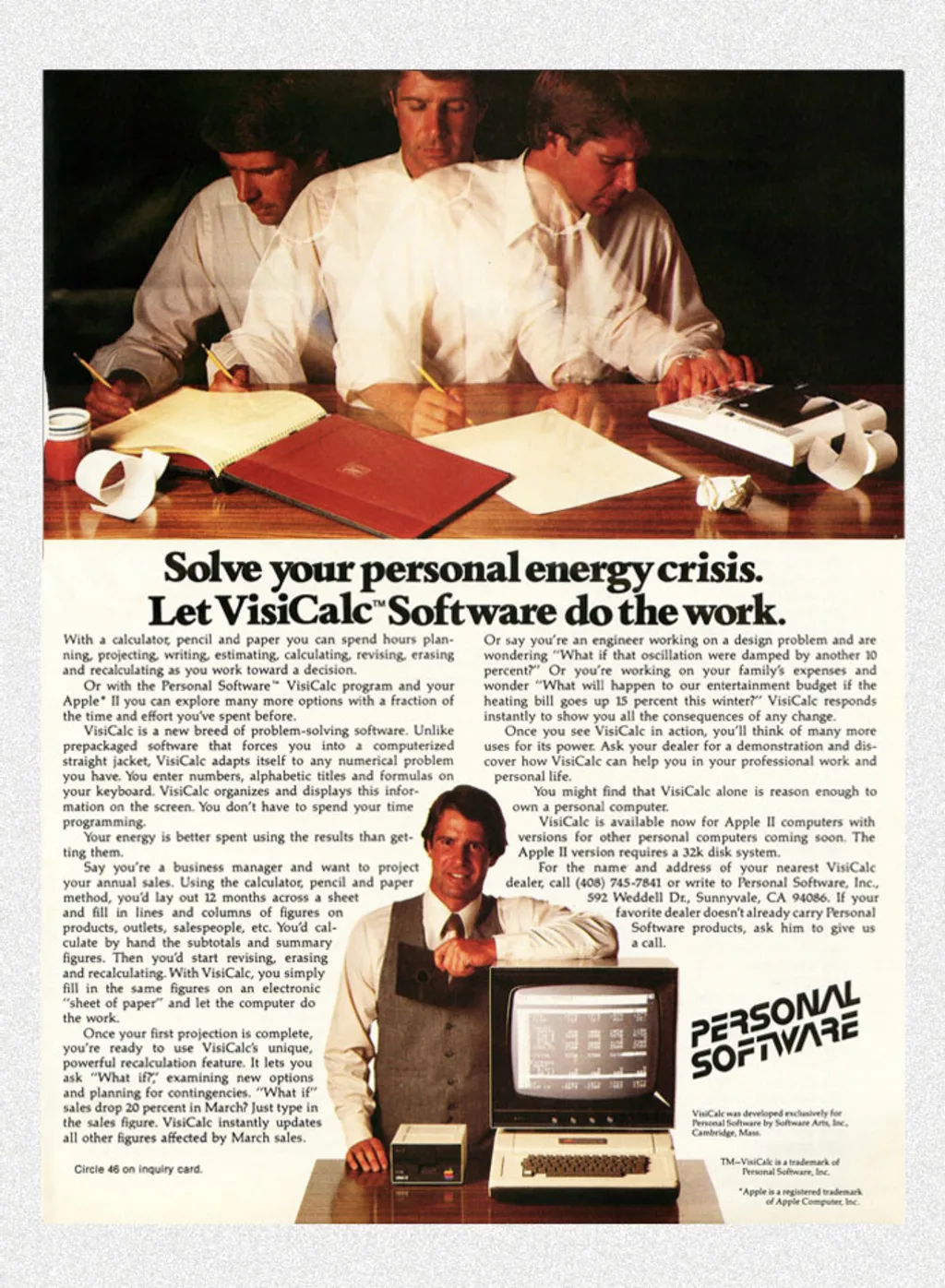
Rotenberg: Dan Fylstra started advertising it in all the computer magazines months before it was introduced. They ran 1/8th-page ads that just said: “VisiCalc: How did you ever do without it?” I started asking at a Boston Computer Society meeting: “Hey, does anyone know what VisiCalc is? They’re running ads everywhere.”
Some guy in front of me turned around and said: “Yeah, I wrote it!” It was Dan Bricklin. The next week, I went to Dan’s apartment in Arlington to get a demo. It was amazing.
Bricklin: There were three machines to deal with, and we had to choose one of them to do first.
Daniel Fylstra: There’s a slightly humorous reason, and a real business reason, why VisiCalc came to ship first on the Apple II. At the time we had just one Commodore PET, one Radio Shack TRS-80, and one Apple II at Personal Software. But we were using the PET and TRS-80 to duplicate cassettes for software products we were already shipping, while the Apple II was relatively free. So I could allow Dan Bricklin to “borrow it”—we never got it back—and take it home to prototype his ideas for the spreadsheet.
The real business reason was that Apple was first to introduce, and ship in volume, a disk drive for the Apple II, as well as more RAM than 4 KB, and we were convinced those would be key capabilities for business use.
Bricklin: The other reason is that Bob Frankston knew how to program the 6502 [the Appple II’s processor], because he’d worked at a company in the Boston area called ECD that made a personal computer. It was basically a board, but it was very, very capable.
Bob Frankston: The reason for the choice of the Apple II was simple—Apple had cornered the market on floppy drives. It was a fortunate coincidence that I had had extensive 6502 experience at ECD.
Bricklin: A lot of people bought the Apple II to play Space Invaders, but they used VisiCalc as the excuse to buy it.
Frankston: The dealers had no idea what VisiCalc was. But accountants would come in.
Bricklin: It ended up taking about a year before VisiCalc came out on all the other machines.
Rotenberg: What most people don’t realize is that the Apple II was not the most popular personal computer in 1977-1978. VisiCalc stimulated the sale of hundreds of thousands of Apple IIs into business. You had to buy an Apple II in order to use VisiCalc. It was wildly popular in financial forecasting, budgeting, and finance. It absolutely revolutionized public accounting.
But if Dan Bricklin had decided to develop VisiCalc for the Radio Shack TRS-80 or Commodore PET instead, it’s not clear that Apple would have had enough critical mass to survive as a mainstream personal computer company.
Markkula: It transformed the computer from a hobby device into a practical business tool.
8. 50 years later
Trying to connect every dot between Apple, the tiny, dirt-poor 1970s startup, and Apple, the $3.7 trillion 21st-century global colossus, is impossible. But this much is clear: The company has always been at its best when its original quirky humanity and willingness to be an outlier shine through.
Johnson: I was in Cupertino just yesterday. It’s totally different. They own Cupertino now.
Rotenberg: People want to hate Apple, because it is big and powerful. But Apple has an underlying moral purpose that is immensely deep and expansive.
Espinosa: Markkula gave everybody who arrived in ’78 and ’79 this one-pager he wrote on the Apple marketing philosophy, which was three points. One was empathy for the customer, which you can still see in Apple’s values. The second was ruthless focus—do fewer things better, which you can also see in our company philosophy today. And the third was impute value. Do everything well—not just the product, but everything related to it.
Markkula: The culture mattered. People were there for the right reasons—to build something transformative—not just to make money. That alignment produced extraordinary results.
Martinengo: They’re not perfect, but it does seem like they still strive for that. It’s not just window dressing. It’s better than “Don’t be evil,” right?
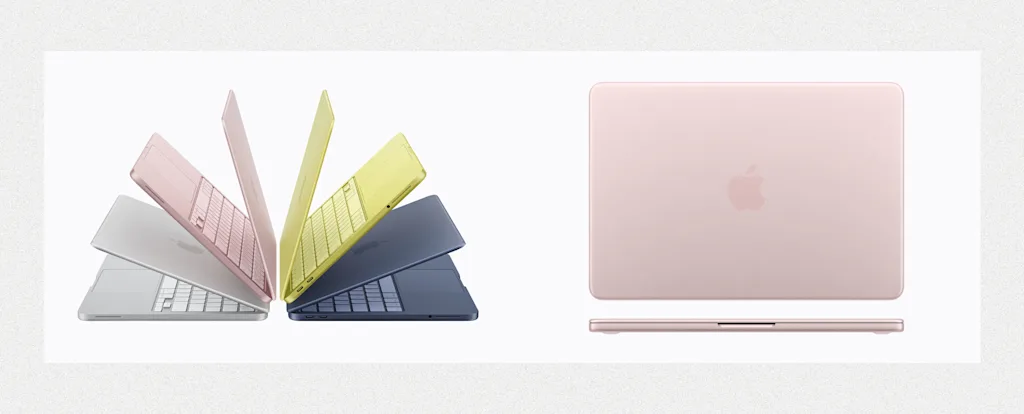
Espinosa: I bought a new iPad yesterday. Just unboxing it with the zip strips and not having to get scissors out and cut through shrink wrap—that goes back to Markkula’s original memo. And I’m over the moon about the MacBook Neo. It’s the culmination of what we started out to do in ’76, and it’s a straight line.
Wigginton: The initial DNA of Apple was very much one of happiness, of trying to help other people. And I think if you fast-forward to today, you still see that focus on individual people.
Wozniak: Everything you do in life should have some element of joy in it. Even your work should have an element of joy.
Felsenstein: For the first couple of years, it was relatively chaotic, but they had a product that could survive that. And they had Jobs. They had a design-oriented and marketing-oriented person there who was in charge. That’s why I’m looking at an Apple Macintosh today and not an IBM anything.
Espinosa: We tried with the Macintosh to be the alternative to the IBM PC in business. That generated billions of dollars for us, but billions of dollars as the alternative. There’s always room for an alternative. And we’ve usually played that, because better necessarily means different.
Wozniak: When you’re about to die, you have certain memories. And for me, it’s not going to be Apple going public or Apple being huge and all that. It’s really going to be stories from the period when humble people spotted something that was interesting and followed it. I’ll be thinking of that when I die, along with a lot of pranks I played. The important things.


