





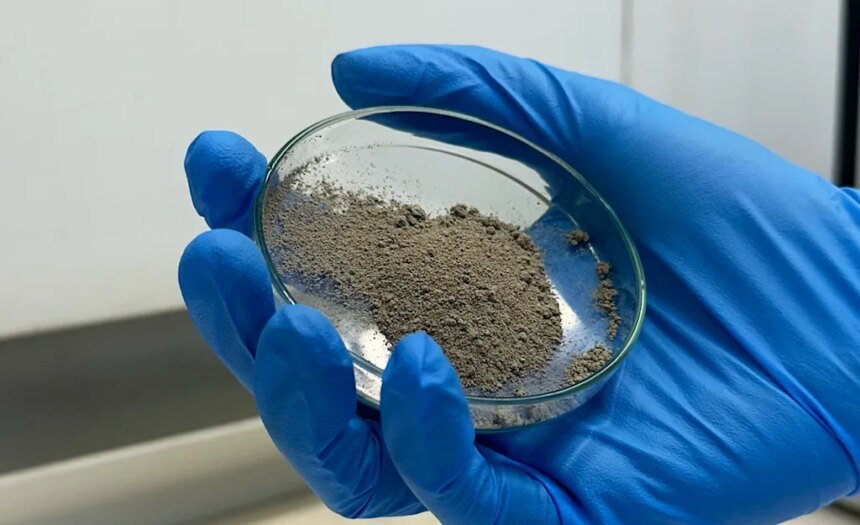

On a hot day, most clothing traps heat. But fabric coated with nanodiamonds—tiny diamond particles—can instead release heat, helping cut energy use for air-conditioning.
The diamond nanoparticles, each less than one-thousandth of the width of a human hair, have the same carbon crystal structure as larger diamonds. But since they don’t have to be perfectly formed and can be made from carbon waste such as plastic, they are relatively inexpensive to make. The structure means that they’re especially effective at moving heat.
“Because carbon has exceptional thermal properties, it can absorb energy and heat quickly, and it can dispense it quickly through that system,” says Shadi Houshyar, an engineering professor at Australia’s RMIT University, whose team developed nanodiamond-coated fabric in the university’s Centre for Materials Innovation and Future Fashion. Diamonds are already used in electronics to help keep parts like computer chips cool. The researchers realized that they could use the same idea in clothing.
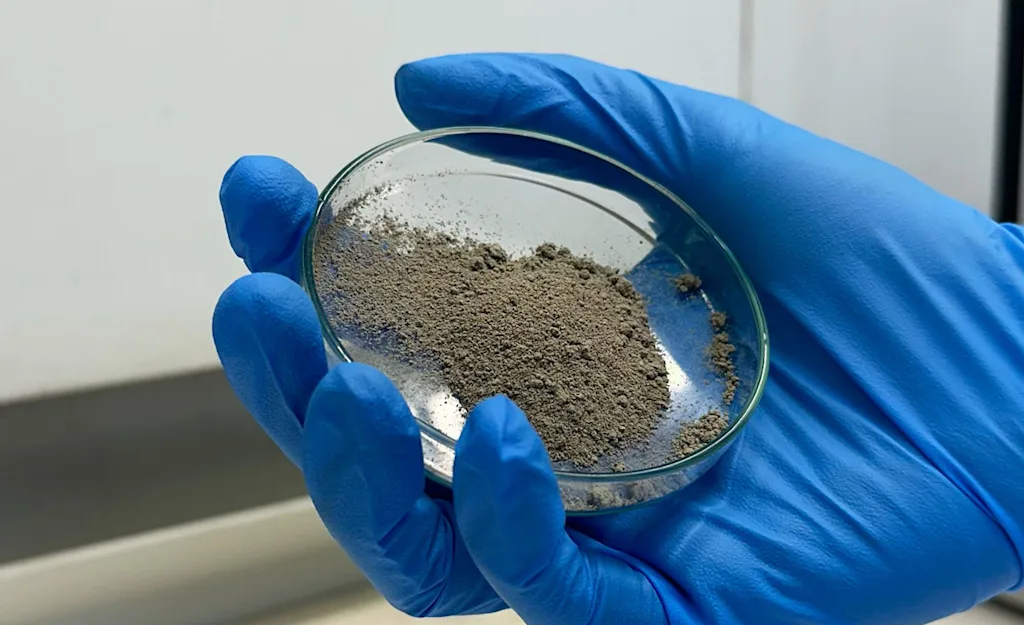
“We decided to add nanodiamonds to textiles,” Houshyar says. “When it’s in contact with the skin, it absorbs heat quickly from the body.” Then it releases the heat. It’s particularly helpful in areas like the torso that get hottest. “It has a high capacity, so it can pull heat from the body for many hours,” she adds. While it could be used in any type of clothing, it can also be useful in protective gear for firefighters, she says.
Clothing made from the fabric can lower your body temperature by around 4 to 5 degrees Fahrenheit (2 to 3 degrees Celsius)—enough that you don’t have to crank up the AC as much to feel comfortable in extreme heat. Curtains made from nanodiamond-coated fabric can also keep homes cooler; house paint could also potentially incorporate nanodiamonds.
To add the material to fabric, the scientists use a sustainable binder that Houshyar says can securely attach the nanodiamonds for at least 50 wash cycles. The team is now also developing a way to coat yarn with a layer of the material earlier in the manufacturing process.
Nanodiamonds can be made from waste carbon—including plastic waste—by exposing the carbon to extreme pressure and temperature in a reactor, rearranging the atoms into a diamond structure. By tweaking the process, it’s possible to give the material other properties, including the ability to absorb or release moisture. “There’s a possibility that this could replace PFAS,” Houshyar says. Unlike PFAS (forever chemical) coatings, which are used to make rain jackets and other clothing water-repellent, the nanodiamonds are nontoxic and environmentally safe.
As climate change makes extreme heat more likely, other researchers are exploring new ways to redesign clothing to keep people cool. Engineers at the University of Massachusetts Amherst recently used calcium carbonate—low-cost chalk—to coat fabric that cooled by several degrees in tests. Others are experimenting with materials like silver nanowires and zinc oxide.
Now, Houshyar’s team is looking for funding to spin the research into a startup. “Companies are already interested,” she says. The project, called DiamondCool, is a finalist in H&M’s Global Change Award for 2026, a prize that backs early-stage work to make fashion more sustainable.

