







During a lunch with my friend Kurt at the Chicago Club—one of those quietly elegant institutions where history sits comfortably in the room—I arrived with a question. It was one that could only be asked by someone trying to understand the United States from outside its horizon.
Kurt’s surname carries enough S’s and K’s to suggest Eastern European roots. I am Brazilian, the grandson of Italians, Portuguese, Ukrainians, and with some Indigenous blood. Our grandparents crossed oceans from similar places, yet our lives unfolded inside different societies.
I asked him: If our families had boarded different ships—mine arriving at Ellis Island and his in Brazil—would we have become different people? Was history shaped by conviction, or sometimes merely by direction?
Only later did I understand the real question was about perception, how distance changes what a society looks like from within and from afar.
In North America, immigrants often gathered within familiar communities. In Brazil, something else happened. Differences dissolved faster. We blend. Identity becomes porous, negotiated daily rather than preserved intact.
I grew up in southern Brazil, roughly one degree below the tropics. It’s about 3,000 feet above sea level and nearly 100 miles from the Atlantic coast, a rare climatic equilibrium. We saw neither snow nor extreme heat, neither storms nor violent winds. Life unfolded with minimal disruption, small variations around a predictable center.
Stability hides systems. When little changes around you, the structures organizing life become invisible.
In the 1980s, we installed antennas on rooftops, searching for distant radio signals and trying to capture BBC broadcasts through atmospheric noise. Vinyl records carried fragments of Anglo culture into our homes. That world existed somewhere else long before we experienced it.
A CHANGE IN SCENE
In 1999, at 23, I crossed what felt like the nearest door into the United States: Miami International Airport.
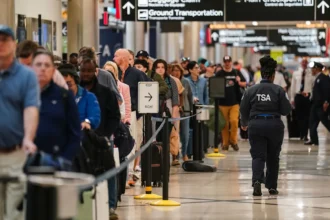
Two sensations collided: overwhelming heat and unexpected precision. Queues moved with silent coordination; procedures anticipated behavior. The country felt less like a place and more like a standard operating procedure.
The United States did not merely function; it executed.
During the Bush–Gore election dispute, I witnessed something Brazil would later experience more intensely: the power of social psychology in politics. What appeared to be a legal controversy also revealed how quickly societies divide into camps where interpretation follows identity.
I believed I possessed everything needed to pursue the American Dream: youth, freedom, ambition. Yet something in me resisted adaptation—an Italian sense of aesthetics searching for variation, a Mediterranean temperament inclined toward reflection rather than acceleration, and a quietly Camusian instinct questioning efficiency when it became an end. Systems optimized for performance produced extraordinary results, yet seemed to compress the contradictions through which human life often finds meaning.
So I left. But I did not truly leave.
NEW VIEWS
Before departing, I established a defining professional agreement in the U.S. And although I no longer lived there, I continued working under the American branch of a global technology organization. I had run from America while still operating inside one of its institutional extensions.
Geography changes faster than systems. Institutions travel through people.
Working alongside Asian partners during the early expansion of wireless internet, I helped introduce public connectivity experiments in Brazil. Networks revealed something new: Systems often understand human behavior before humans understand them.
The following years unfolded across continents, exposing different assumptions about risk, hierarchy, and trust.
Then came South Asia.
I spent 7 years moving in and out of Pakistan, and 12 years in total across Asia, including periods in India, Bangladesh, and China. Pakistan dismantled my internal references. Poverty, instability, and political tension forced me back to history books to understand how societies arrive at such different equilibria.
During one visa renewal at a U.S. embassy, an officer examined my passport filled with repeated entries into Pakistan and asked why I kept going there. Osama bin Laden had not yet been captured. Geography itself carried suspicion.
BETWEEN CULTURES
Years later, walking along the coast of New Jersey to escape New York’s intensity, I entered a small restaurant filled with elderly couples. Conversations stopped when my wife and I walked in. She is Chinese-Lebanese, with green eyes and features difficult to categorize.
They feared us. And unexpectedly, I realized we feared them too.
Societies are not only systems of laws or markets; they are projections of uncertainty. Fear is rarely unilateral; it is symmetrical.
Moving between cultures that admired the United States and others that opposed it, my interpretation of America oscillated. Distance did not produce clarity at first. It produced instability, the loss of certainty about one’s assumptions.
Over time, perception stretched. Long exposure to incompatible systems allows societies to appear not as fixed identities but as moments within longer historical processes.
I began to see the United States differently—not as an ideal or an adversary, but as a configuration of organization and trust. It was a society that behaves, in many ways, like an operating system—resilient because of rules, innovative because of scale, misunderstood by critics and admirers alike.
My relationship with the United States is not one of blind admiration. Instead, it has become a place of renovation, somewhere I return regularly for intellectual and professional renewal. There I observe social psychology in motion: how large systems organize cooperation, how groups form narratives, and how leadership emerges from the management of collective perception. In that sense, America functions as a kind of hypermodern school of leadership—less concerned with dismantling structures than with understanding how human systems coordinate trust, conflict, and innovation at scale.
Today, when my mother travels to visit my brother there, I sometimes realize that my immediate family could easily end up entirely in the United States. In such moments, the logic of the American Dream seems almost self-evident. Yet my relationship with the country has evolved differently: less a destination than a hub of observation and exchange. I travel frequently, remain professionally engaged, and write for Fast Company.
Distance does not automatically make us wiser. It reveals the assumptions we did not know we carried.
Rodrigo Magnago is director at R-Magnago Critical Thinking

