






For many who grew up visiting older relatives during the holidays, memories of childhood Christmases are swathed in a warm glow that feels like the calling card of the season: a combination of colorful bulbs, lit candles, and soft lamplight. In recent years, though, it feels like the holiday season has traded its cozy tones for a much cooler, even sterile color palette. As it turns out, that’s not just a quirk of our rosy collective memory.
David Andora, a multidisciplinary creative who’s worked in branding, production design, specialized lighting, and parade events, set out to understand why Christmas looks so different today. He discovered that, with the advent of light-emitting diode (LED) technology, classic holiday lighting has become something of a lost art.
“When LED lights started becoming the norm for Christmas lights, which happened quite a while ago, one of the things that was completely missing was that warm, peachy glow that came off of those incandescent painted big bulbs,” Andora says. “Each year I would go to the big-box resellers, look at the new Christmas lights, and wonder, ‘Why is no one making these?’”
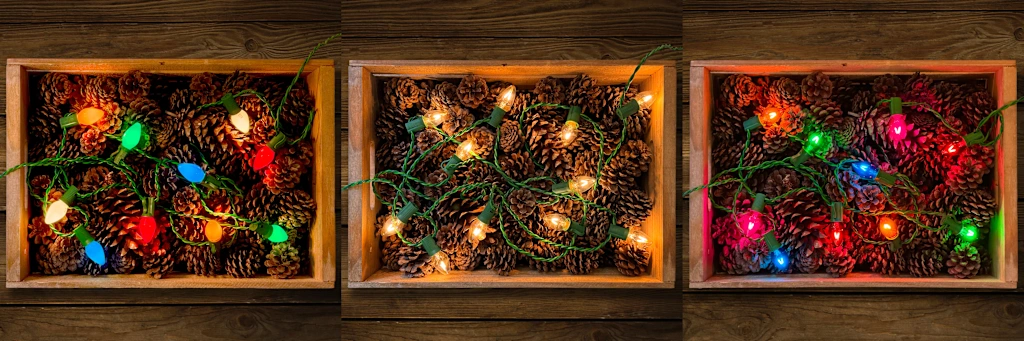
So, he decided to do it himself. Andora’s company, Tru-Tone, caters to a growing audience of customers who want the look of a retro Christmas without any of the accompanying fire hazards. The company declined to share exact sales numbers with Fast Company, but it’s seen major demand since its founding in 2020, experiencing growth of about 50% over the past several consecutive years. A 25-light set of Tru-Tone bulbs costs about $65, making them significantly pricier than similar options at big-box stores (a 100-count strand at Home Depot retails for about $50).
Tru-Tone’s secret, Andora says, comes down to a fairly simple design trick that pairs modern LED technology with a vintage lighting technique.
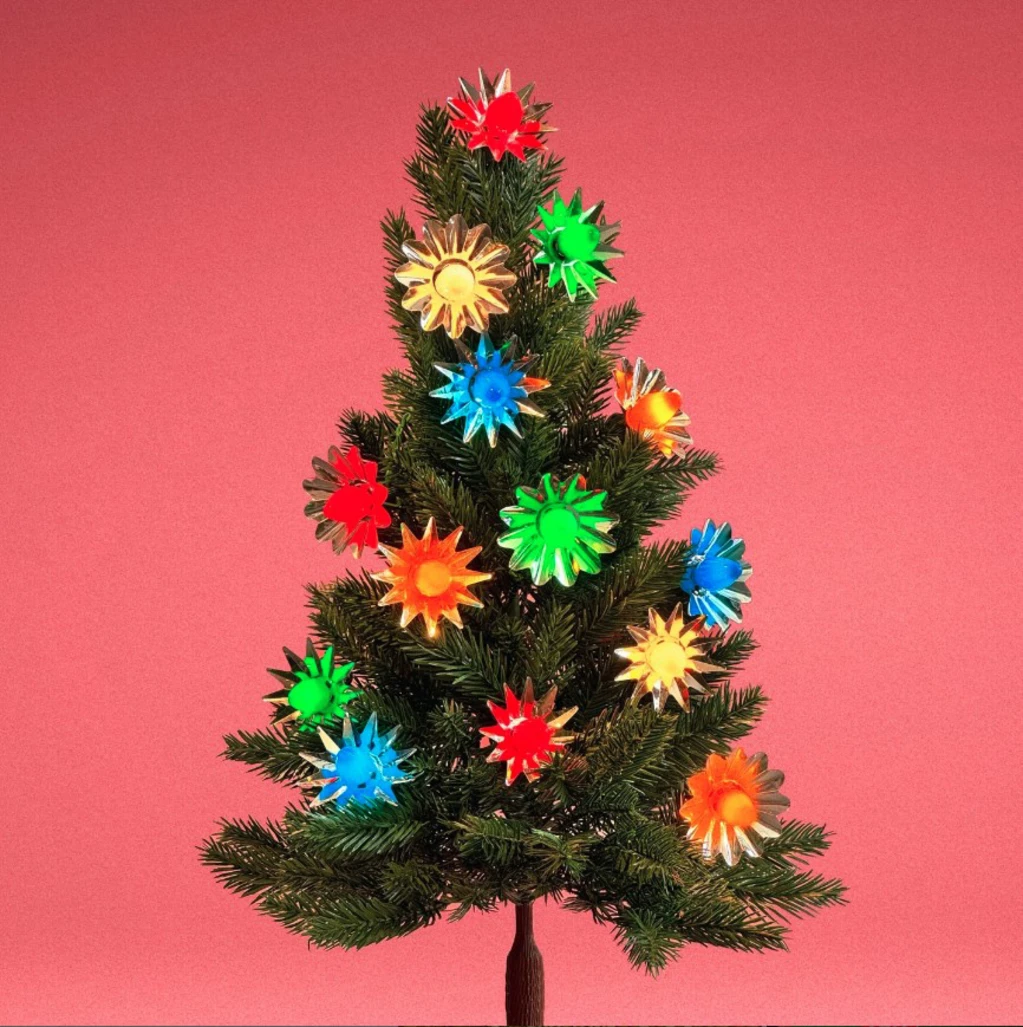
Why are today’s Christmas lights so bad?
During his research, Andora found that the Christmas light manufacturing process has changed drastically since the mid-20th century.
In that era, almost all holiday lights were incandescent, or bulbs that emit light via heat. The actual light source was all one color—a warm white hue—and, to make it colorful, American manufacturers like General Electric (one of the largest holiday light makers at the time) would add translucent bulbs with color washes on top. This combination created the peachy glow that defines Christmas nostalgia. There was just one major drawback to incandescent Christmas lights: They were hot. Like, really hot.
“Your parents were constantly warning you to never leave the tree lit unattended,” Andora says. “If you left the room, the tree had to be turned off because there were all these horror stories of trees burning people’s houses down with these blazingly hot light bulbs.”
LED lights began to replace incandescent ones in the late ’90s, and manufacturing largely moved overseas to China. Unlike incandescent bulbs, almost all LED holiday lights on the market rely on colored LED diodes, rather than color-washed bulbs, to produce their final look.
Colors from an LED diode are deeply saturated “pure” colors emitted from a very narrow spectrum of colored light, whereas white incandescent light filtered through a colorful bulb produces a wider spectrum of light. This difference in the breadth of light spectrum is what makes many LED bulbs appear harsher and more electronic (even if they’re trying to recreate a “warmer” appearance), whereas vintage incandescents have a blurry, glowing look.
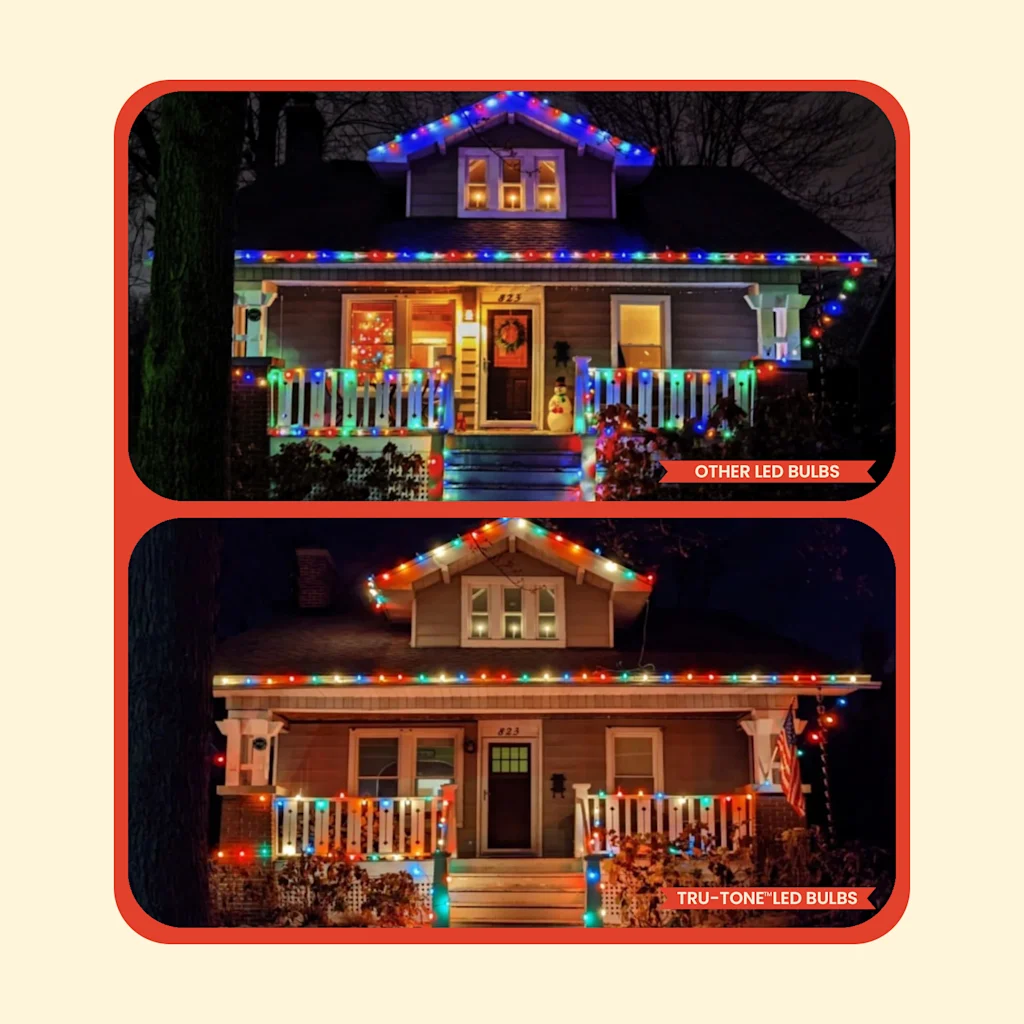
For Chinese manufacturers, this process makes sense, Andora says. Producing lights that draw their color from the LED itself is much simpler and more cost-effective than the incandescent technique, on top of LEDs being significantly more environmentally friendly. In addition, he says, Chinese manufacturers typically don’t have the same nostalgic associations with peachy tones that American consumers do, meaning that modern LED bulbs are also considered more aesthetically appealing.
“The nostalgia for warm-colored Christmas lights is very Western, not part of the region where these lights come from. The factories view the colored-diode lights as easier, less costly, and more beautiful,” Andora says. “Very little development of these products is coming from the U.S. Most of this happens from the factories, and provides a catalog to resellers, also shaping what we see for sale here.”
To recreate the vintage Christmas look, he would need to both rethink today’s design process and convince manufacturers to adopt a new process.
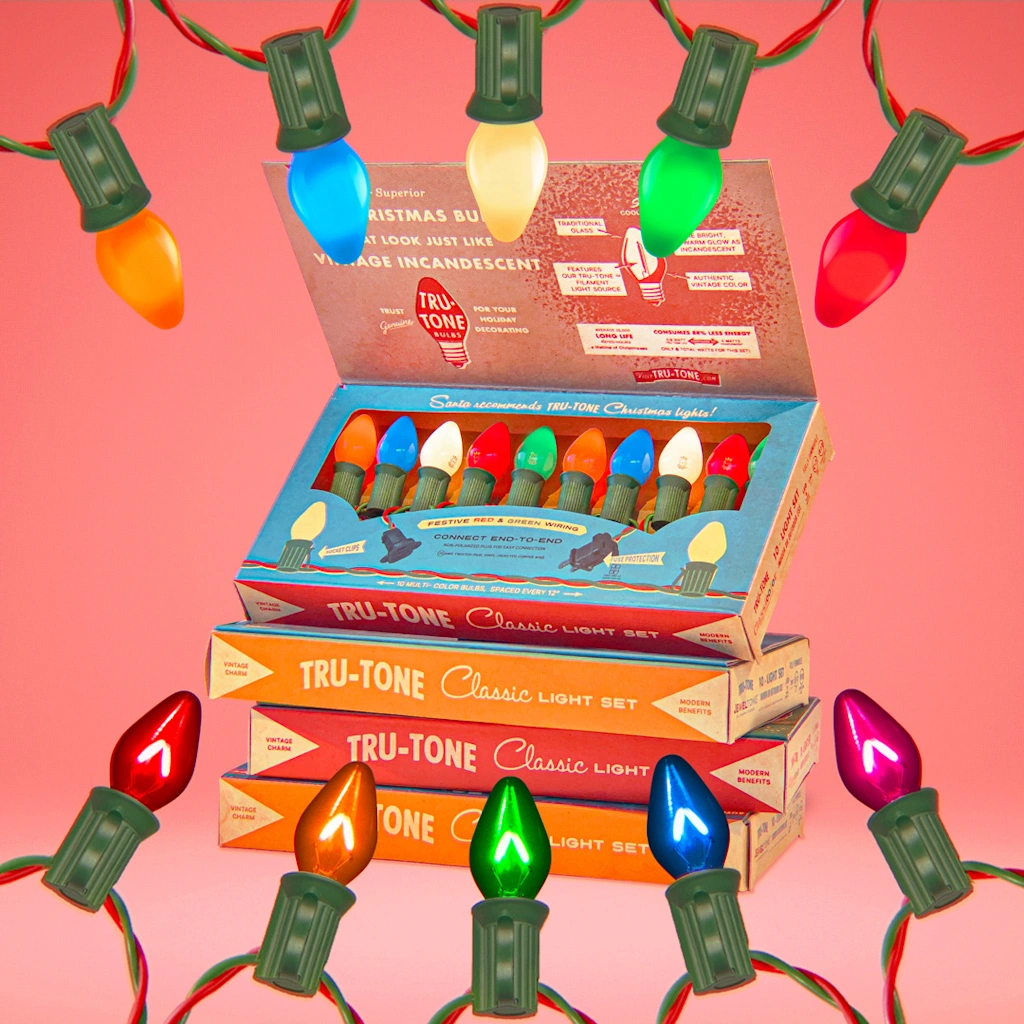
How Tru-Tone recreated the vintage incandescent look
Tru-Tone started as a passion project from a basement in Michigan. Andora spent a year experimenting with his prototype before landing on a final product that he felt looked almost identical to the real thing.
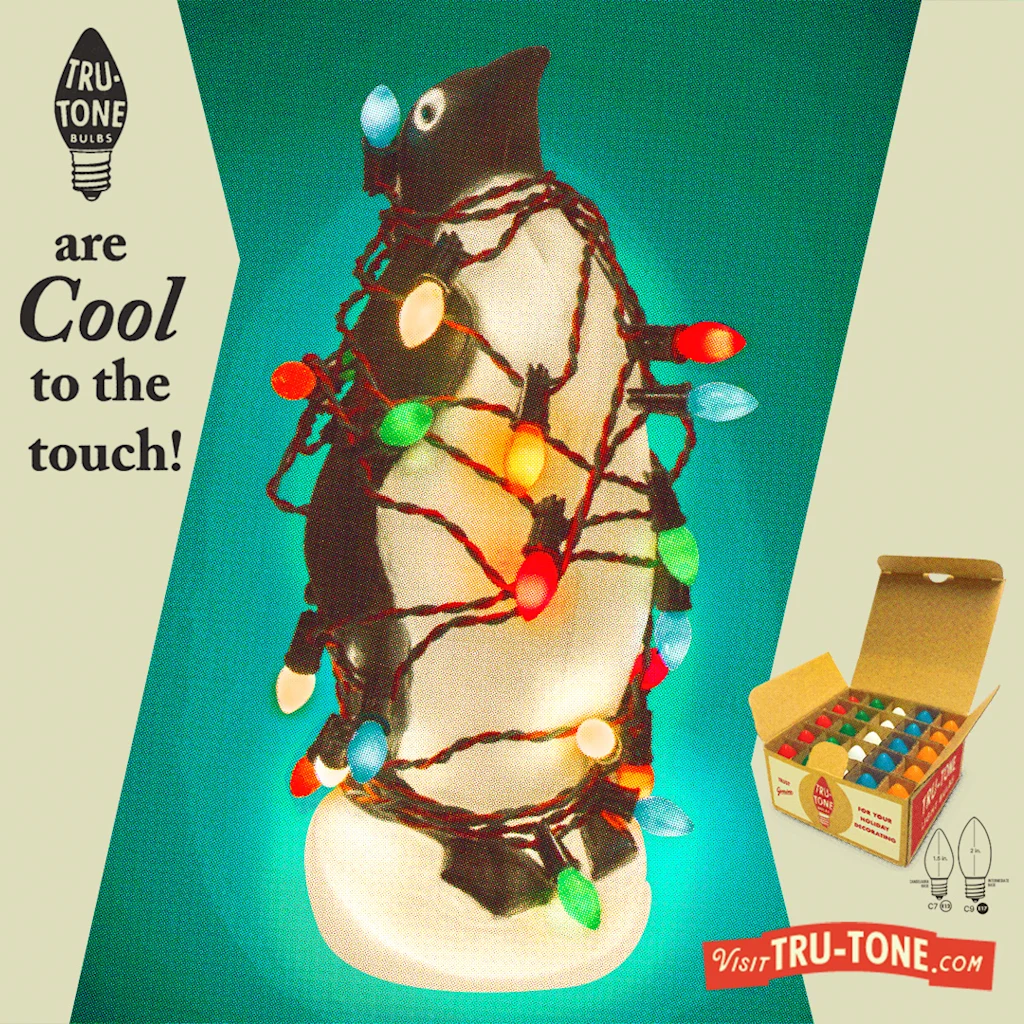
To recreate vintage incandescents, Tru-Tone’s products use the same basic process as the original lights. Every light is a warm white LED that’s fitted with a tinted bulb on top to produce the actual color. Inside the bulb, the light itself is created by warm white LED “filaments”—an array of very tiny LEDs used to mimic a tungsten wire filament—that create their warm white color with a color-tuned phosphor coating.
Andora says this technique already exists in modern household lighting to produce a warmer effect, but Tru-Tone is the first to bring it to holiday lighting, likely because it adds an extra layer of inefficiency to the manufacturing process.
To capture the nostalgic magic of vintage Christmas lights, Andora experimented with theater gels to perfect each bulb’s color wash. He used archival incandescent light samples from a range of periods, dating from the ’50s all the way to the ’90s.
Once Andora had an actual product, the real challenge was convincing an overseas manufacturer to sign on. Hiring a manufacturer was made even more complicated by the fact that Andora hand-designs all of Tru-Tone’s packaging (and its delightfully retro website) to resemble vintage advertisements, which, he says, often included font alignment inaccuracies and printing errors that lend them a certain charm.
Today, he provides manufacturers with a full packet of information—translated to Chinese—explaining Tru-Tone’s premise and assuring bulb manufacturers and packaging printers that the brand’s quirks are intentional.
“You see a lot of vintage-style design these days that I joke is ‘Old Navy-style retro,’” Andora says. “It’s really just retro font, and that’s the end of it—the design isn’t as authentic. I think that what makes us special is that I try to really make things feel like you pulled it out of your grandmother’s attic.”
The return of a nostalgic Christmas
When Tru-Tone launched its first small batch of lights via social media in 2020, they sold out within two weeks. Since then, the brand has been steadily expanding and adding new product lines while navigating the typical growing pains of a new small business.
One of the main problems it’s faced, Andora says, is not having enough stock to keep up with demand. While that struggle has diminished as he’s developed some “good relationships” with overseas manufacturing partners over the years, Tru-Tone is still actively sold out of several popular items. In the future, Andora says, he’d love to begin manufacturing in the U.S.—though that’s currently more of a pipe dream than an actionable reality, given the lack of infrastructure for such an undertaking in the States.
Andora believes that interest in vintage Christmas aesthetics is currently on the rise—and big-box retailers seem to agree. According to a Home Depot spokesperson, demand for nostalgic holiday aesthetics is one of the major trends the company is noticing this year. That’s evident on TikTok, where a search for “vintage Christmas” yields hundreds of aspirational videos, DIY concepts, and nostalgia-core clips. And Pinterest data shows that searches for “nostalgic Christmas aesthetic” are up 1,130% this November compared with last November, while “colorful vintage Christmas” and “vintage retro Christmas” are up 1,500% and 100%, respectively.
Customers are turning away from the bright white, blue, and millennial gray aesthetics in favor of a classic Christmas, and Tru-Tone is on the leading edge of that shift.
“I think that mid-century design, especially related to Christmas, is definitely reaching a peak,” Andora says. “After the gray and beige interior trend, people are looking for more color in their lives, and the Christmas holiday is the perfect time for people to really want cozy, colorful, comfy vibes.”
The final deadline for Fast Company’s World Changing Ideas Awards is Friday, December 12, at 11:59 p.m. PT. Apply today.

