







What do you do if you want to eat fish, but you hate the idea of harming wild animals?
Or if you’d like a nice lox and bagel, but you’re concerned about mercury and microplastics—or the broader climate risks of industrial fishing. What are your options?
One San Francisco startup has an answer: Grab cells from a salmon, grow them in giant tanks in a lab-like setting filled with a warm bath of nutrients that mimic the inside of a real fish, and then coax them onto veggie-based scaffolds to form a piece of premium fish that’s never touched an ocean.
That’s the vision driving Wildtype, a lab-grown fish company based in San Francisco’s trendy Dogpatch neighborhood. I stopped by, met Wildtype’s cofounder Dr. Aryé Elfenbein, and tried some of the company’s lab-grown salmon firsthand.

The Fishery
From the outside, Wildtype’s headquarters look like a nondescript industrial building. The only identifying mark is a stylized, W-shaped sign.
Inside, though, it more closely resembles a high-end sushi restaurant.
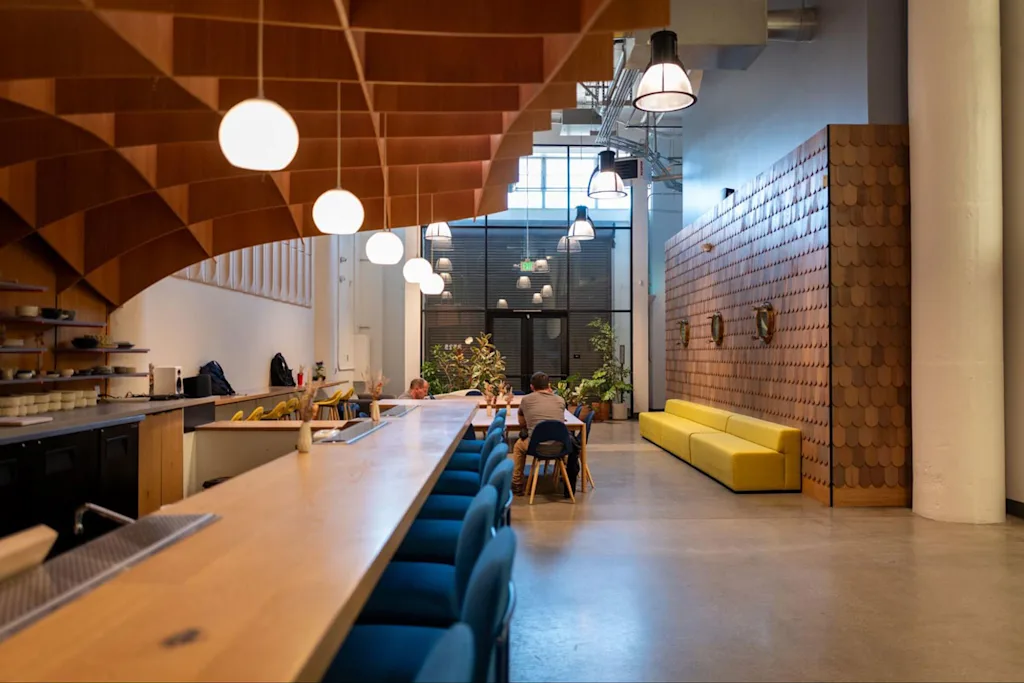
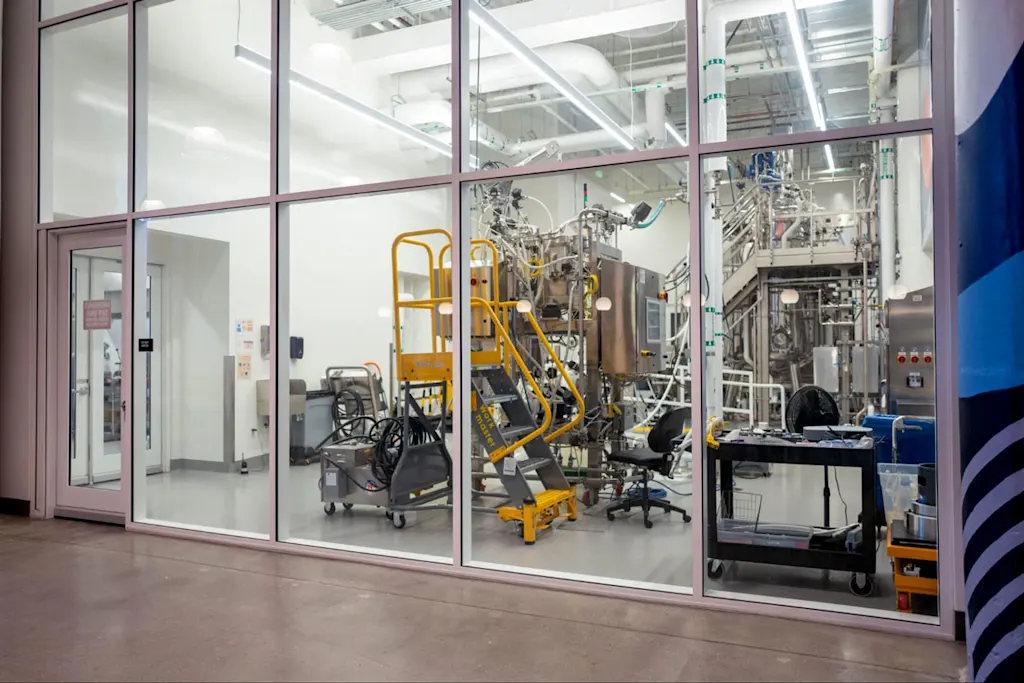
Elfenbein—a curly-haired, enthusiastic, practicing cardiologist with a deep passion for fish—greeted me warmly at the door and took me inside. I was immediately drawn to a multistory glass window at the center of the cavernous room. Behind it were gleaming stainless-steel tanks, resembling the kind of kit you might find at a microbrewery.
That’s fitting, as Wildtype’s space used to host a beer-brewing operation. And the connection runs deeper. Elfenbein told me he dislikes the term “lab-grown fish” and prefers the term “cultivated.”
I get it. The moniker “lab grown” evokes Frankenstein-esque visions of sparking lighting generators and people in biohazard suits wielding test tubes.
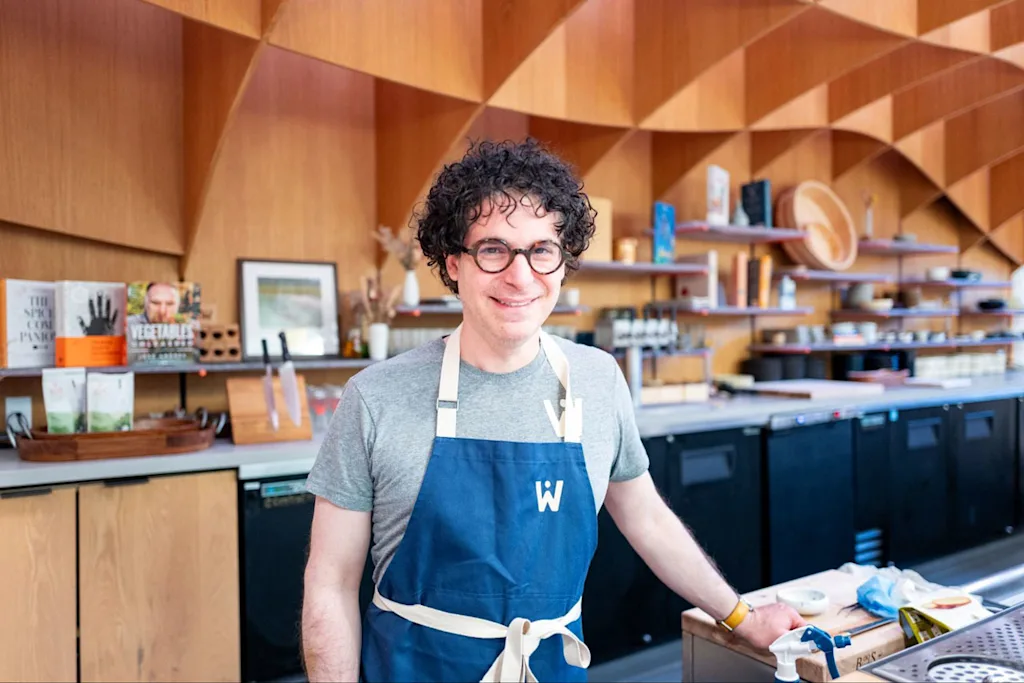
Elfenbein’s objection to the “lab grown” terms runs deeper, though. As a scientist, he’s been in plenty of labs. And he was quick to point out that Wildtype’s operation doesn’t require the kind of clean-room, negative-pressure, super-advanced environment you’d find in a true bioscience lab.
It’s more akin, again, to a microbrewery, Elfenbein explained. Except instead of brewing beer, Wildtype is brewing fish.
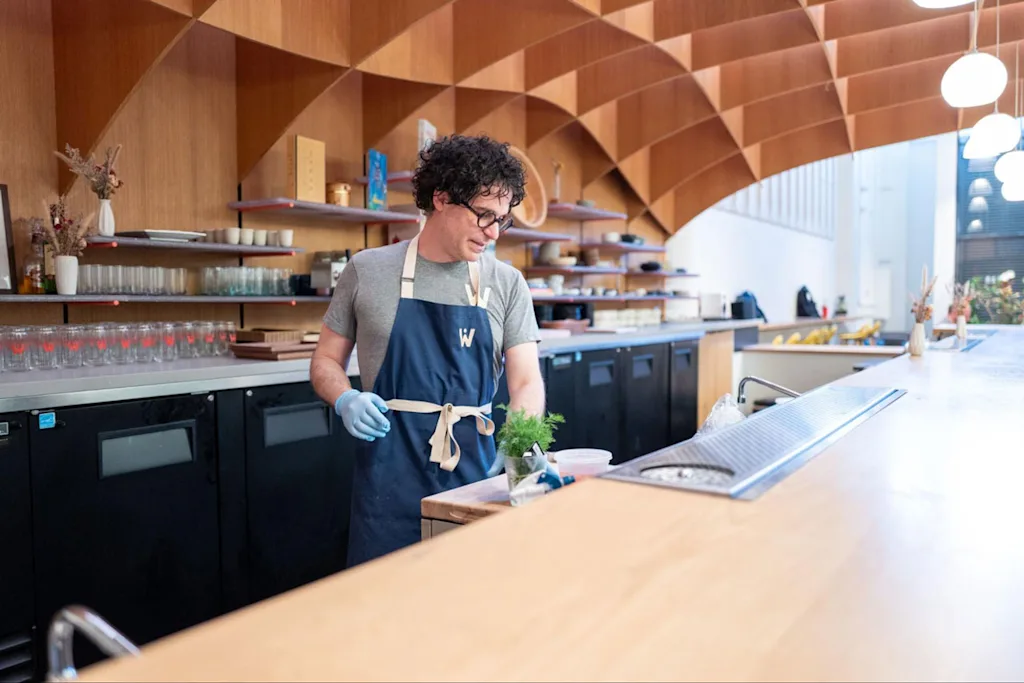
After visiting the tanks, Elfenbein led me over to a bespoke wooden sushi bar, beautifully decorated with cookbooks and ephemera from the sea. He then set about preparing me some fish to try out.
A Single Fish
Elfenbein explained that when the company first started making its cultivated fish, a pound of product might cost hundreds of thousands of dollars to produce.
Although it doesn’t require a lab, the process is scientifically complex. It begins with cells taken from a real salmon—in fact, one specific baby salmon whose cells were extracted years ago.
Elfenbein told me that they initially thought they’d need to harvest cells from lots of individual fish in order to get their process right. After some work in the early days, Elfenbein told me that Wildtype has “not needed to return to the animals.” For over seven years, the single sample from a single fish has been enough.
The company had purchased lots of salmon, anticipating the need to harvest multiple cell lines. When that turned out to be unnecessary, they kept the extra fish as pets.
Elfenbein told me that he knows, as a scientist, he isn’t supposed to get attached to his subjects. But in spending time with Wildtype’s fish, he started to recognize that different individuals had different preferences and ways of behaving.
It hammered in the idea that even a salmon is a unique, individual animal, and that killing one for food means ending a life.
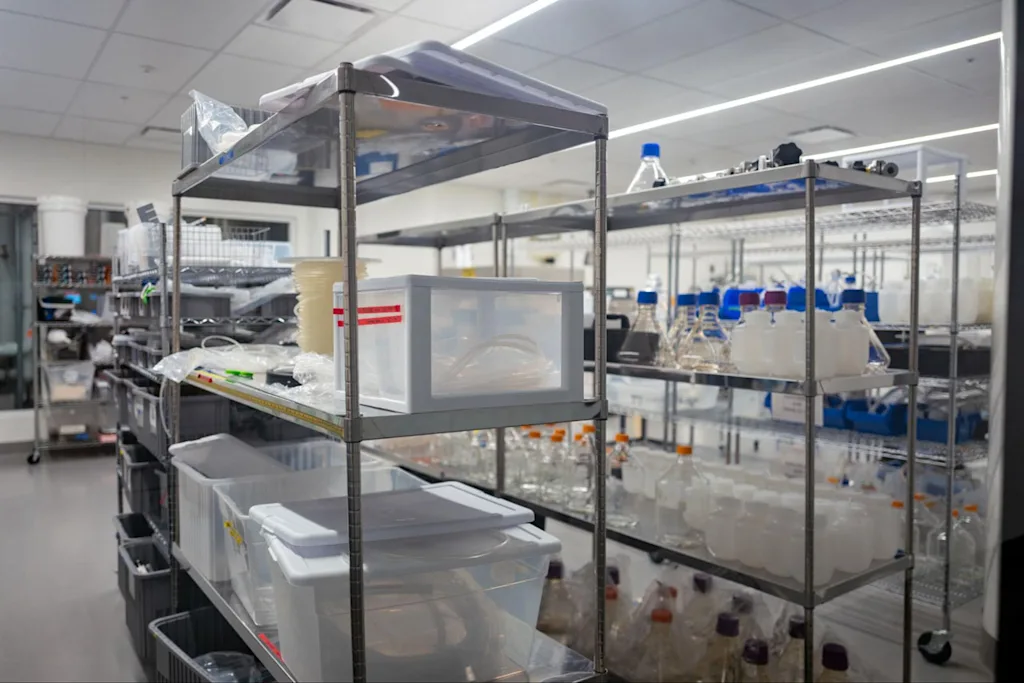
After harvesting cells, Wildtype grows them in a special nutrient solution. The specific type of harvested cells can become fat cells, muscle tissue, connective tissue, and more. By altering the nutrient solution, the company can coax the cells to adopt each of these unique identities.
With a variety of cell types ready to go, Wildtype uses a plant-based scaffolding to coax the cells to assemble themselves into a piece of actual fish. Interestingly, Elfenbein told me the cells seem pre-programmed to do this—give them the right scaffold, and they’ll handle much of the assembly process on their own.
With more time to grow, the fish gets tastier. Elfenbein likened the process to aging a fine wine.
The Path to Walmart
The details of the various solutions and scaffolds used are the product of years of work at Wildtype. The end result is a piece of actual fish, made from real salmon cells, with the marbled fat, connective tissue, and flavor of conventional salmon.
Elfenbein told me that in blind taste tests, people can’t tell the difference between their cultivated fish and the fish from the ocean. That makes Wildtype’s product markedly different from meat alternatives, which currently dominate the market for non-meat meat. Brands like Beyond Meat and Impossible use plant cells and fats, processing them to resemble meat.
Wildtype’s cultivated fish, in contrast, is made from real fish cells. That makes it far closer to the real thing than a plant-based substitute.
That proximity has already stirred up trouble in certain circles. As Elfenbein pulled out a fancy Japanese knife (he’s spent significant time in Japan) and started preparing the fish I was about to taste, he told me, “What I’m about to do right now could land me in jail in multiple states.”
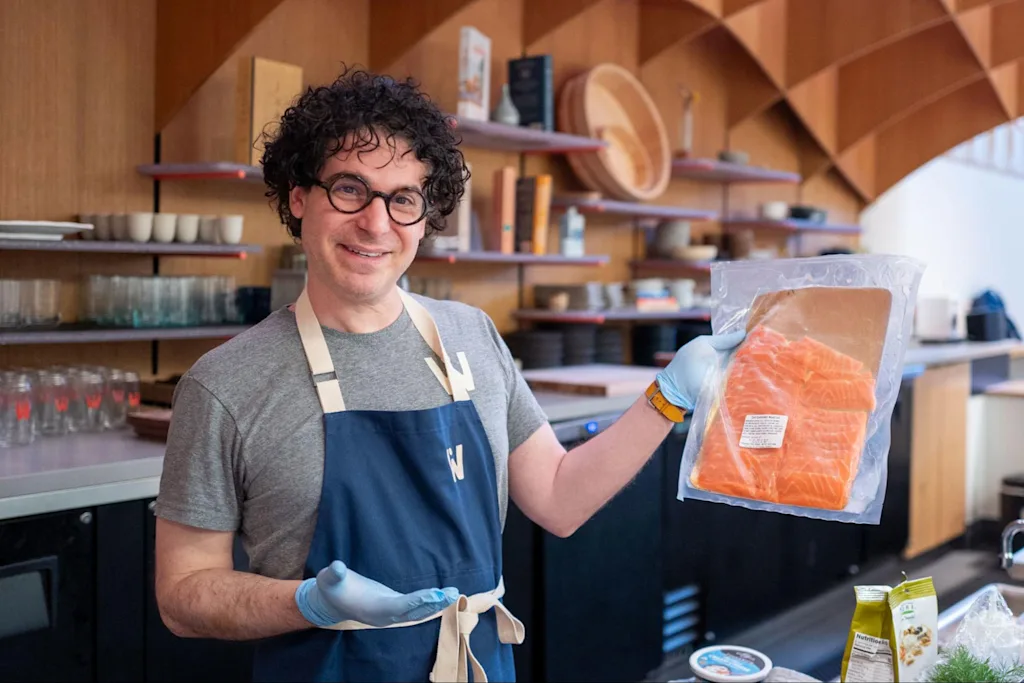
Indeed, several states have already preemptively banned cultivated or lab-grown meat or fish. This bewilders Elfenbein. His product is American-made, he told me, in contrast to most commercial fish, which is farmed abroad. And he’s not a rabid animal rights protestor—just a scientist who thinks he can do something in a better, more efficient, less harmful way.
That should endear Wildtype to protectionist-minded types. But apparently, the specter of artificial meat is too much for some people to stomach. Elfenbein told me that, interestingly, his biggest supporters in multiple states are hardcore libertarians.
“I’d never be caught dead eating this weird San Francisco stuff,” they apparently tell him. “But if a man wants to eat something, he should be allowed to eat it!”
Thankfully, in San Francisco and multiple other states, Wildtype’s product (which has received clearance from the Food and Drug Administration) is perfectly legal. It’s currently offered at several high-end fish restaurants and sushi bars in California and other Western states.
In the early days, Elfenbein said, Wildtype focused on producing sashimi-grade raw salmon for these kinds of sushi bars. Now, though, they’ve pivoted to something different—smoked salmon.
Why? Elfenbein told me that there’s something uniquely special about lox on a good bagel. And beyond that, Wildtype doesn’t want to only serve high-end spots. The company’s dream, Elfenbein told me, is to have their product sold at Walmart. That would make cultivated fish a mainstream product, and expand the company’s impact dramatically.
Just as organic food made the jump from niche, hippie product to mass-market commodity, Elfenbein hopes cultivated fish will do the same—with the attendant benefits to animals and the environment.
The Moment of Truth
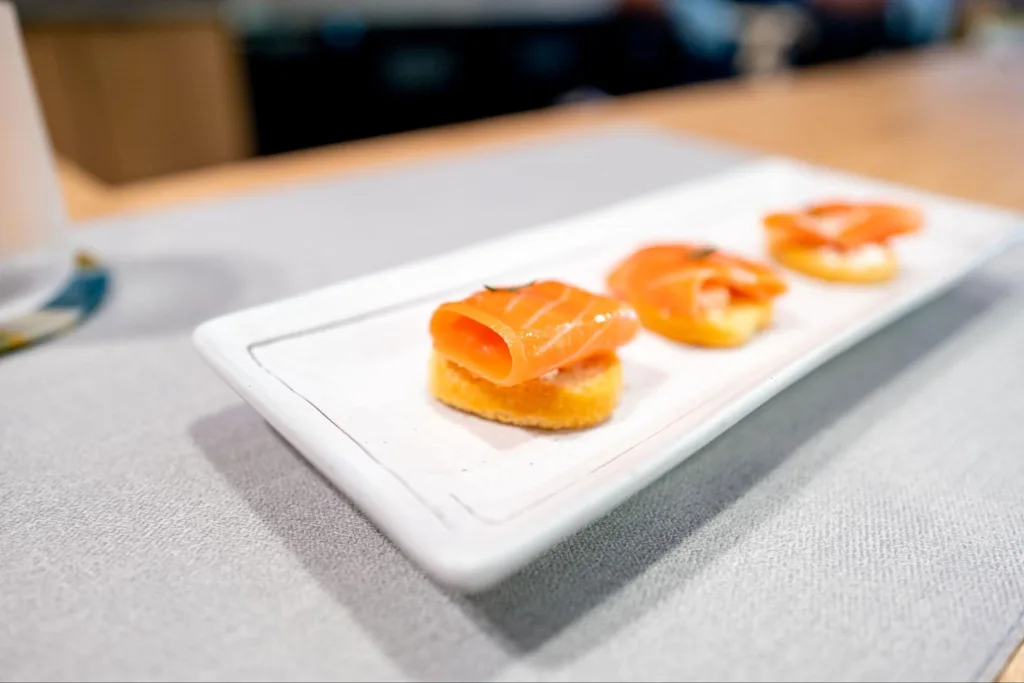
As we spoke, Elfenbein opened a package of entirely ordinary-looking smoked salmon, cut several slices, put it on top of crackers with some pickled onions and cream cheese, apologized for not having good-enough bagels to serve me, and then put down a lovely plate of dainty little morsels on the bar in front of me.
I bit into one. It tasted like fish. My first impression was that it had a bit less of the connective tissue than conventional smoked salmon, giving it a bit less pull than the traditional stuff.
As I ate more, though, I had a harder and harder time telling it apart from the smoked fish I eat every weekend. Wildtype smokes it in-house using a special wood blend, and the thin format of smoked salmon likely makes it easier to grow than a big hunk of sashimi.
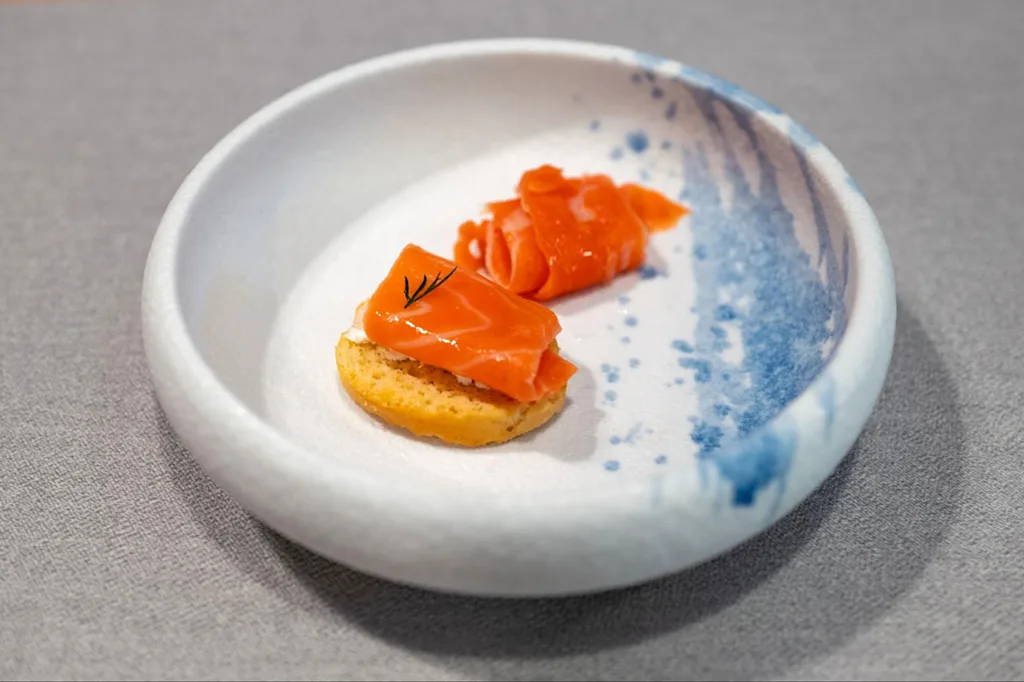
It was tasty. But most of all—save for my knowledge of how it was produced—it was unremarkable. It just tasted like a nice slice of lox. Nothing more and nothing less.
That surprised me. I was expecting something goopy or incomplete—like when a vegan friend serves you a dish made with tofu and insists, incorrectly, that “this tastes just like the real thing!” I expected to have to squint a bit—visually and culinarily—to believe I was really eating salmon.
Wildtype’s fish wasn’t like that at all. It just tasted like fish.
Again, that’s exactly Wildtype’s goal. It’s ironic that it takes years of work from highly trained scientists and an industrial building full of equipment to duplicate a process that nature does entirely unassisted every day.
But it’s a common story in San Francisco. Decades of research and training result in machines and processes that mimic biology—but with benefits.
Indeed, I rode to Wildtype’s headquarters in an AI-powered Waymo that had been meticulously trained by armies of researchers to do something that humans do with their brains every day, only better.
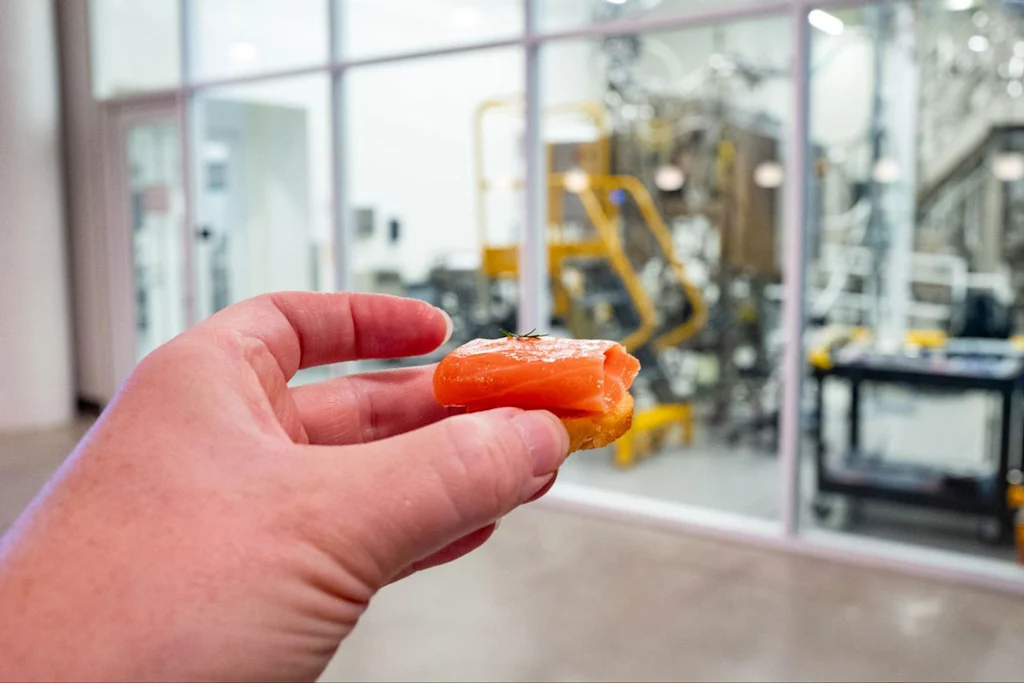
Beyond the taste of Wildtype’s cultivated fish, there is a laundry list of benefits to fish that don’t come from the ocean.
It has far less environmental impact than wild-harvested or farmed fish, Elfenbein told me. I could literally look behind me while I ate and see exactly where my fish came from—and no diesel-exhaust-spewing trawler had to set out to sea to get it to me.
Wildtype’s fish is also free from parasites, microplastics, mercury, and many of the other contaminants lurking in much of America’s commercial salmon.
And of course, there’s the core benefit of not killing animals.
Elfenbein told me that Wildtype exists in a strange gray area when it comes to animal rights. The product is not technically vegan, because it’s derived from animal cells.
Yet many vegans choose to eat it, and many animal rights activists and organizations are quietly cheering on Wildtype’s work. Elfenbein told me that when lifelong vegans come to try Wildtype’s cultivated fish, he has to warn them: “If you’re eating fish for the first time ever, you’re probably not going to like it!”
Salmon of any variety is an acquired taste. But more and more vegans are willing to acquire it via Wildtype’s products, Elfenbein said. Even a local middle school has stopped by to sample it.
That got me curious as to the choice of product: Why grow fish in the first place? Elfenbein told me that, as a cardiologist who still practices in the ICU, he felt the world didn’t need more meat loaded with saturated fat or cholesterol.
Fish is healthy, but most Americans don’t eat enough of it. It’s also pricier than ground beef or chicken, which makes the economics of running a cultivated fish company work better.
Elfenbein shared that the cost of producing Wildtype’s cultivated fish has dropped dramatically. If the company’s processes were scaled up and run by appropriate staff members in an appropriate facility for mass production—not by highly trained, highly paid scientists in the heart of the West Coast’s most expensive city—the cost of their fish could match or even beat the conventionally harvested sort.
That’s the goal at Wildtype: Deliver a product that competes on price and quality, but that is otherwise mass market enough that you might eat it without even realizing you’ve done so.
There are still many hurdles to cross before Wildtype gets there. But in meeting Elfenbein and trying the product, I can see an everyday consumer topping their bagel with fish grown in a massive (non-lab) lab, adding a bit of nice cream cheese, and wolfing it down without batting an eye—or wondering if an animal was killed.

