



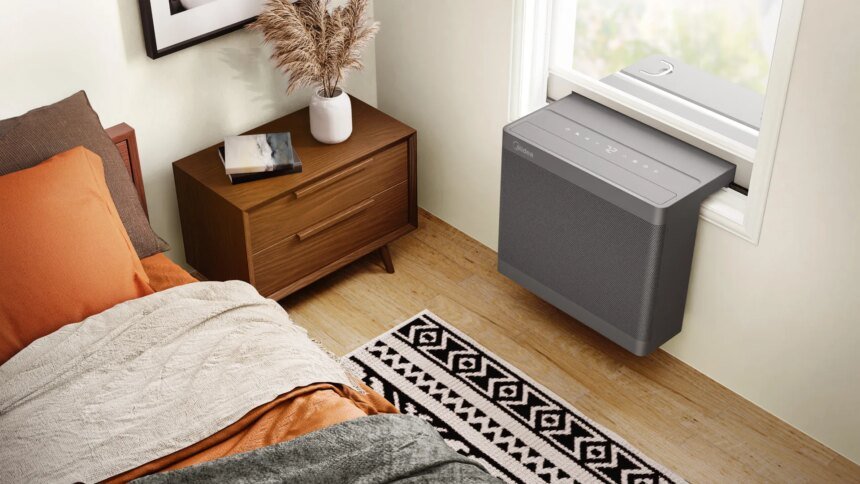

It looks a little like a sleek window AC, but a new device from Chinese appliance giant Midea is actually a reversible heat pump that can both cool and heat a home—and it’s designed to heat efficiently even when the temperature outside drops as low as 22 degrees below zero.
The heat pump, called the Midea PWHP, just launched commercially after years of development. Over the last few weeks, I’ve been testing it in freezing temperatures in upstate New York. It works better than my gas furnace, and uses less energy. And the form factor and cost could help heat pumps—which already outsell gas furnaces—spread even faster.
A new type of heat pump
Like other heat pumps, the PWHP transfers warmth from the outdoor air to heat your space, using relatively little energy. But the new heat pump is designed to be much easier to install than other versions, which reduces the overall cost and complexity of switching.
The inspiration for the idea originally came from New York City, where the state and local government launched the Clean Heat for All Challenge in 2022—which offered the potential of a contract with the city’s public housing authority, which controls more than 177,000 apartments within 335 housing developments—as the city looked for ways to decarbonize apartment buildings.
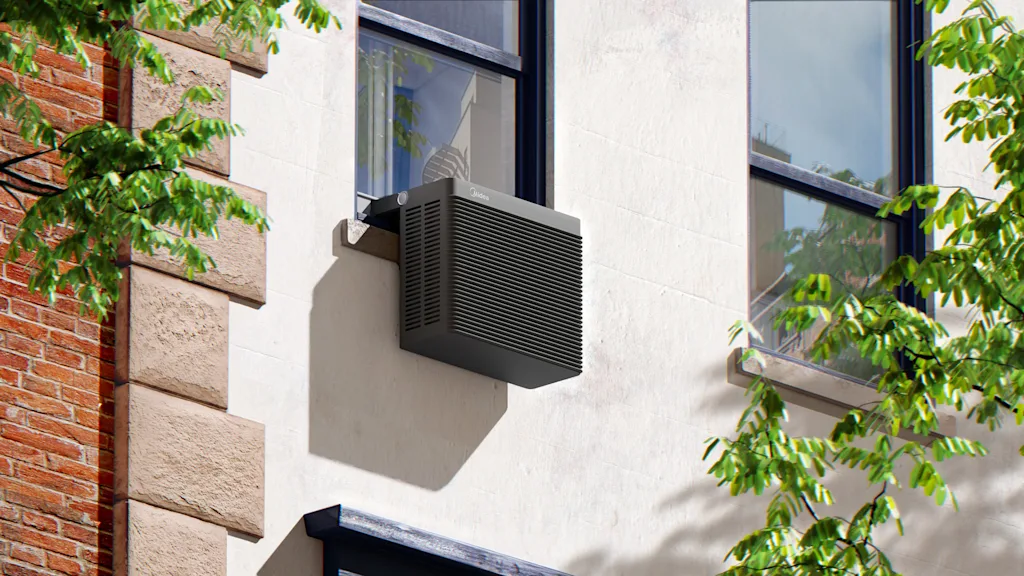
Right now, most heat pumps come in one of two formats: “mini splits” that are installed in the wall, or central units that can connect to ducts and replace a gas or oil furnace. Both work well, but they’re time-consuming and can be expensive to install. Putting in a mini-split often involves adding new wiring, since older homes don’t have the right voltage, and cutting holes in the wall. One unit might take a day of work and require multiple licensed tradespeople. Replacing a gas furnace in a house typically takes a couple of days—and can also . In a large old apartment building in New York, the challenges are multiplied.
Midea started working on the challenge in its Louisville office, which focuses on R&D. “We’re essentially a startup with the world’s largest appliance manufacturer as the backer,” says Brian Langness, a senior project manager at the Midea America Research Center. (Gradient, a startup, also separately worked on a different design for a window heat pump for New York.)
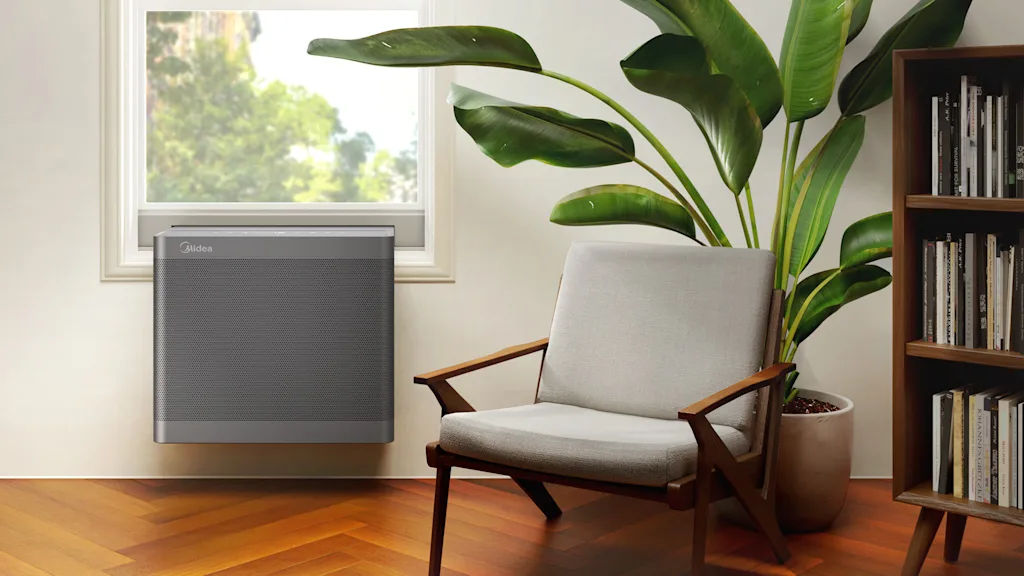
Midea began designing a new unit to meet the city’s strict requirements: sized to fit in a window, quiet to run, with reliable heating in very low temperatures that wouldn’t need backup from electric resistance heat. It also couldn’t require electrical upgrades, needed to have a saddle shape that wouldn’t block views, and had to be easy enough to install that it could theoretically be a DIY job.
Engineering the PWHP
The design team sprinted to adapt heat pump technology to the new format, working closely with the company’s manufacturing team in China. “It was a 24-hour design cycle,” says Langness. “They would work on the design while we were sleeping. We’d wake up in the morning, and we’d ask the things that needed to be worked on. That was really the way that we were able to get this done in such a short amount of time.”
While there are some other window heat pumps on the market, they don’t work in very low temperatures. To make it possible for a compact, self-contained unit to work well in cold weather, Midea designed a brand new compressor, changing components and modifying algorithms. (The company owns its own compressor manufacturer, making this step easier.)
The compressor monitors the outside temperature and only runs as much as it needs to. “Older style compressors were either on or off,” says Langness. “This one modulates that power to ensure that you’re hitting that sweet spot to make sure that you’re maintaining the room’s comfort, but not consuming an unnecessary amount of energy.”
By the summer of 2023, they had installed 36 prototypes at a city-owned public housing complex in Queens. Tenants started testing the units as air conditioners, and then as heaters the following winter. “Because of the timeframe, the residents were basically our field test engineers,” Langness says.
Based on feedback from tenants, the team tweaked the design. The unit has a flat top that acts like a windowsill, and one tenant had a cat that kept jumping on it and turning the device on and off; the engineers added a child safety lock. After some extreme cold weather, they also modified how the system runs so it ramps up more slowly to a specific temperature, making it more efficient.
Earlier this month, after a successful pilot, New York’s housing authority took out the pilot units and started installing 150 units of the final design. Midea also started selling the units to consumers through its distributors, at prices ranging between $2,800 and $3,000. Eventually, the company may sell the product directly at big box stores like Home Depot or Lowe’s.
Real-world performance
Although the unit was designed so that it could theoretically be installed by anyone, in the initial launch, Midea’s distributors will work with professional installers to ensure the installation is correct. (I worked with AI Global Enterprise, a New York City-based distributor, and an HVAC company called Halco to install the review unit for this article.)
But because it doesn’t require electrical upgrades or other major steps, it’s a simple and quick job. The unit is heavy, but uses shock absorbers to lower itself gently into place after it’s set in the window. After some experience, NYCHA’s staff could install three units in as little as 45 minutes, Langness says.
When I started testing the heat pump, the first thing I noticed was how comfortable the room felt. I recently moved into a 180-year-old former schoolhouse in upstate New York, and it’s not exactly energy efficient. The house has no added insulation, though its double brick walls with an air gap provide some natural temperature moderation. When I crank up the gas heat to 72 degrees, some corners of the house still feel chilly. The heat pump, which gradually heats up surfaces like walls and floor, felt like it heated the room more evenly than my gas furnace can
I tested the heat pump in a back room with a fireplace, which isn’t connected to the central heat in the rest of the house. That was also the only place I could put it: the room was a later addition, and the rest of the house’s walls are so unusually thick that the heat pump’s u-shaped design wouldn’t fit over the other windowsills.
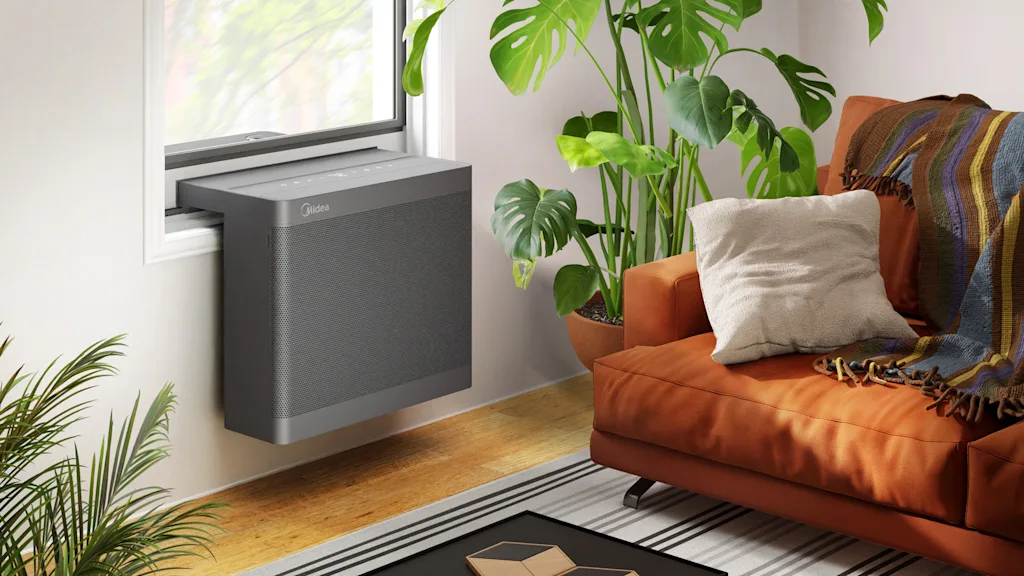
Of course, the heat pump would work even better in a well-insulated space. But when I turned up the heat with temperatures in the 20s outside, it soon felt toasty in the room—and more comfortable than the rest of the house. The fan was far quieter than the vents for my gas furnace, which are sometimes so incredibly loud that I have to turn off the heat temporarily when I’m in a meeting. The heat pump also has a “silent” mode that keeps the temperature up but makes the fan barely perceptible. While my furnace blows air through dusty vents, the heat pump keeps the air clean. The air also felt less dry than in my rooms with gas heat.
It uses relatively little energy—less than a space heater, while heating a bigger area. In the pilot in the New York City apartments, the city noted that it saw an 87% drop in energy use and 50% drop in energy cost compared to the old steam radiators.
My only complaint is the size: the heat pump takes up quite a bit of room under a window, similar to an old-fashioned radiator. For homeowners who can afford the extra cost and time, a mini split on the wall might fit better in some rooms (some mini splits look better than others, like the stylish design from the startup Quilt).
The Midea PWHP is designed to heat a living space between 300 and 500 square feet, depending on the layout of the rooms. In my case, the back room is separated, but I could feel the heat moving into my adjacent kitchen. In NYCHA’s two-bedroom apartments, Midea installed three units, one in each bedroom and one in the living room.
A less expensive heat pump
Midea is focused primarily on supplying the heat pump for apartment buildings. When NYCHA first launched the challenge, it estimated that it would need more than 150,000 window heat pumps to meet its 2050 climate goals. The company is in active discussions with other housing authorities, including in Boston, about pilots modeled after the program in New York. Another pilot is about to begin in Canada.
The company isn’t actively pushing direct sales to consumers at this point—as of right now, to buy one, you have to email the company to be connected with a local distributor. But the product could be a good fit for some homeowners, landlords, or even tenants who want a temporary climate solution that they can bring with them when they move.
At $2,800 or $3,000, it isn’t cheap, though Midea says that the price will eventually come down as production scales up. And until the end of the year—when most clean energy tax credits will expire thanks to Trump’s policies—it’s eligible for a federal tax credit of up to $2,000 on qualified installations. State, local, and utility incentive programs, such as New York State’s Clean Heat program, can also help offset the cost. And the total cost is still less than typical mini split heat pump, which can cost as much as $8,000 with installation in some regions.
For some people who might not otherwise have decided to get a heat pump, it could be a first step to getting off fossil fuels. “We recognize that whole home heat pumps and mini splits are an investment,” says Matt Slimsky, VP of production at Halco, the company that installed my review unit. “This window unit is still an investment, but it’s a heck of a gateway.”
The final deadline for Fast Company’s World Changing Ideas Awards is Friday, December 12, at 11:59 p.m. PT. Apply today.

