




“Because of that, you are more willing to take a risk and say, ‘Well, if it fails, it fails. But it was five minutes of my day. I’m cool with that,’” Flores said.
Bryson Shellito, head of marketing operations at Lucid Motors, shared how his team uses AI to quickly refresh creative assets and surface real-time performance insights, allowing them to focus on big campaigns while continually improving content through a feedback loop.
“This creates a feedback loop where we can get insights in real time,” Shellito explained. Instead of hemming and hawing over subjective details in a specific asset, we’re trying to create a learning loop to make our assets better and evolve and progress over time.”

Human instinct remains essential
Despite the technology, the panel agreed that human instinct remains non-negotiable. Elizabeth O’Brien, senior executive of sports and entertainment sponsorship marketing at IBM, emphasized that AI should handle the data so humans can handle the heart.
“Using AI judiciously helps you to free up to do the things that only humans can do,” O’Brien said. She noted that while AI writes race recaps, “there’s another section of the app where people can message the drivers or the team, and the team messages them back, and there’s no AI there.”
Kristina Windham, executive brand advisor for Milk Makeup, stressed that human oversight is vital when selecting brand partners. “I consistently task our teams to think through utilizing AI as we’re talking about influencers and community,” she said. Windham added that while AI can help surface potential talent, brands are deeply sensitive by nature—so humans must make the final call to preserve authenticity and keep the brand narrative aligned with its true north star.
Transparency is the future of brand ownership
Just as with most conversations around AI, the focus turned to trust. McGuire noted that consumers are savvy, and honesty about AI use is the best policy. “It really comes down to intent,” he said. “If your intent is to try to fool people, then you’re going to get caught, right? If your intent is to tell a story in a way that makes sense to utilize AI, be transparent about it.”
Lazer agreed, pointing out that owning AI use can be a strength. “If a brand is transparent about it, it actually greatly increases trust in the brand,” he concluded.
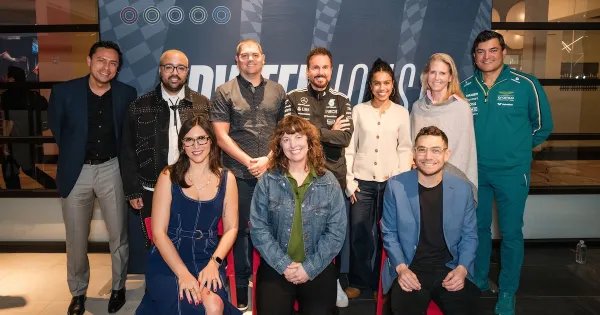
Featured Conversation Leaders
- Shergul Arshad, Head of North America, Aston Martin F1 Team
- Rafa Flores, Chief Product Officer, Treasure Data
- Justin Johnson, Global Marketing and Partnerships Expert, Former Head of Market Development at Acorns
- Liz Kneebone, VP, Community Programs and Development, ADWEEK
- Joe Lazer, CMO (Fractional), Pepper
- Don McGuire, CMO, Qualcomm
- Elizabeth O’Brien, Senior Executive, Sports & Entertainment Sponsorship Marketing, IBM
- Bryson Shellito, Head of Marketing Operations, Lucid Motors
- Kristina Windham, Executive Brand Advisor, Milk Makeup
- Karen Wood, CMO, Treasure Data

