






In 2015, Disney discovered a new way to cash in on nostalgia: live-action remakes of its classic animated films. That started with Cinderella, brought back to the big screen 65 years after the original movie premiered. In the decade since, Disney has released 12 more of those remakes, with the gap between the original films’ release dates and the remakes growing shorter and shorter. The next entry is a remake of 2016’s Moana coming to theaters this July, a few months shy of the original’s 10-year anniversary.
Disney remakes are designed to recapture the magic of the source material, replicating iconic shots and rehashing beloved lines, scenes, and songs. But that creative philosophy has always raised a simple question: Why watch the remake, when the original animated film still exists?
On Monday, March 23, Disney released the first trailer for its new take on Moana, putting that question center-stage like never before—and viewers across social media are dragging the remake to the Realm of Monsters and back.
The trailer immediately stands out from the original for its lack of color, falling into the same desaturated camp as the Wicked films and modern Marvel movies. Users on social media placed stills from the trailer side by side with images from the original Moana, making the contrast unmistakable. As one user put it, the remake “literally just sucked up all the color” from Moana’s signature vibrant, tropical setting.
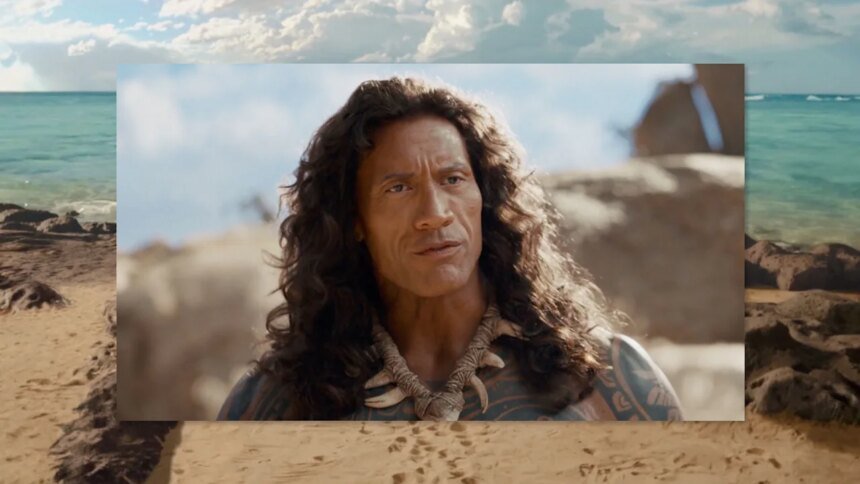
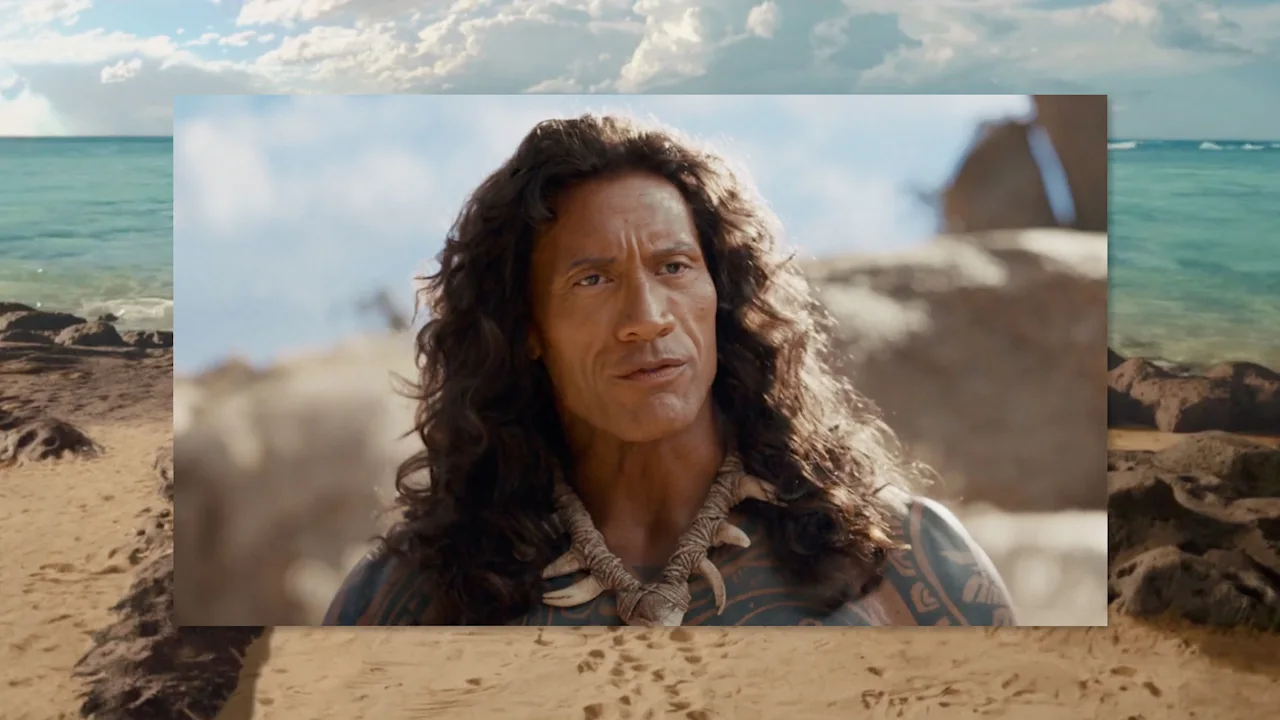
Moana also stands out from Disney’s other live-action remakes for its casting. Where some of those films have used a buzzy star to provide a new take (at least nominally) on old material, like Emma Watson as Belle in Beauty and the Beast or Halle Bailey as Ariel in The Little Mermaid, the new Moana retreads the exact same casting strategy as the original movie: an unknown actress making her film debut as Disney Princess Moana—then Auli’i Cravalho, now Catherine Laga’aia—and Dwane “the Rock” Johnson as her companion Maui, whose live-action version sports a less-than-stellar wig that’s drawn its own wave of ridicule.
Johnson’s casting marks the first time an actor from an original Disney film is reprising their role in its remake. He may be a big name, but social media users see his rehashed casting as another strike against the film: “Hundreds of millions of dollars wasted so Dwayne Johnson can don a terrible wig and deliver the same lines but with worse timing,” one poster lamented.
Recasting the same actor in a principal role only adds to the question at the center of the discourse: What sets this Moana apart from the original, let alone makes it the better viewing option less than 10 years later?
Though that answer may be unclear to critics online, Disney’s box office success speaks for itself. In 2019, the Lion King remake made Disney $1.6 billion worldwide, now sitting as its third-highest-grossing film of all time. 2017’s Beauty and the Beast, 2019’s Aladdin, and 2025’s Lilo & Stitch also crossed that billion-dollar threshold, proving that despite any online outrage, Disney’s remakes are still among its best-selling ventures. That doesn’t mean those movies are necessarily superior to their originals (and any diehard Disney fans would no doubt balk at that very idea), but as long as they’re putting butts in seats, they’re not likely to stop being made any time soon.
The new Moana trailer ends with a gag that exemplifies why some stories are best told through animation. Maui, a shapeshifter, gets stuck mid-transformation, with the body of a human and the head of a shark. In the original Moana, the moment was a charming joke that resulted in a cutesy hybrid worthy of being turned into a Funko Pop. In the remake, it’s an off-putting abomination that’s somehow meant to strike the same tone—a descriptor that might just fit the movie itself.

