



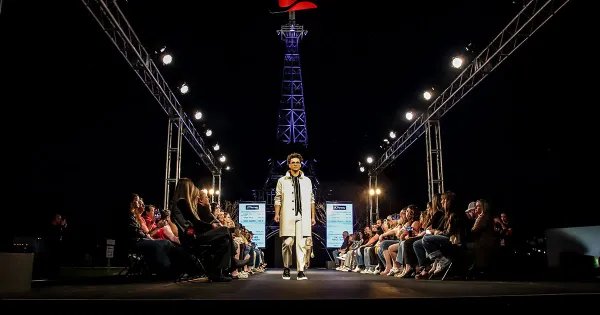

Along with showcasing JCPenney’s affordable prices, the brand featured “actual body diversity walking down the runway,” said Thalberg, including looks from its inclusive sizing collection with model Ashley Graham, which launched in October.

The lack of body diversity in fashion is “another tension in culture we’ve been pushing up against,” Thalberg said. “That’s part of the accessibility of [‘The Other Paris Runway’]: to be able to dream and know [the clothes] are attainable to you, not only on price point but in size and body range.”
Changing people’s minds
Thalberg and her team have been pushing up against such cultural tensions since unveiling the “Yes, JCPenney” platform last year.
Following years of declining sales, the brand revival is aimed at “getting people to see JCPenney with fresh eyes,” Thalberg said. The “Yes, JCPenney” slogan imbues the brand with confidence, turning questions about the brand’s style and affordability into a declarative statement.
Since the launch, JCPenney’s store traffic is up 6% year over year, and it has seen significant growth across its Home, Juniors, Activewear and Fine Jewelry departments, said Thalberg.

She said the platform is resonating with customers because “it’s that cool double wow of finding surprisingly great fashion and surprisingly great deals.”
“The attitudinal pivot is being unapologetic about that,” she continued. “It’s incumbent on us to tell that story in ways that open people’s eyes.”
Like “The Other Venice Wedding” or the Ashley Graham collaboration, JCPenney’s marketing pivot has been “deliberate in making points of comparison” with a spirit that’s both “smart and welcoming,” Thalberg explained.
Another example was this year’s Super Bowl-themed campaign, which shone a spotlight on the real MVPs: football players’ moms. All the JCPenney clothes worn by the mothers cost less than a single Super Bowl ticket, Thalberg said.

