






New York City scaffolding is so commonplace it has become a kind of extra architectural skin covering the city. It’s estimated that there are more than 9,000 of these “construction sheds” (another term for scaffolding) installed across the city, enough to stretch nearly 400 miles if they were put end to end.
They do the important work of shielding pedestrians from potential falling debris during building construction and renovation projects, but they also shroud large swaths of sidewalk in dark and cloistered tunnels made of an unfortunate jumble of steel poles and plywood.
Construction scaffolding is the city’s ubiquitous, utilitarian, and mostly unpleasant necessary evil. And now, a new effort aims to rethink their form with a series of new, more appealing designs.
Six new designs for scaffolding have just been announced by New York City’s Department of Buildings, and they replace the dark and convoluted sheds of today with bright, airy, and open versions. The new scaffolding designs come from two design teams led by the New York-based architecture and urban design firm Practice for Architecture and Urbanism (PAU) and the global design and engineering firm Arup. Simplified and minimal, each of the six designs turns the workaday construction shed into a more open and accessible add-on to the built environment.
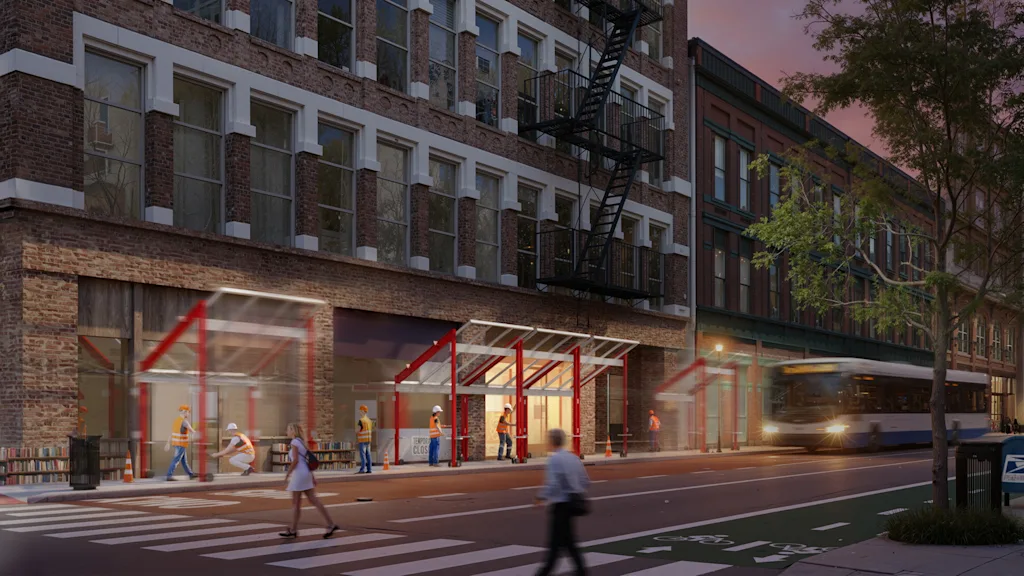
Time for a makeover
The new designs are a result of the “Get Sheds Down” initiative, an effort launched by the city in 2023 to update the look of construction sheds and revise the rules and regulations that govern when and where they’re used. The sheds currently in use in New York—and many other cities—have been largely unchanged since the 1980s. Usually hunter green and made up of a kit of parts consisting largely of steel poles and plywood, the current shed system is a boxy shield, but it’s also an obstacle for people moving down sidewalks, entering buildings, or getting in and out of vehicles on the street.
After a public bidding process, the city hired two design teams led by PAU and Arup to reimagine the shed. They were asked to create six designs for alternative sheds that maintain public safety while also improving the pedestrian experience, beautifying the streetscape, and keeping the cost of installing sheds reasonable for building owners.
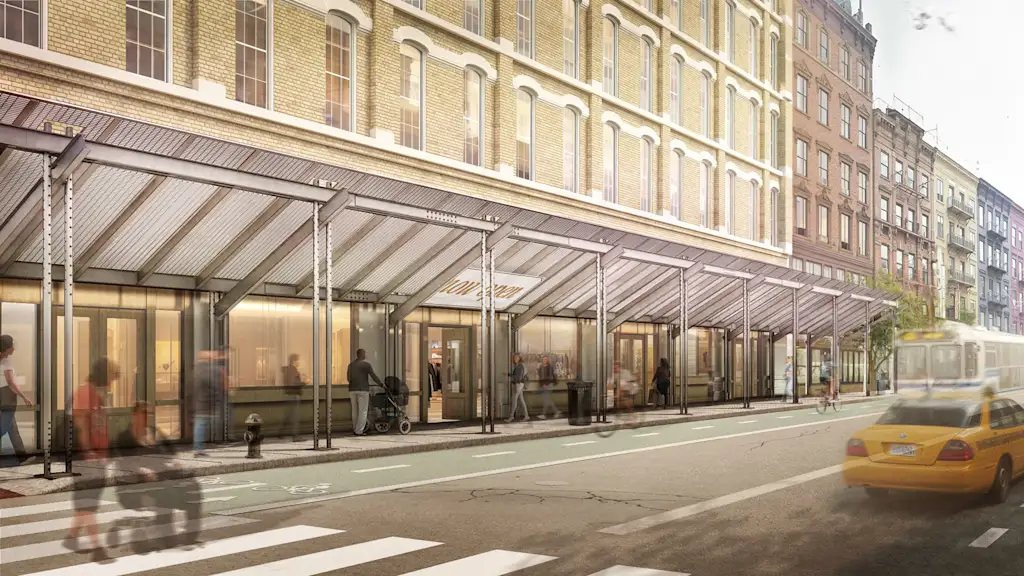
PAU’s three designs use a slanted form, a transparent roof, and a streamlined kit of structural parts to make a much more open and airy shed. “We were very focused on the pedestrian experience,” says Vishaan Chakrabarti, founder of PAU. “The slanted design lets more light and air in. It’s a very simple thing.”
Just as important, Chakrabarti says, was the elimination of the cross bracing between columns, X-shaped metal poles that act almost like walls on the existing sheds. PAU’s design makes each column stronger so that only one horizontal beam is needed to connect them.
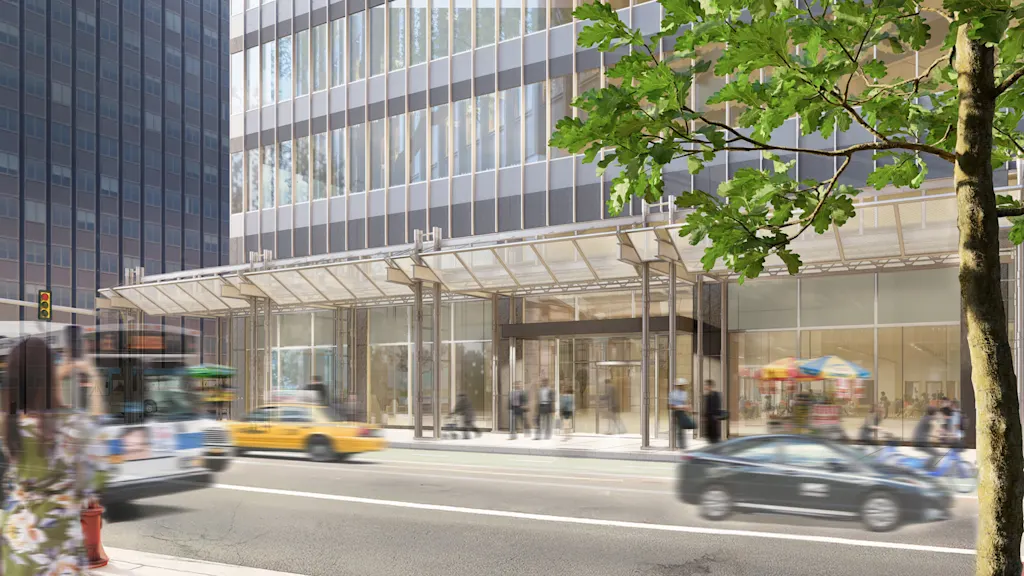
The baseline version of the shed uses this configuration with a transparent roof. A large version can be used for bigger buildings and broader sidewalks with more widely spaced structural columns that double up to provide more strength. And for smaller-scale projects or emergency installations, PAU has designed a version that uses a high-strength netting on its slanted side, offering safety and a nearly clear view to the sky above.
A new take on an old form
Arup’s three designs also bring in noticeably more light than the existing shed system, while also offering variability for the different conditions found across the city. One design, named the Rigid Shed, uses a grid-based structural system with prefabricated connection nodes, minimizing materials and connections during assembly.
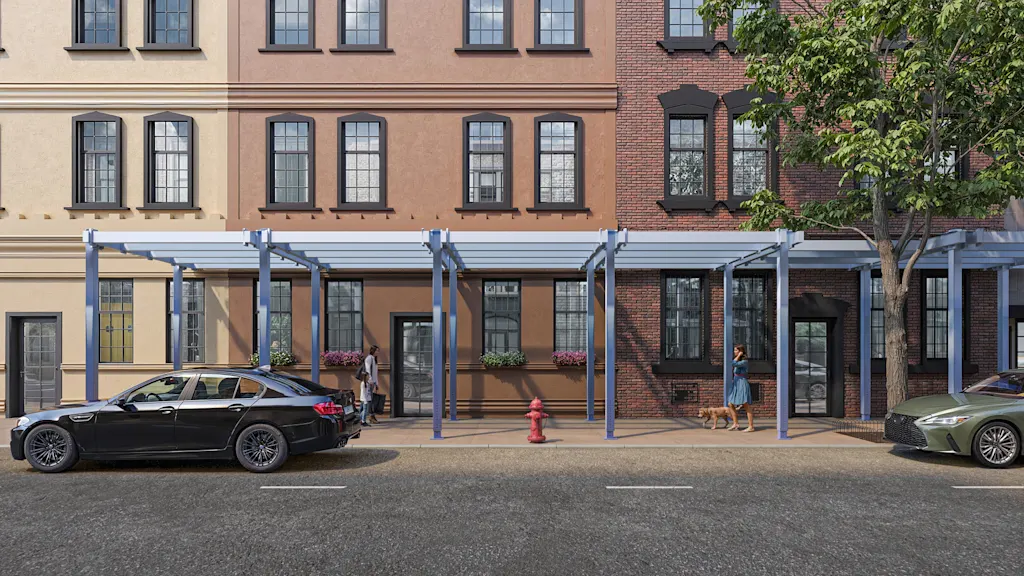
Another design, the Flex Shed, has a similar grid approach but with an even simpler set of posts and beams that can be adjusted in three dimensions to accommodate things like street trees, fire escapes, and the dozens of types of street furniture and infrastructure that exists on city sidewalks. Maybe the most elegant of all the six solutions, the Air Shed is a balcony-like cantilever that only anchors to the sidewalk at points alongside the building. Rather than creating a tunnel people have to traverse, it forms a thin canopy overhead that some people might not even notice.
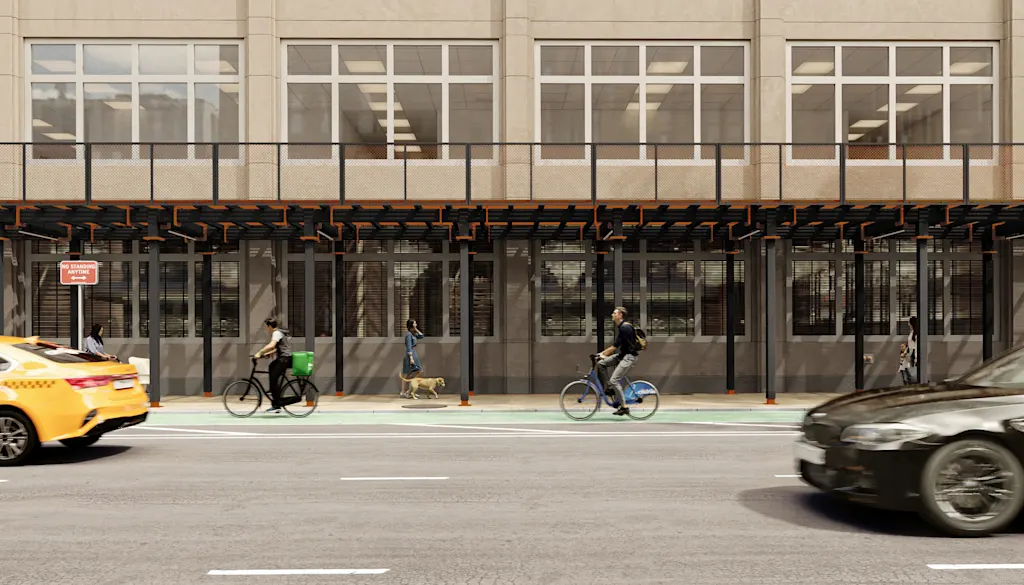
“The inspiration for the Air Shed is essentially a wall-mounted shelving system,” says Seth Wolfe, a principal at Arup.
Arup has been working on these ideas for more than a decade. The firm first got involved back in 2009 when it partnered with the architecture firm KNE Studio on a submission to another city-led shed redesign effort. KNE Studio’s design was a finalist in that design competition, and the two firms remained in contact and continued to work on new shed designs in conjunction with the shed installing company Core Scaffolding.
When the Get Sheds Down initiative launched, the team was primed to participate. “We had momentum going into the RFP,” says Kevin Erickson of KNE Studio. “We had stuff cooking on the backburner.”
The six new designs resulting from the “Get Sheds Down” initiative join a range of scaffolding types in use in cities around the world, with a range of materials and price points. The winner of New York City’s 2009 shed design competition, Urban Umbrella, is now a provider of upscale sheds across the city. Simpler approaches are also in use.
Chakrabarti notes that scaffolding in Hong Kong is still made from bamboo. He even suggested early on in the Get Sheds Down process that maybe that wouldn’t be such a bad idea in New York. “I actually asked the question,” he says. “I got laughed at.”
New York City’s Department of Buildings is now working with PAU and Arup to make the designs available for public use by builders and contractors doing construction and renovation work on buildings across the city. Next, each of the new designs will be made into mockups that can be evaluated and tested. Some of these new shed designs could begin appearing at building sites and on city sidewalks before the end of 2026.
The six new designs add to what Chakrabarti calls a “menu” of options for builders in the city, some of whom may still opt to use the existing system. He says providing more choice is a way to achieve the main goal of the initiative, which is to improve the experience of people in New York City who will inevitably encounter construction sheds.
“You can use a Lego set to build an ugly thing, or you can use a Lego set to build a beautiful thing,” Chakrabarti says. “But the first thing you’ve got to do is understand the Lego set.”
The final deadline for Fast Company’s World Changing Ideas Awards is Friday, December 12, at 11:59 p.m. PT. Apply today.

