




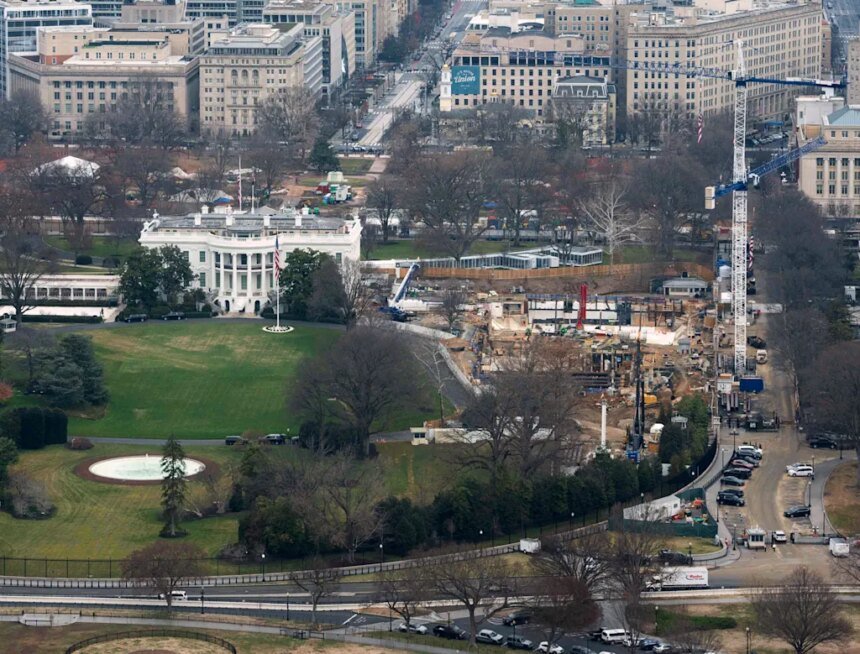

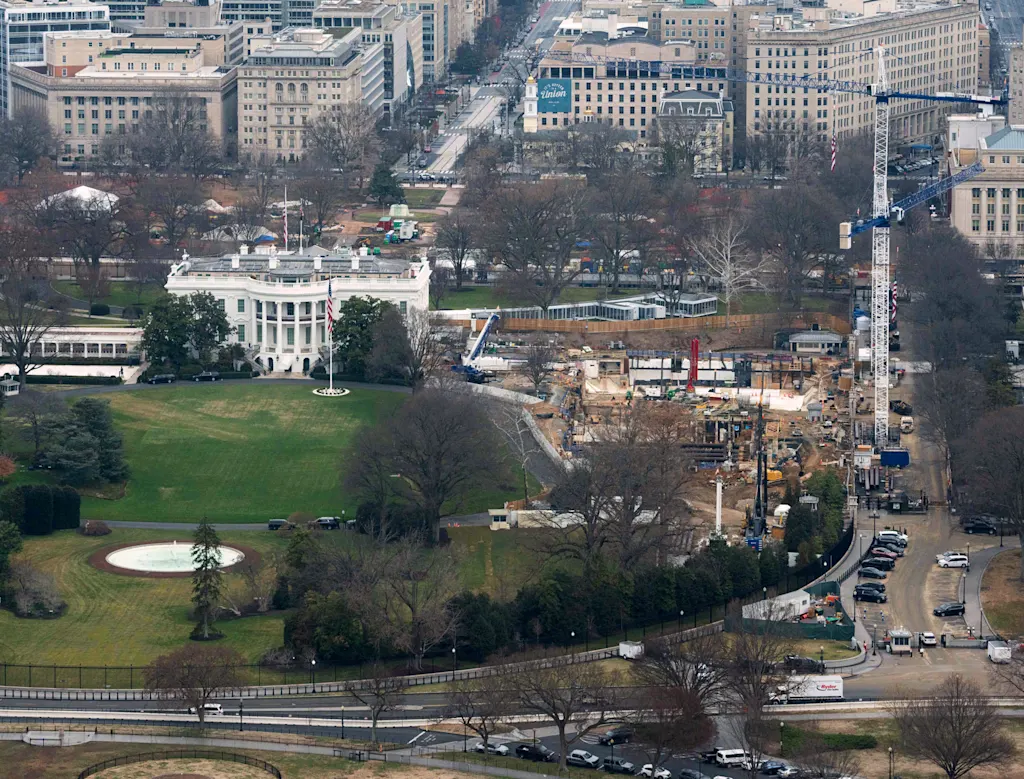
With a portion of the White House demolished and site preparation underway, President Donald Trump’s planned ballroom extension on the White House grounds has been ordered to halt construction.
Ruling on a lawsuit filed by the National Trust for Historic Preservation, U.S. District Court Judge Richard J. Leon granted a request for a preliminary injunction against the White House ballroom, finding that Trump exceeded his authority in pursuing the project without congressional approval. Leon gave the White House—along with lead defendants the National Park Service and six other parties—14 days to appeal. The Trump administration has already appealed the ruling, and the case is almost certainly headed to the Supreme Court.
The ruling is significant, affecting one of the most controversial and high-profile construction projects in the nation. The ruling is also notable for its expressive and sometimes sassy prose.
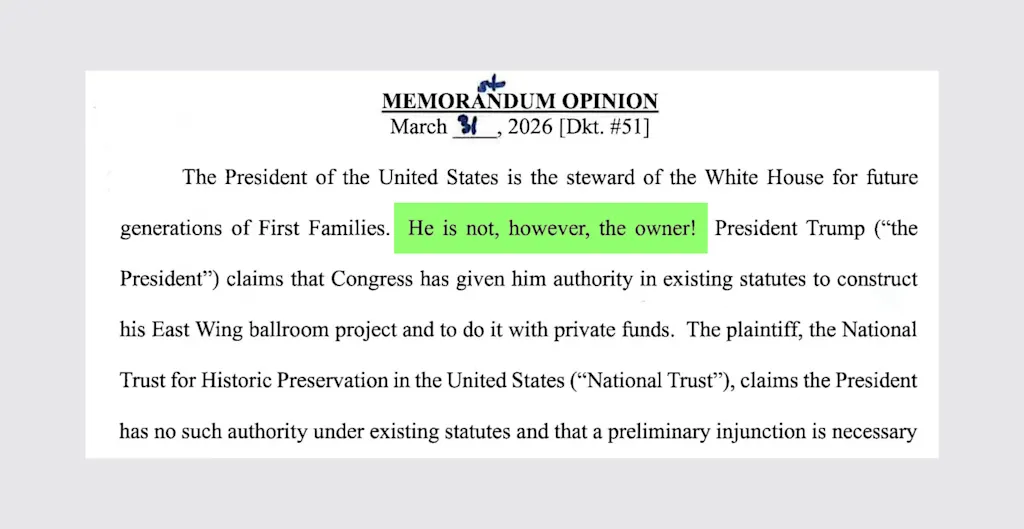
While most court rulings naturally contain a lot of legalese and case references, Leon’s 35-page ruling on the White House ballroom leans into bombast, using an exclamation point 17 times, plus one more time in a footnote. (This tally does not include a 19th exclamation point, in a quote from Trump.) The first usage comes in just the second sentence of the ruling, which notes that Trump is the steward of the White House, “not, however, the owner!”
Four times in the ruling, Leon responds with exasperation and astonishment to the assertions of the defense in arguing Trump did not violate the law, using the sarcastic and memorable phrase, “Please!”
One of the defense’s assertions is that a certain section of the law shouldn’t be read as to limit this type of construction without a clear statement or prohibition from Congress. To that, Leon writes: “Please! A clear statement rule makes sense when Congress is legislating in an area where the President exercises overlapping constitutional authority.”
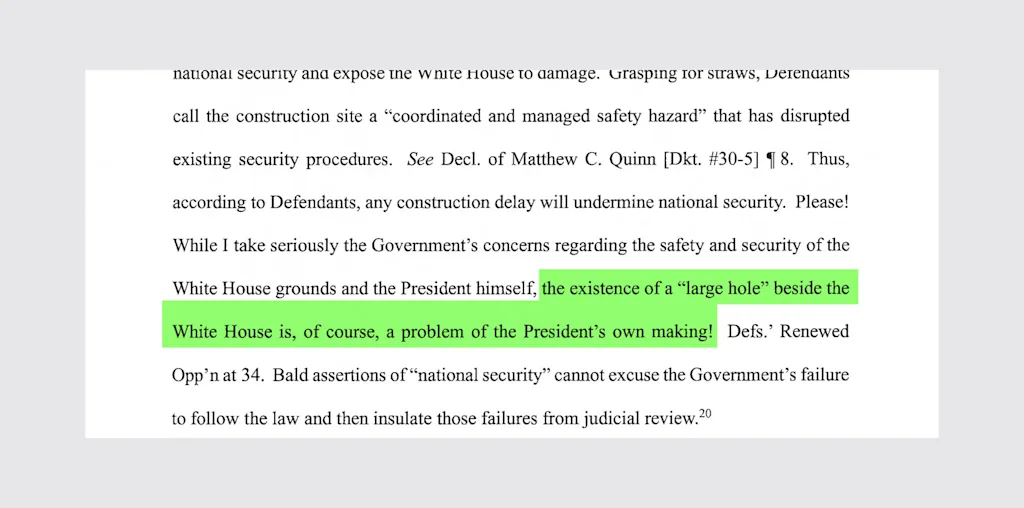
Another of the defense’s assertions is that delaying the already-started construction project could make the construction site a safety hazard that undermines national security. Leon strenuously counters. “Please! While I take seriously the Government’s concerns regarding the safety and security of the White House grounds and the President himself, the existence of a ‘large hole’ beside the White House is, of course, a problem of the President’s own making!” he writes.
Other instances of his sarcastic “Please!” are in sections perhaps only lawyers could truly appreciate. One focuses on what does and does not belong as a precedent reference in a review known as ultra vires, or a test of whether an action is “beyond the powers” of an official. The other attempts to make the point that other donor-funded construction projects have gone ahead without formal congressional approval.
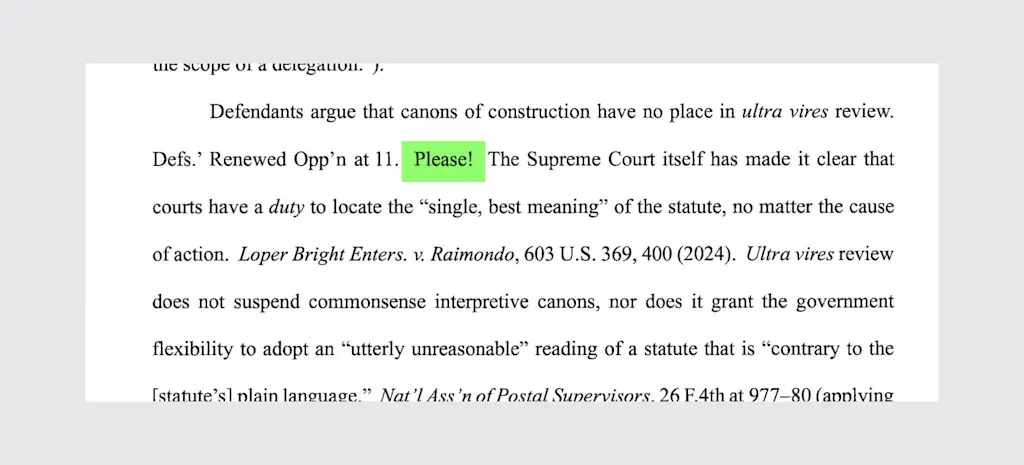
As Leon writes: “Please!”
The tone here is uncommon in federal court rulings, and hard to separate from that frequently used in written communications and social media posts by Trump himself. Leon, who was appointed to his role in 2002 by then-President George W. Bush, was previously in private practice and served as counsel to Congress in the investigations of three sitting presidents.
The White House ballroom project was set to face a vote for official approval at the April 2 meeting of the National Capital Planning Commission. Its short-term future has been complicated by this ruling.
“Where does this leave us? Unfortunately for Defendants, unless and until Congress blesses this project through statutory authorization, construction has to stop!” Leon writes in his ruling.
Leon notes that it is not too late for the project to move ahead in compliance with the law.
“The President may at any time go to Congress to obtain express authority to construct a ballroom and to do so with private funds. Indeed, Congress may even choose to appropriate funds for the ballroom,” he writes.
That, his ruling notes, is the heart of the White House ballroom’s legal question. By rushing ahead with the demolition of the East Wing of the White House and launching into construction of the ballroom without congressional approval, Trump and his administration violated the law. Should this ruling survive its likely appeal from the defendants, the ballroom would be required to follow the formal process such a project requires.
The plaintiff’s “interests in a constitutional and lawful process will be vindicated,” Leon writes. “And the American people will benefit from the branches of Government exercising their constitutionally prescribed roles. Not a bad outcome, that!”

