






Rocket and Redfin’s Super Bowl spot doesn’t shy away from tension.
The 60-second film opens on a Latino family finding a new home on the Redfin app. The house is bigger—necessary after welcoming a new baby—but the move comes at a cost. As the family packs up, their teenage daughter lingers, visibly upset about leaving her friends behind.
Across town, in a new neighborhood, another family is unpacking. The move is the result of a divorce—another transition the girl didn’t choose.
When the two girls first see each other outside of their new homes, neither looks comfortable. They’re strangers, arriving in the same place for entirely different reasons.
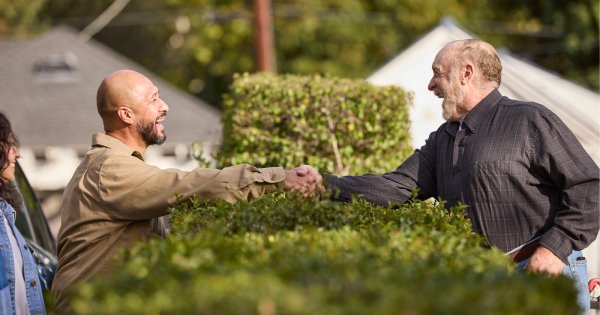
That unease extends to the adults. The Latino father warns his new neighbor that there is a big storm coming, but the white father barely acknowledges him. The moment hangs.
When the storm hits, the white family’s dog bolts and goes missing. The next day, the Latino daughter finds the dog and returns it. The white girl opens the door and throws her arms around her.
Jonathan Mildenhall, chief marketing officer of Rocket Companies, told ADWEEK the embrace was directed as “a release of all the trauma”—of her parents splitting up, of being uprooted from her home, and of finding her dog.
Outside, the Latino father cuts a fallen tree free in his neighbor’s driveway. The gestures are small, but they shift everything.
The film widens into scenes of neighbors helping one another across the country before returning to the two girls—now riding bikes together—suggesting that in this neighborhood, trust has taken root.
The spot, titled “America Needs Neighbors Like You,” was created by Miramar and marks Rocket and Redfin’s first-ever joint Super Bowl commercial, as well as Redfin’s debut on the Big Game stage. Set to Mr. Roger’s “Wont You Be My Neighbor” sung by Lady Gaga, rather than foregrounding a product, the ad advances a civic idea: that neighborliness, once assumed, now requires intention.
Both Rocket and Miramar framed the work as a response to eroding social trust. Mildenhall pointed to a stark statistic: Only 25% of Americans know their next door neighbor by name.
Miramar chief creative officer John McKelvey said the brief centered on this decline in trust and on resisting the urge to over-explain. “You see when he gets snubbed,” he said of the Latino father. “There’s so much in that look.”

