






If you’re sick of paying for subscription services, Tesla has some bad news for you.
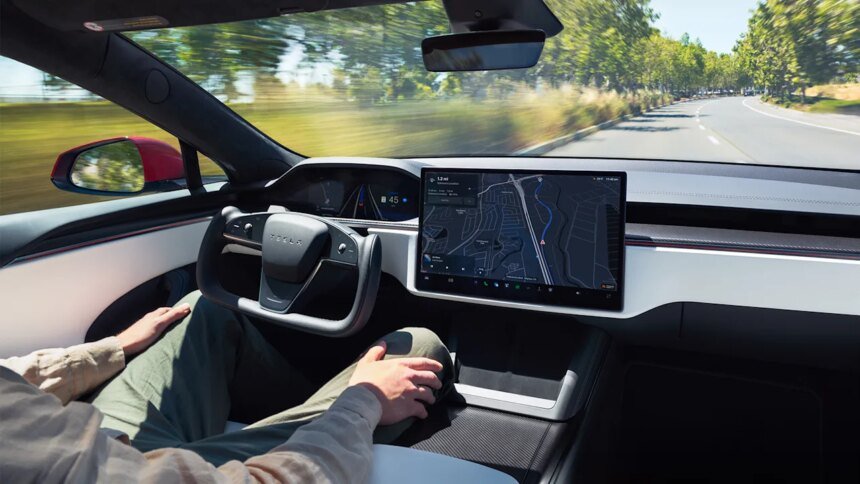
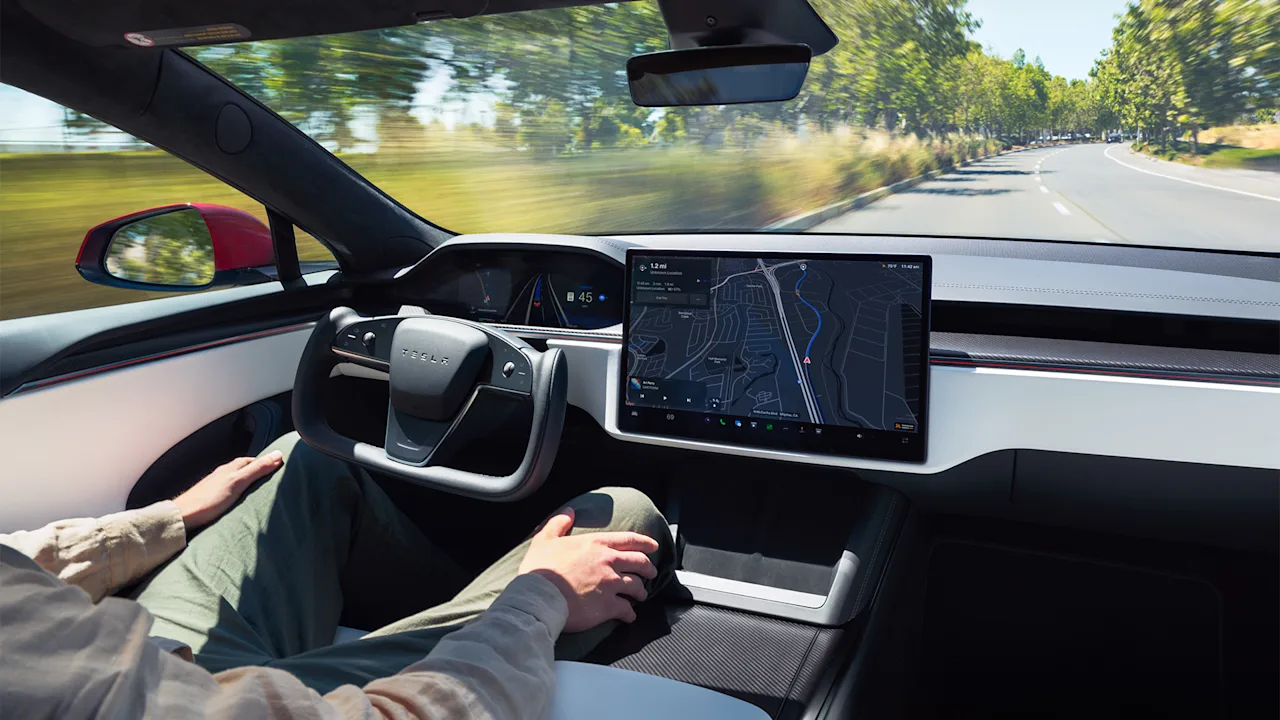
The EV maker announced Wednesday that going forward, its Full Self-Driving (Supervised) software will only be available as a monthly subscription – not a one-time payment. Tesla CEO Elon Musk broke the news on X, the social media platform he owns, noting that the shift will happen on February 14. “FSD will only be available as a monthly subscription thereafter,” Musk wrote, offering no details about how that change would affect the software’s pricing.
While the price of access to Full Self-Driving (FSD) mode has fluctuated over time, the current one-time purchase price for the software is $8,000 or $99 paid as a monthly subscription. Tesla once charged as much as $15,000 for the technology, which promises to “intelligently and accurately complete driving maneuvers for you,” including steering, making lane changes and parking. The feature requires “active driver supervision” and doesn’t “make the vehicle autonomous,” Tesla disclaims on the Full Self-Driving website.
Tesla’s decision to flip to a subscription model for its self-driving software may not land well with some Tesla buyers, but it’s not a total surprise. In November, Tesla’s shareholders approved an eye-watering pay package for Musk that consolidates even more power at the company with the mercurial billionaire with the promise of a payout that could be worth $1 trillion. One of the pay package milestones Musk must hit to unlock the biggest executive payout in history? Boosting Tesla’s Full Self-Driving software to 10 million monthly active subscriptions before 2035.
Much of Tesla’s future revolves around the future of its self-driving tech, but Musk has broken many promises about the software along the way. In California, the company is facing legal woes over deceptive marketing practices that suggested Tesla’s technology was autonomous, even as it required close supervision from a human driver at the wheel – hence the software’s current nomenclature: “Full Self-Driving (Supervised).” Musk has also asserted that Tesla’s vehicles would be “appreciating assets” thanks to the self-driving software – a claim not borne out by Tesla’s recent tanking used vehicle prices.
Tesla’s competition heats up
Depending on where you look, Tesla’s competition is either out ahead or catching up fast. Earlier this month, Chinese company BYD bumped Tesla from its top slot as the world’s bestselling electric vehicle maker. Tesla reported that it delivered 1.64 million EVs last year, a 9% dip from the year prior. In the last quarter of 2025, Tesla missed sales expectations, tallying 418,227 sales – a decline connected to Trump’s decision to kill the hefty U.S. tax credits designed to give Americans a break on qualifying EVs.
Tesla, like Musk, has a lot of irons in the fire. The company is also investing aggressively into the robotaxi business, even as its self-driving tech faces scrutiny from federal regulators for reckless behavior. Tesla has a lot of catching up to do on that count, with Alphabet’s Waymo leading the push into autonomous taxi service across major U.S. cities like Austin, Los Angeles and San Francisco.
Tesla’s own robotaxi experiment has yet to impress, based on Fast Company’s own firsthand experience. Unlike Waymo’s own properly self-driving taxis, Tesla’s robotaxis still come with a human supervisor – an awkward compromise and a long way from Musk’s lofty promises of a fully autonomous near-future.

