






Opinions expressed by Entrepreneur contributors are their own.
Key Takeaways
- A sudden diagnosis in college changed her entire career trajectory and became the insight behind a 25,000-store empire.
- Phillips had no co-packer, no CPG resume and no business degree when she cold-pitched Whole Foods and they said yes.
- Believe in the product, get it into people’s hands and adjust when necessary.
Vanessa Phillips did not start her food company with a pitch deck. She started it with a lie.
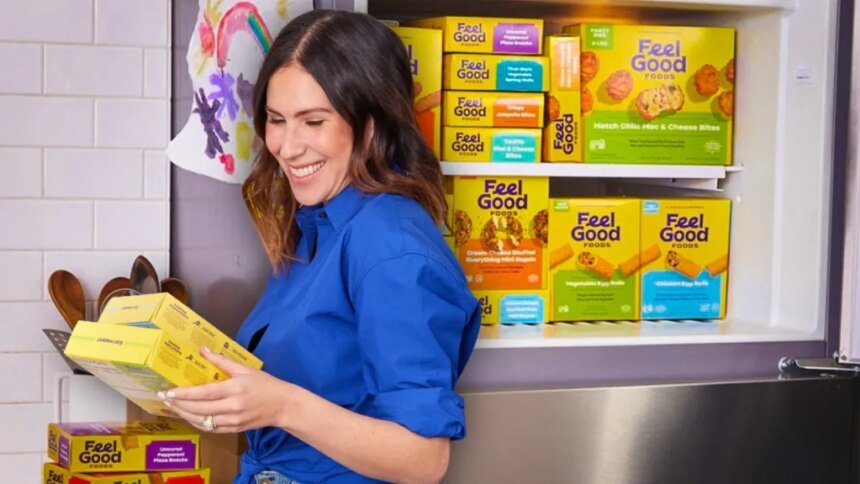
Today, she is the CEO of Feel Good Foods, a gluten-free frozen brand sold in roughly 25,000 grocery stores nationwide, including Target and Walmart. But before freezer aisles and national distribution, there was a flight to a family reunion in Los Angeles and a completely made-up lasagna business.
“I don’t know what I wanna do with my life,” she remembers telling her mom on the plane to that reunion. Her mother suggested she manifest something. Phillips replied, “You mean lie?”
When they landed, she started telling relatives she had just launched a gluten-free lasagna company. There was no company. No lasagna. No kitchen beyond her New York studio apartment.
By the end of the weekend, she had fully conceptualized a business that did not yet exist.
The confidence was not random. Phillips grew up in New York City in a restaurant family. Her father owned quick-service bagel shops and Chinese restaurants. Food was daily life. She worked in restaurants, dreamed of owning one and gravitated toward people in hospitality.
Related: These Restaurateurs Relied on One Tactic to Help Them Tackle Their ‘Most Ambitious Challenge Yet’
Then college brought a pivot. She was diagnosed with celiac disease. The foods she loved most were suddenly off limits. Instead of retreating, she obsessed. She worked even more in restaurants, describing specials she could not eat with theatrical detail. She especially missed dumplings and egg rolls, the foods tied to childhood memories with her parents.
That longing became direction.
She opened Friedman’s inside Chelsea Market, building a menu around the nostalgia she missed after going gluten-free. Guests signed a book with their names and hometowns, traveling specifically for food they could finally eat without compromise.
The lasagna she invented on that reunion weekend stopped being a story and became a signal. There was a larger audience hungry for food that did not feel like a substitute.
And Phillips was not thinking small.
Related: Why Google’s Food Program Is Actually a People Strategy
Belief beats credentials
The first retail product was gluten-free dumplings.
Phillips and her team had tested them as a special at Friedman’s. Customers loved them. Instead of keeping them inside the restaurant, she packed samples into Ziploc bags, mocked up packaging with a friend and sent them to Whole Foods. She had no co-packer, no background in consumer packaged goods and no business degree.
“I had no reason to believe they were going to say yes,” she says. “But I knew they would.”
And they did. The first order covered 27 stores in the North Atlantic region. Phillips cried when she got the news. Then the adrenaline gave way to responsibility. She stepped away from the day-to-day of Friedman’s, moved to Boston and demoed the product every single day for four months. Two shifts a day at every story. And she engaged with nearly every shopper.
It was a hands-on belief.
Then came the first production run. Twenty-five thousand cartons. Almost immediately, customers began calling. The dumplings were turning to mush.
Related: He Started Making His Favorite Game Day Snack at Home. Now, His Brand Is Growing Fast.
Phillips picked up the box and found the mistake. One crucial line was missing from the cooking instructions: cover pan with lid. There was no budget to scrap the packaging. So thousands of cartons were stamped by hand in bright red letters correcting the error.
Today, she would reprint the packaging. Back then, that was not an option. That moment captures how the company was built. Not with polish. Not with perfect information. But with movement. Phillips never went to business school. She had no experience in consumer packaged goods. And she believes that helped.
“I really had no idea what was ahead,” she says. Without a long list of everything that could go wrong, she moved forward. When something did go wrong, she fixed it and kept going. There was no U-turn.
Feel Good Foods is now sold in roughly 25,000 grocery stores nationwide. But the through line remains the same as those early days: believe in the product, get it into people’s hands and adjust when necessary.
The lesson was never about dumplings turning to mush. It was about not turning around.
About Restaurant Influencers
Restaurant Influencers is brought to you by Toast, the powerful restaurant point-of-sale and management system that helps restaurants improve operations, increase sales and create a better guest experience.
Toast — Powering Successful Restaurants. Learn more about Toast.
Key Takeaways
- A sudden diagnosis in college changed her entire career trajectory and became the insight behind a 25,000-store empire.
- Phillips had no co-packer, no CPG resume and no business degree when she cold-pitched Whole Foods and they said yes.
- Believe in the product, get it into people’s hands and adjust when necessary.
Vanessa Phillips did not start her food company with a pitch deck. She started it with a lie.
Today, she is the CEO of Feel Good Foods, a gluten-free frozen brand sold in roughly 25,000 grocery stores nationwide, including Target and Walmart. But before freezer aisles and national distribution, there was a flight to a family reunion in Los Angeles and a completely made-up lasagna business.

