



The role of the marketing leader has gone from a focus on individual campaigns to a role that functions as the primary commercial engine for the entire enterprise.
Success in this environment requires more than technical skill; it demands a way of thinking that connects finance, strategy, and human behavior across traditional silos.
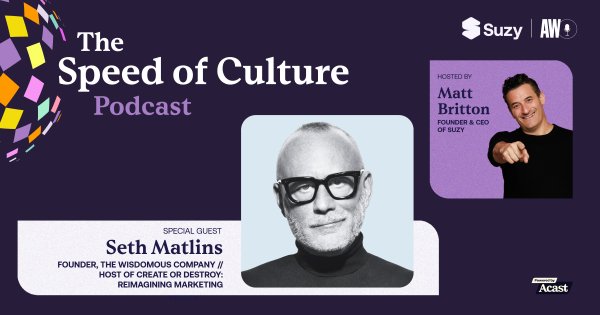
Seth Matlins joins Matt Britton on the Speed of Culture podcast to share his perspective on these evolving requirements for leadership and value creation.
Seth is the founder of The Wisdomous Company and host of the Create or Destroy podcast, bringing experience from the Forbes CMO network, Live Nation, and CAA to a conversation about the future of brand identity and business growth.
They discuss what forces move the industry in 2026, with Seth providing a new perspective on why common data about executive tenure is often misunderstood and why the ability to see across the whole organization is now the most valuable skill for any leader.
How do brands build emotional connections through identity? And what is the best way to prepare for the future? These are questions they get into in this episode.
About the guest:
Seth Matlins is the founder of The Wisdomous Company and the host of the Create or Destroy: Reimagining Marketing podcast. His career spans several decades and includes leadership roles on both the client and agency sides, including serving as the first global CMO of Live Nation and leading the Forbes CMO network.
Seth has been at the forefront of shaping modern marketing, from running Rock the Vote to his work at CAA and Endeavor. Today, he focuses on how business decisions contribute to value creation or destruction, helping leaders navigate the complexities of a fragmented market.
Key Takeaways:
[04:19] Reevaluating the Narrative of Executive Tenure — Seth argues that the frequently cited data showing short tenures for marketing leaders is often stripped of its necessary context. While the average time in a role may be around forty months, this number does not distinguish between those who leave due to failure and those who move on because of promotions, better opportunities, or retirement. Perpetuating a negative narrative without this context is self-defeating for the industry. The focus should remain on whether a leader has the organizational permission to succeed in their specific environment.
[07:16] Permission and the Power of Invention — Brilliant leadership requires both individual capability and an organization that allows for real transformation. Seth references the idea that the most effective way to predict what comes next is to invent it yourself. This mindset moves a leader from merely responding to changes to actively shaping the future of the brand.

