





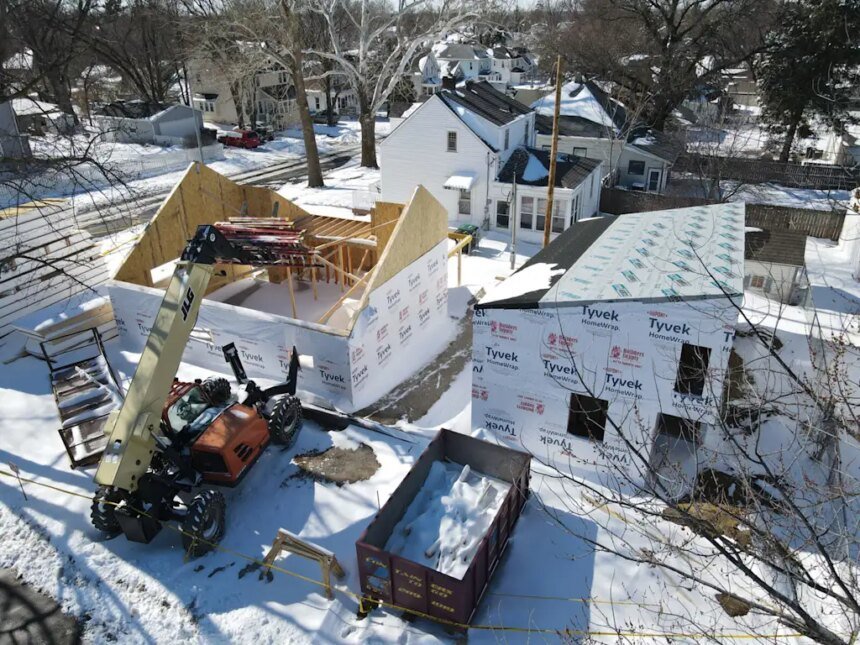

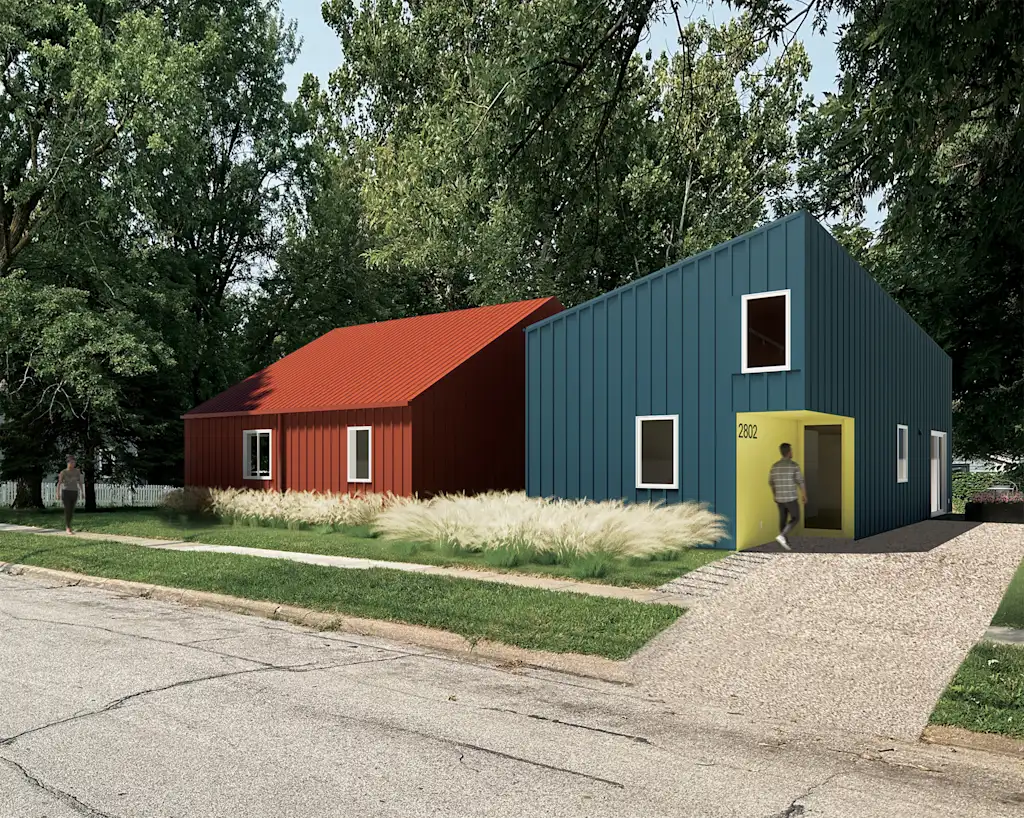
On the corner of a tree-lined street in northeast Omaha, Nebraska, two modern and minimalist residences are resetting the standard of what a new house should look like. Their bold orange and navy blue exteriors and spare, geometric forms set them apart from the more conventional gabled houses down the street. The biggest difference, though, is their size. At just 802 and 618 square feet, the two houses are significantly smaller than the average new American home, which has a median area of more than 2,100 square feet.
The houses are the first two iterations of OurStory, a housing system envisioned as a replicable, accessible, and above all affordable approach to building homes. Using hyper-efficient spatial layouts and quickly manufactured prefab parts, the houses are designed to be built fast and inexpensively for anything from an age-in-place forever home to a backyard accessory dwelling unit (ADU) to a remarkably enticing option for a first-time homebuyer. They’re resetting the standard for starter homes in the U.S.
The OurStory houses are a collaboration between the nonprofit Partners for Livable Omaha and the University of Nebraska-Lincoln College of Architecture’s FACT studio, which engaged architecture students to design and build the first two homes. Construction is expected to wrap up by August. The larger house has already sold for just $190,000—$90,000 less than the median sale price of homes in the city. The smaller house will likely be even more affordable.
Not just more housing, more variety
Omaha, like many cities, has a shortage of affordable housing. The city estimates that it needs 30,000 new homes for low- and middle-income residents by the end of the decade. The OurStory project was launched partly to fill that gap, but also to address another kind of housing shortage: the low variety of housing types on the market. Of the 48 building permits issued for single family homes in the last month in Omaha and surrounding Douglas County, only six are smaller than 2,000 square feet, and none are smaller than 1,000 square feet.
Jessica Scheuerman, executive director of Partners for Livable Omaha, says there’s a need for a wider range of housing types, from smaller footprints to homes designed for aging in place. Scheuerman realized the extent of the need after seeing her mother struggle to find appropriate housing on a fixed income, and thought there should be a bigger range of options. “When you design and plan for the aging community, everybody benefits,” she says.
In 2024, she reached out to architect Jeffrey Day, a practicing architect and professor at the University of Nebraska–Lincoln College of Architecture, to think about what a solution could look like. The two had worked together before on other projects, and they agreed that a modest aging-ready house could be a good assignment for the university’s design-build students. The project could also have legs.
“The goal has always been to think about this project as a prototype that could be replicated multiple times, and in different configurations,” Day says.
For Scheuerman, making the houses suitable for aging in place was one priority. Before founding Partners for Livable Omaha in 2020, she’s been a longtime vice president of Partners for Livable Communities, a Washington D.C.–based nonprofit that has worked for nearly 50 years to improve urban planning and design to create places where people can thrive. Aging in place is one of its main focus areas. So when the design of the OurStory houses got started, Scheuerman stressed the need for the design to include some of the basic tenets of aging-ready housing, from a zero-step entrance to wheelchair accessible hallways and doors. “We need to stop treating older adults like they’re invisible and the built environment is not for them,” she says.
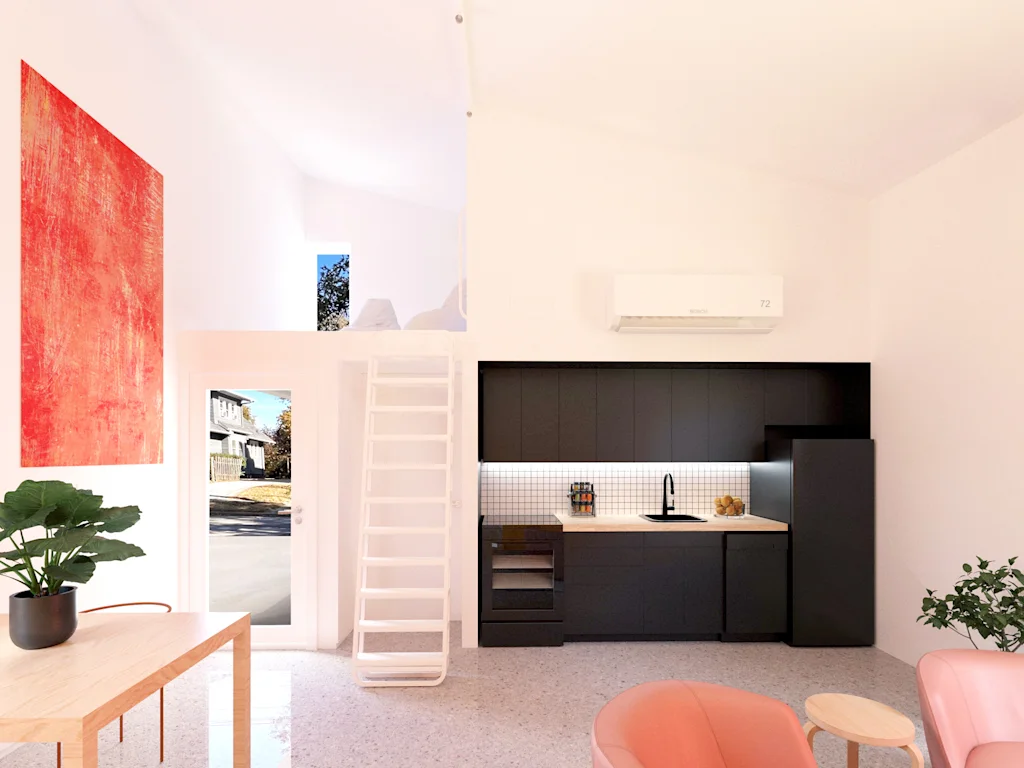
A flexible kit of parts
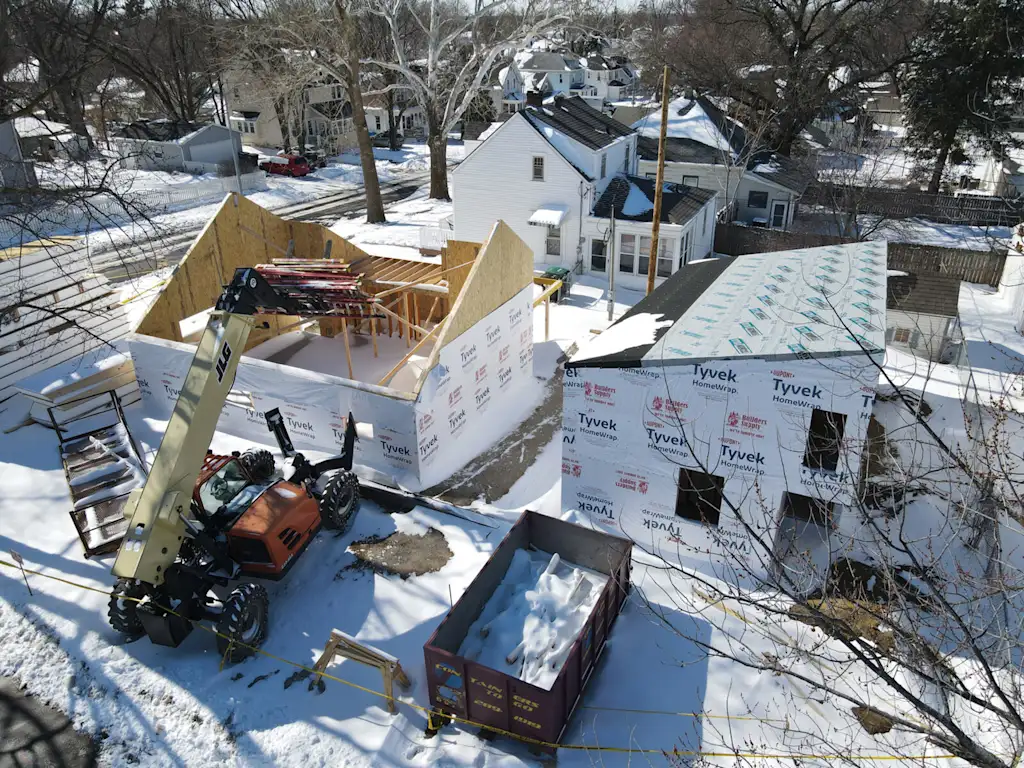
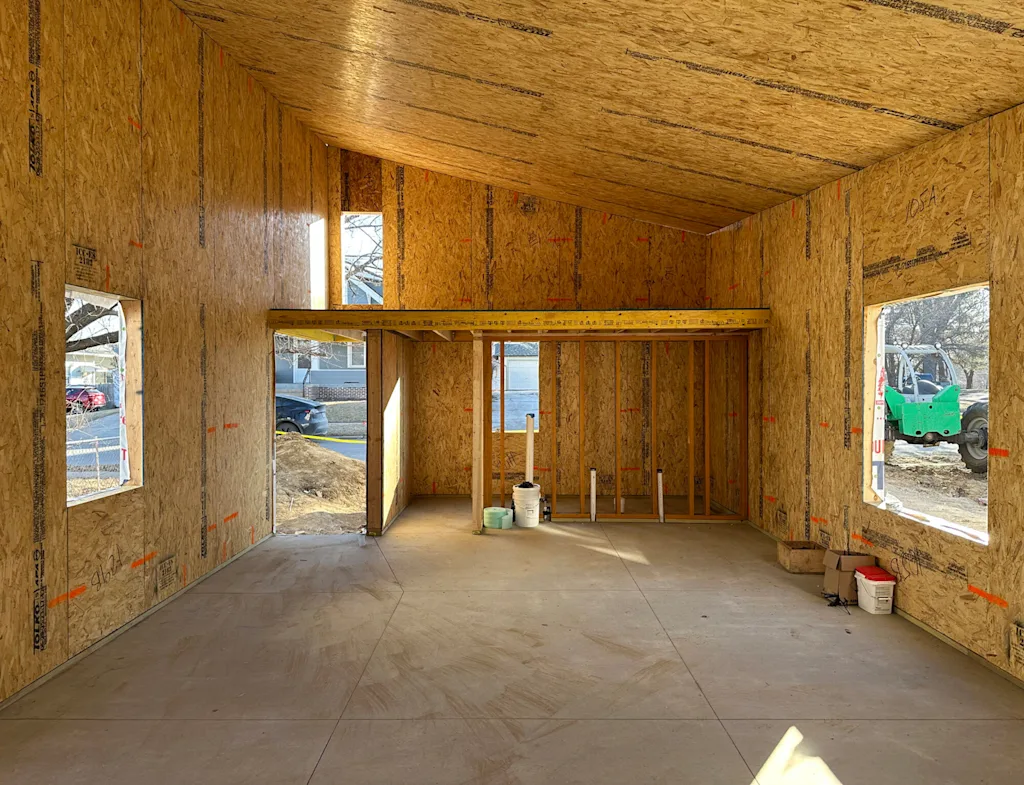
Those aims were just the start. Under the guidance of Day, who runs his own Omaha-based architecture practice, Actual Architecture Company, the University of Nebraska design-build students expanded on the brief to turn the project into a shape-shifting and highly refined version of a small home. The team also decided the houses should be designed using a kit of parts, with prefabricated structural insulated panels making up the walls of the homes to speed up the construction timeline and bring down costs.
Inside, the students dialed in on the least flexible parts of a house, the kitchen and bathroom. Requiring a lot of plumbing and electrical work, these rooms can make up a significant amount of the cost of construction depending on where they’re placed. So the students placed the spaces right next to each other, sharing a wall where all that infrastructure could be concentrated. “It has a lot of the electrical and all the plumbing in that one 10-foot wall,” Day says.
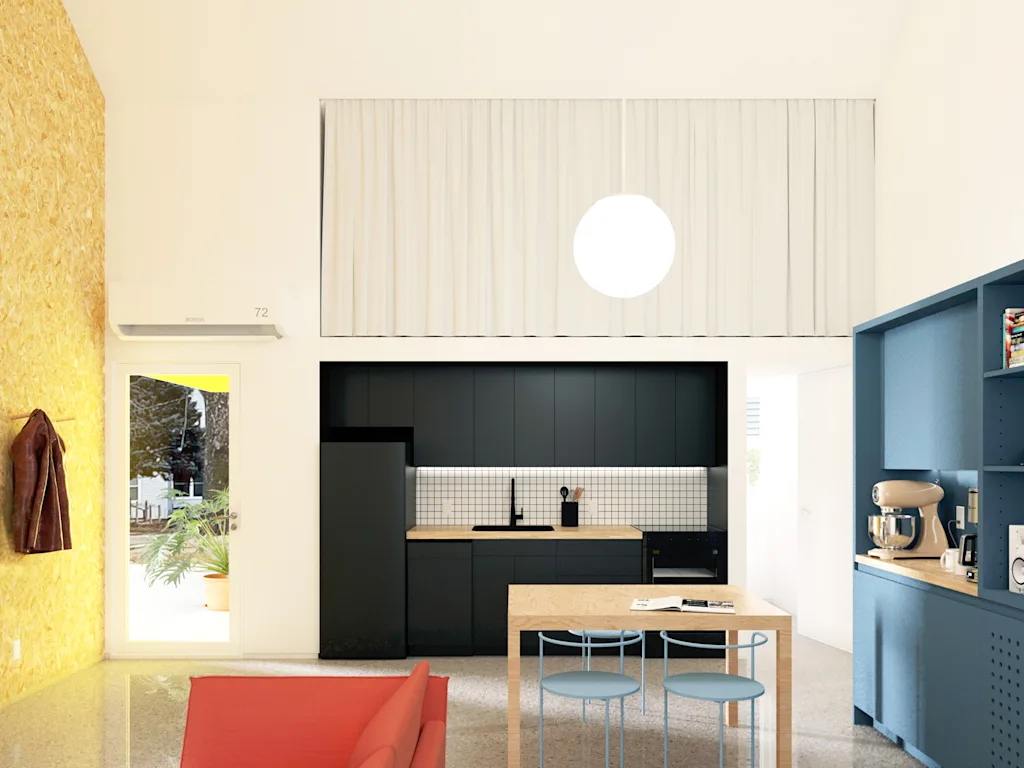
This wall, along with the house exterior walls and room dividers, can all be built in a factory, and students are now doing some of that prefab construction work themselves. “Someone could be putting a foundation in while the interior components are being fabricated in a shop,” Day says. “Everything comes together on the property to reduce construction time, and therefore cost.”
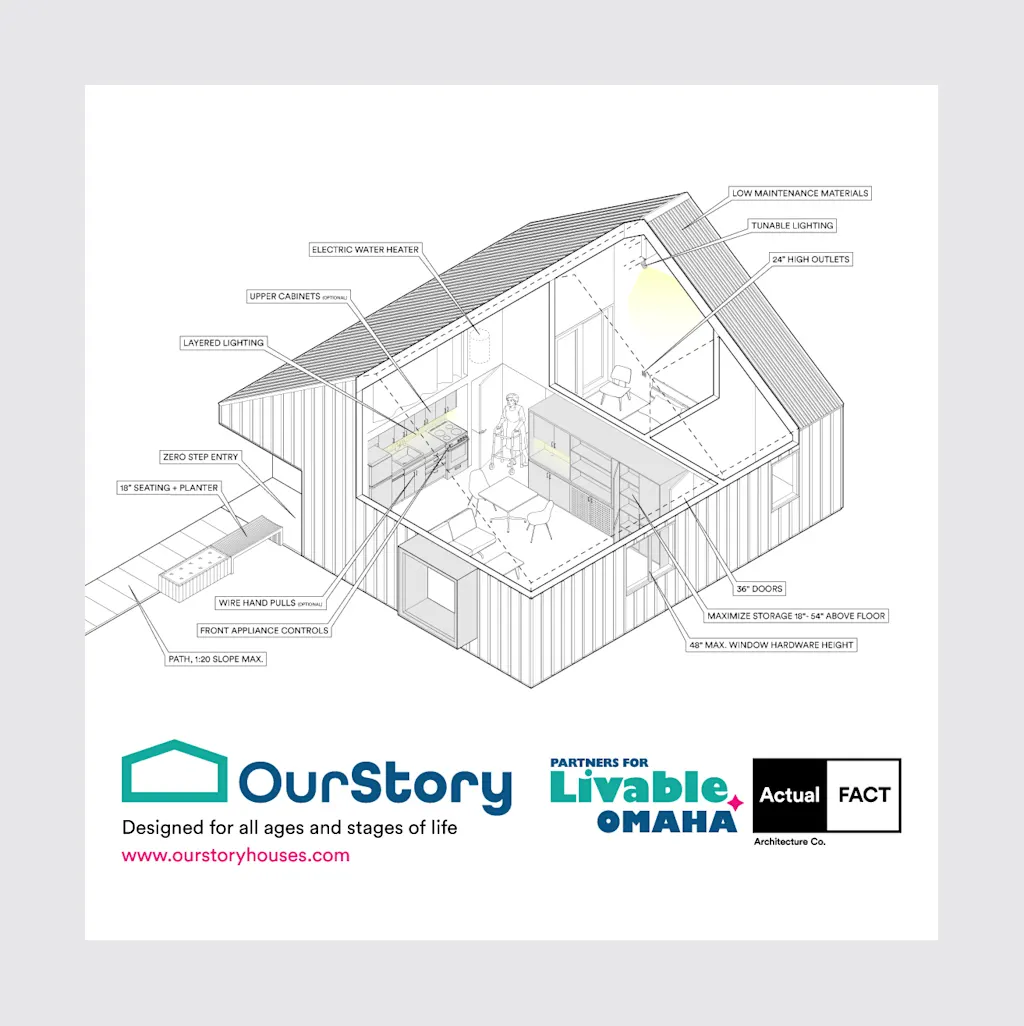
Taking this approach lent flexibility to the house design, which evolved in a major way from its earliest inklings. Originally planned as a single house for that corner lot in northeastern Omaha, the project got an unexpected alteration when a visiting official from the city’s planning department suggested subdividing the lot and making it into two houses. “And we’re like, ‘I didn’t know you would let me do that,’” Scheuerman says. “Like, ‘you’re gonna let me do that?’”
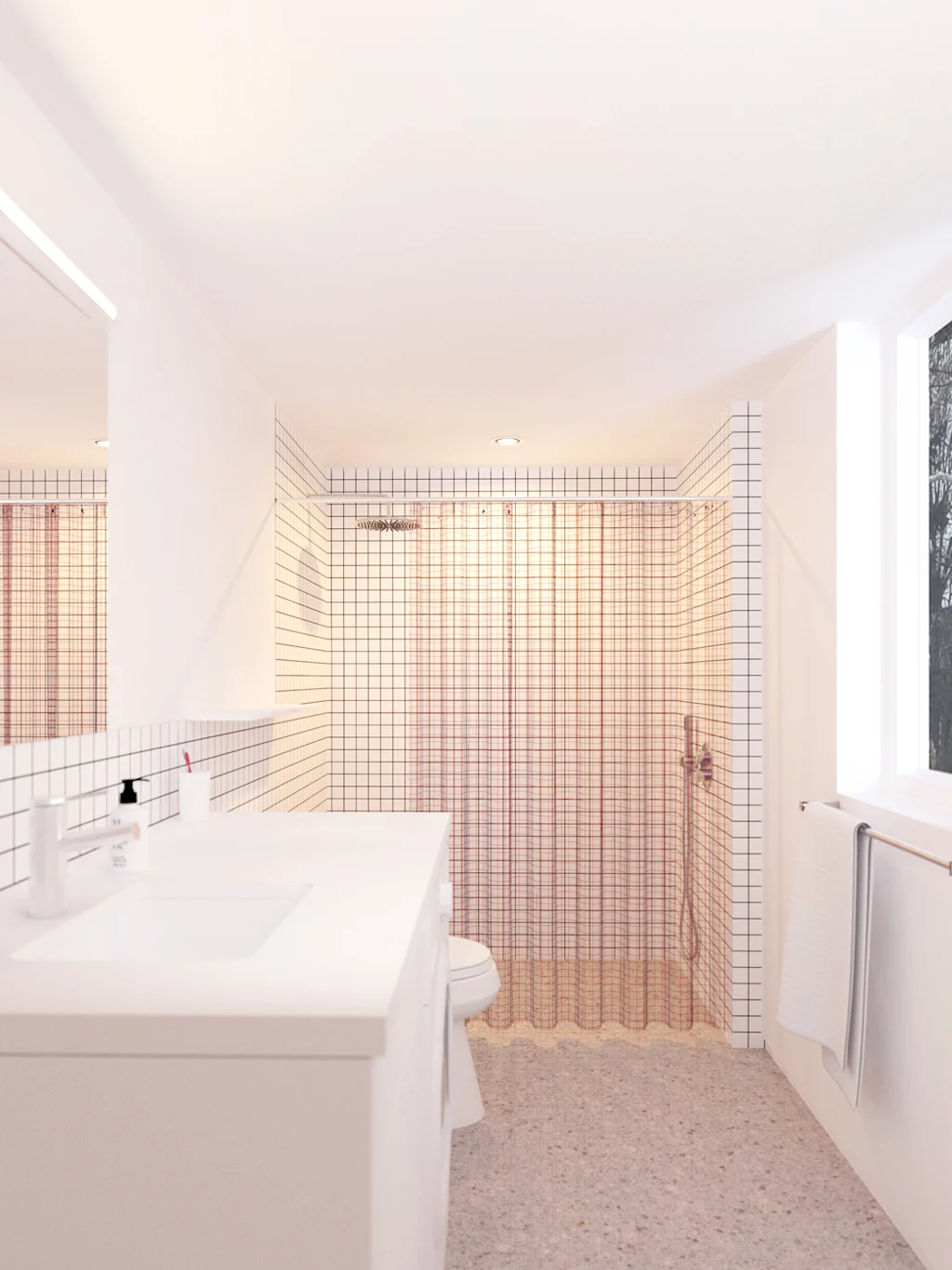
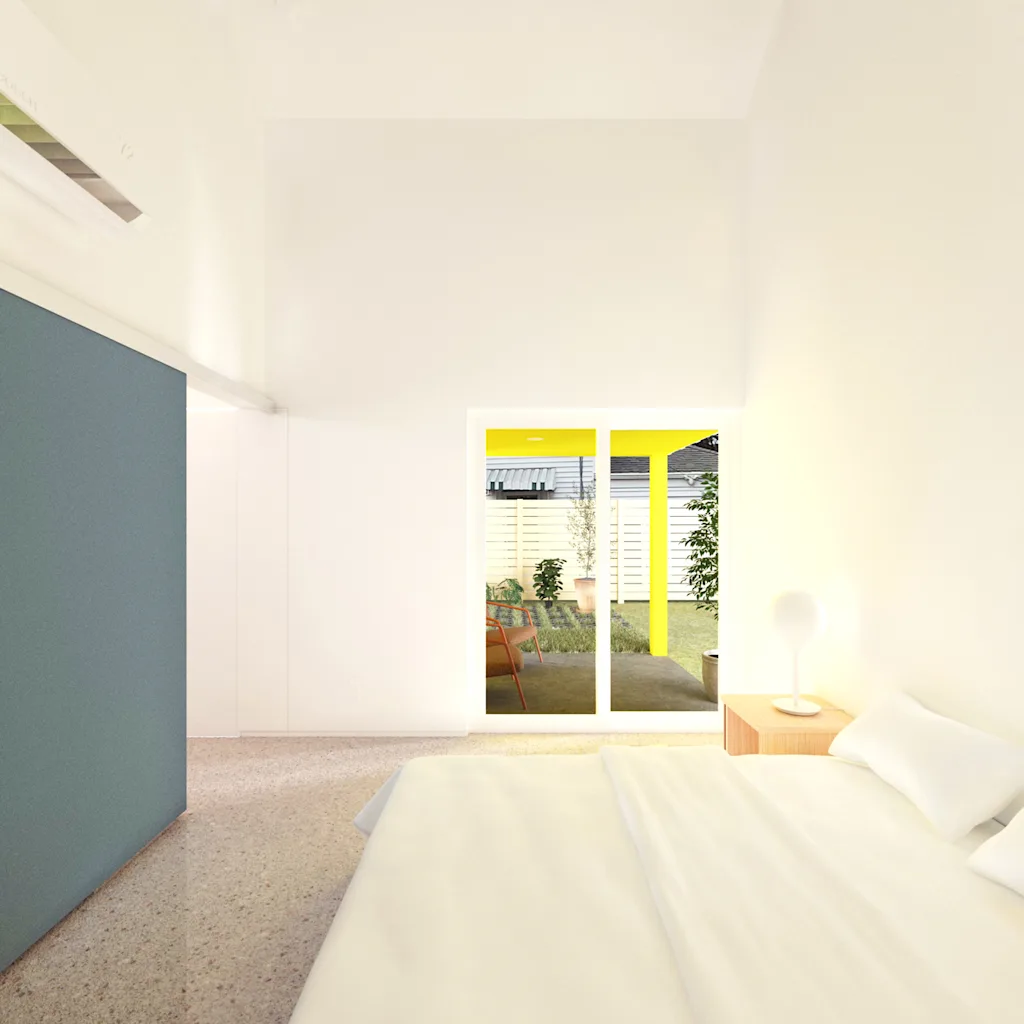
Now a two-house project, the students used their kitchen-bathroom wall as the central point of the designs and worked their way out from there. The larger house became a two bedroom, and the smaller a one bedroom. One has a peaked roof and the other a single slant, with extra room in a loft area. “The system has certain components that can be configured in different ways,” Day says.
That means the design can be more than just the aging-in-place housing Scheuerman initially set out to create. “Everyone puts an overlay on it,” she says. “People see this product, and they see artist housing, or they see rental income with an ADU. Or they see a solution for a problem that they have.”
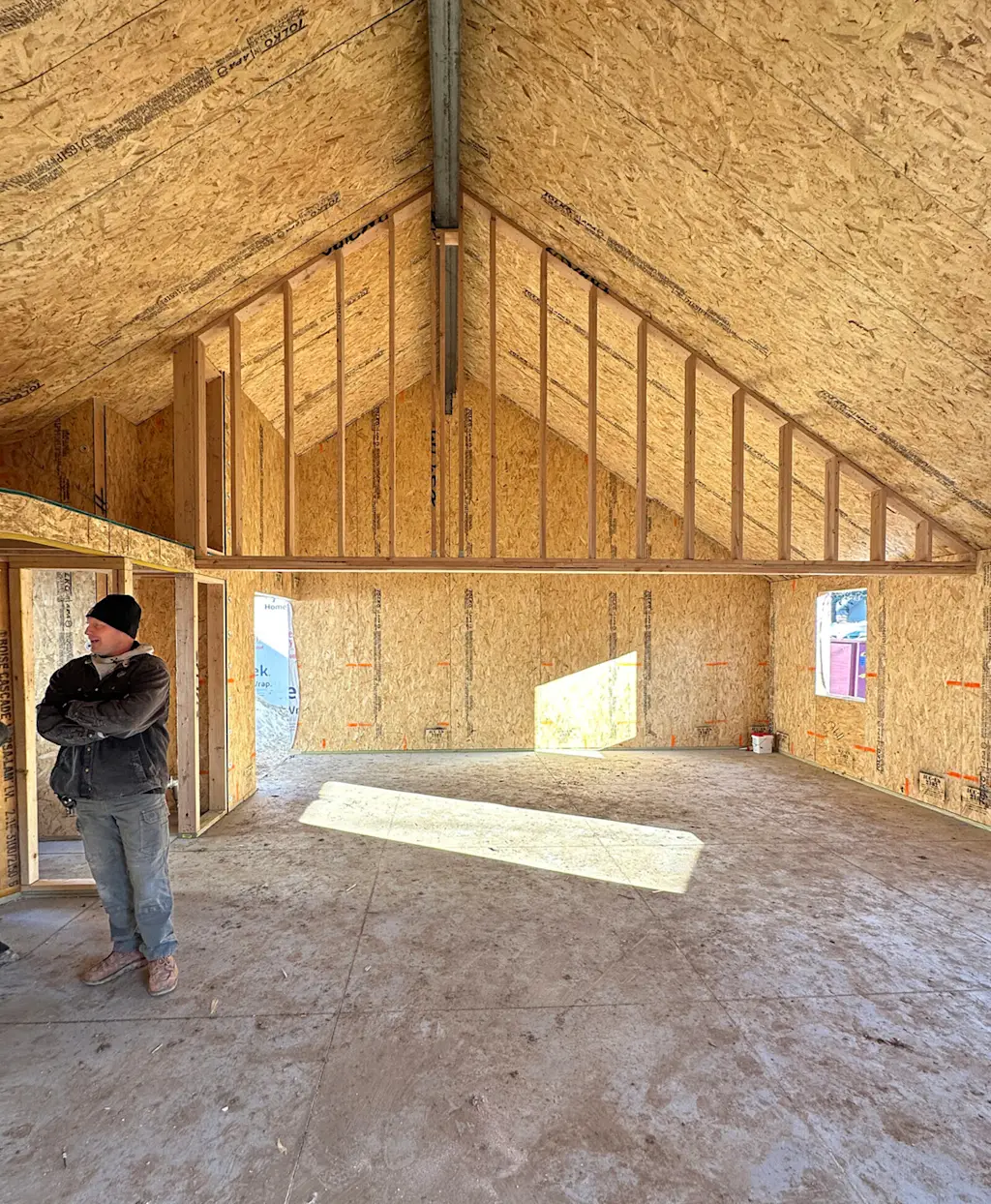
Scheuerman envisions the first two houses as prototypes but they also prove that this approach is financially viable. The homes have been partly funded through philanthropy, including from the Lozier Foundation, material donations from window and door manufacturer Pella, and grants from the state of Nebraska’s Middle Income Workforce Housing Investment Fund. The local nonprofit community bank Spark Capital provided financing to complete construction, with up to $100,000 in forgiveness for nonprofit developers like Partners for Livable Omaha.
Scheuerman says the total cost to build both homes will be about $540,000. That exceeds their total sales prices but still manages to pencil out due to the loan forgiveness and grants that helped offset land and development costs. Without taking those offsets into account, the homes are still more affordable than the median home in the city. Scheuerman says future builds will likely be less expensive, based on lessons learned with these first two homes.
“At the end of the day, this project is pointless if the numbers don’t work,” Scheuerman says. “So we had to spend a ton of time being educated by the lending community, and by the appraisal community, and by the mortgage community. And they had some notes for the students, which ultimately made the design better.”
Into the developer’s seat
Scheuerman says proceeds from the sale of the two houses will be reinvested in land to build more. But she doesn’t want to build alone. Getting others to follow the model is a central part of the project, according to Scheuerman, and she says the combination of small size and prefabricated construction puts these houses at a price point where they can be feasibly financed by a wide range of people.
“There is a segment of the population that can come to market right now. They have high home equity or cash on hand,” she says. “We know people are ready to go, and we want to meet that market.”
To open that door, Day’s students are developing a catalog of different designs using this system, offering them up as pro-bono plans for people to apply to their own small house development projects. Funding from the American Institute of Architects and AARP helped start that work, and the Nebraska Department of Economic Development’s Nebraska Affordable Housing Trust Fund is supporting the catalog’s ongoing development. It should be available online this summer, and Scheuerman says it will be like a modern-day version of the housing that once appeared in the Sears catalog: affordable to build and easily accessible.
“Real estate development is our shared responsibility, and communities need to be empowered to get into the developer’s seat,” Scheuerman says. In less than two years, the OurStory houses have gone from idea to nearly completed homes. It’s a scalable approach that could start to chip away at the housing shortages plaguing Omaha and cities like it. “I double dog, triple dog dare you to build one,” she says. “That’s how easy we’re trying to make it.”

