





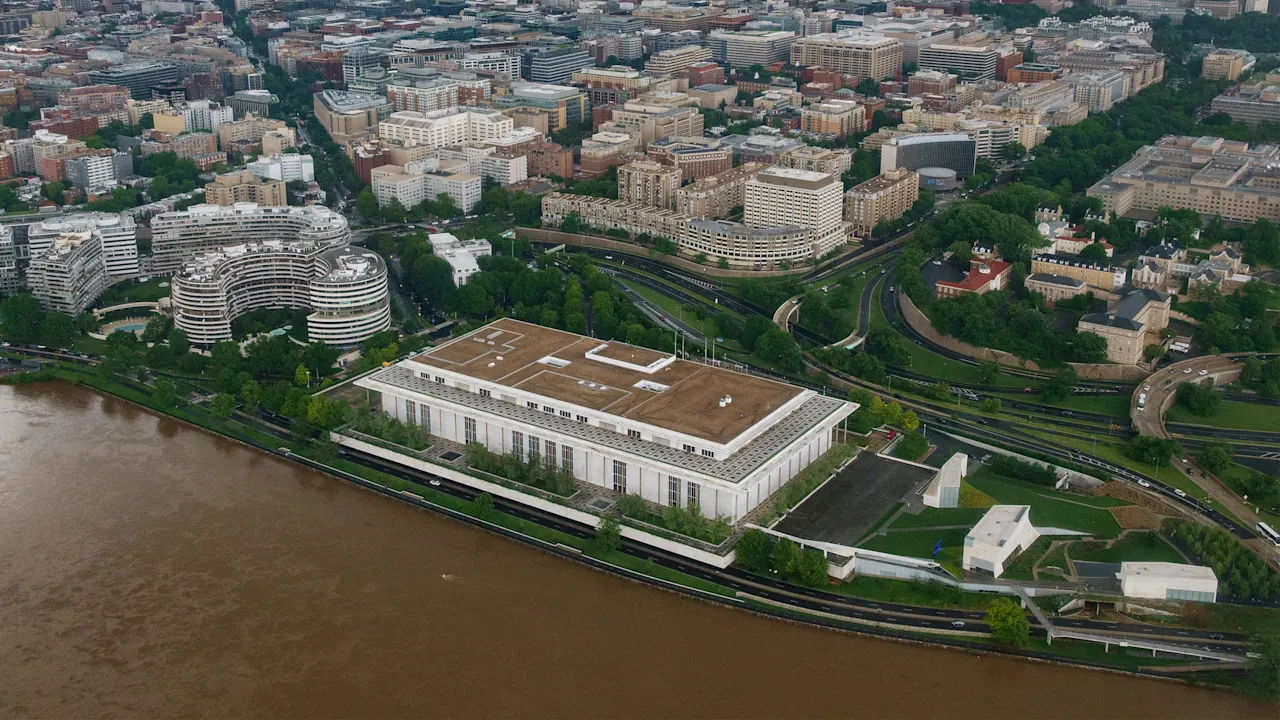
When President Donald Trump announced on social media February 1 that the John F. Kennedy Center for the Performing Arts in Washington D.C. would close for two years of “construction, revitalization, and complete rebuilding,” many observers were dismayed that the politicization of the center has gone this far.
Among them is famed architect Steven Holl whose firm Steven Holl Architects designed a $250 million expansion of the Kennedy Center called the REACH that opened less than seven years ago.
In an email to Fast Company, Holl expresses skepticism about the nature of Trump’s plan.
“The REACH Expansion of the Kennedy Center, which opened in 2019 under the direction of Deborah Rutter and David Rubenstein, is a much loved and needed facility for the practice of artists in all cultural activities. We hope they will allow it to remain open if they are closing the main building. As a living memorial to John F. Kennedy, the Kennedy Center was the soul of culture in Washington DC… its manipulation today is absurd,” Holl writes.
Both Rutter, the former president of the Kennedy Center, and Rubenstein, its former board chair, were ousted from the organization in February 2025 by Trump, along with half of the board. His appointed replacements then elected him the new chair. In the months since, the Kennedy Center has become increasingly politicized. Trump had his own name added to the facade of the building. Meanwhile, a long line of artists have cancelled planned performances, audiences have shrunk, and notable officials have resigned.
Does the Kennedy Center need a renovation?
The two-year closure Trump proposes would be used to fix what he calls a “tired, broken, and dilapidated” facility.
In a 2025 dinner with his newly installed board, Trump bemoaned the conditions of the Kennedy Center, claiming the previous board misspent millions in funding. “They certainly didn’t spend it on wallpaper, carpet or painting,” he said at the time. Shortly after her ouster, Rutter countered these assertions, blaming any perceived shabbiness on a lack of federal support. “Due to the limited and decreased funding from the federal government, there is a backlog of maintenance that has been prioritized to mirror the appropriated funding,” she said in a statement to NPR.
Originally opened in 1971, the Kennedy Center is, like many half-century-old buildings, in need of regular maintenance. And as host to more than 2,200 performances and events per year, it is a heavily used facility. The REACH Expansion project, and Holl’s design, were intended to lessen the burden on the historic building by adding new rehearsal rooms, education areas, and performance spaces both inside and outside of the 72,000-square-foot, multi-pavilion complex. Natural light filters into the performance and practice rooms, and the sculptural forms of the pavilions turn them into backdrops for outdoor performances and events overlooking the Potomac River.
The project was seen as an investment in the future of the Kennedy Center, and a way to augment the existing facility while reducing the toll of its heavy use on the aging central building. “More and more, today’s audiences crave connection—with art and with each other—while artists and arts organizations desire customized spaces that nurture their creative endeavors. The REACH will fulfill many of those needs, all within a one-of-a-kind design that is a work of art in and of itself,” Rutter said at the time of its opening.
Under Trump’s plan, the Kennedy Center would close on July 4. No detailed plans have yet been announced, and the White House did not respond to a request for additional information, so the extent of this proposed closure and reconstruction is unclear. Whether it would affect Holl’s still-new addition remains to be seen.

