







One hot new phone of 2025 has no screen, can’t send a text, and needs to be plugged into the wall. But to buyers of the Tin Can, that’s a definite plus.
The Tin Can, from a Seattle startup of the same name, grew out of conversations cofounder and CEO Chet Kittleson had with fellow parents about the challenges of enabling kids to connect with friends and relatives without giving them full-fledged cellphones. While children of the 20th century could pick up the house landline to call a grandparent or schedule a sleepover, today’s kids are often left dependent on parents for scheduling playdates and connecting with family until they’re old enough to carry their own smartphones.
“Our first social network was a landline, and our kids don’t have that,” Kittleson says. “We’re trying hard to keep them away from cellphones for as long as we can, but we’re not giving them anything in return, and so they’re sort of left in the lurch.”
Starting in 2024, Kittleson and his Tin Can cofounders started working on a prototype that would deliver some of the same features of the old-school house phone without actually requiring landline service from the local phone or cable company. The result, which quickly proved a viral hit among Kittleson’s network of parents and kids, is a phone complete with handheld receiver and curly cord that lets kids call, and receive calls and voicemails from, parent-approved numbers.
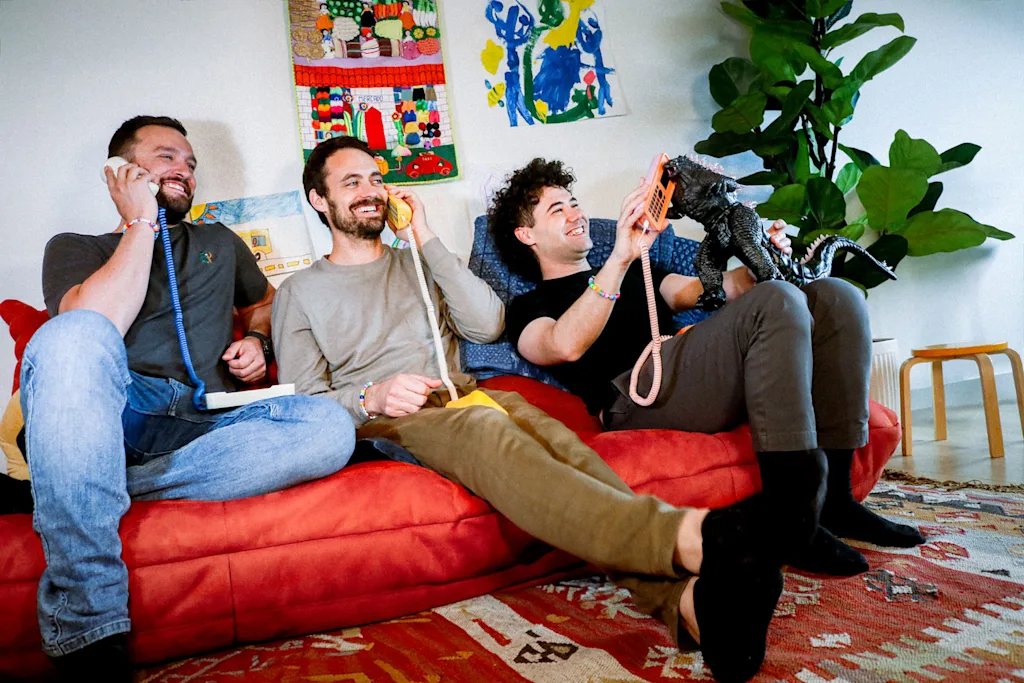
“It gives them the opportunity to be social and work out play dates without having to come to us and use our phone,” says Chelsea Miller, a Seattle parent of two whose family was quick to adopt the device.
Her two children—a 10-year-old daughter and a son about to turn 8—also use the phone to connect with their grandparents, she says.
The phones now come in two models. A white model called the Flashback is described by the company as “the phone of 80s childhood,” though it plugs via ethernet cable into a router instead of a wall-mounted phone jack. A second model, simply called the Tin Can, has an appropriately playful cylindrical design, and it only needs Wi-Fi to connect. But as a deliberate design choice backed by early user input, the phone lacks a battery and must be plugged into a power socket, meaning kids can only roam as far as the cord can reach.

