






Every day in America, over 100 people are involved in a life-altering crash that severely injures them or kills them. And that 100-per-day doesn’t even include all the people whose lives are impacted indirectly by severe crashes.
Vision Zero is a road safety philosophy that originated in Sweden in the 1990s and has since been adopted by cities across the United States and Europe. Its premise is straightforward: traffic deaths and serious injuries are preventable and can therefore be eliminated. With the right street design, traffic enforcement, and public awareness, everyone can get around safely.
The problem is that severe crashes are a catastrophe so routine that it barely registers in the news cycle. Americans have been conditioned to think traffic violence is inevitable. One outcome of that conditioning is that people will campaign against transportation projects that improve safety. That’s right—against safety.
{“blockType”:”mv-promo-block”,”data”:{“imageDesktopUrl”:”https:\/\/images.fastcompany.com\/image\/upload\/f_webp,q_auto,c_fit\/wp-cms-2\/2025\/12\/speakeasy-desktop.png”,”imageMobileUrl”:”https:\/\/images.fastcompany.com\/image\/upload\/f_webp,q_auto,c_fit\/wp-cms-2\/2025\/12\/speakeasy-mobile.png”,”eyebrow”:””,”headline”:”\u003Cstrong\u003ESubscribe to Urbanism Speakeasy\u003C\/strong\u003E”,”dek”:”Join Andy Boenau as he explores ideas that the infrastructure status quo would rather keep quiet. To learn more, visit \u003Ca href=\u0022http:\/\/urbanismspeakeasy.com\/\u0022\u003Eurbanismspeakeasy.com.\u003C\/a\u003E”,”subhed”:””,”description”:””,”ctaText”:”SIGN UP”,”ctaUrl”:”http:\/\/urbanismspeakeasy.com\/”,”theme”:{“bg”:”#f5f5f5″,”text”:”#000000″,”eyebrow”:”#9aa2aa”,”subhed”:”#ffffff”,”buttonBg”:”#000000″,”buttonHoverBg”:”#3b3f46″,”buttonText”:”#ffffff”},”imageDesktopId”:91453933,”imageMobileId”:91453932,”shareable”:false,”slug”:””,”wpCssClasses”:””}}
Here’s a social media comment someone made to me in response to redesigning a street to improve safety: “Members of the public communicate their risk tolerance through voting. It is the job of engineers to comply with that, not to second guess democratic choices.”
I get comments like that all the time, and it’s not just anonymous bots. Putting transportation safety projects up for a Yes/No vote reminds me of this quote that’s often attributed to Ben Franklin: “Democracy is two wolves and a lamb voting on what to have for lunch.”
Democracy is a trap
We don’t vote on airplane safety. Imagine being handed a survey when you board a plane: Should the airline prioritize your arrival time or the structural integrity of the landing gear? That would be absurd. We trust aviation engineers to design safe aircraft. Passengers vote with their wallets, but no one gets a veto over whether safety is a priority in the first place.
Surface transportation doesn’t work this way. When a city proposes narrowing a street to reduce speeding, neighbors show up to meetings and call it an “attack on drivers.” When a protected bike lane is added to a corridor with a history of fatal crashes, it gets removed after community complaints. When a signal timing change is proposed to give pedestrians more crossing time, it gets killed because drivers worry about congestion. When illegal parking that blocks sightlines at intersections is enforced by police, the cries of over-reach flood city hall.
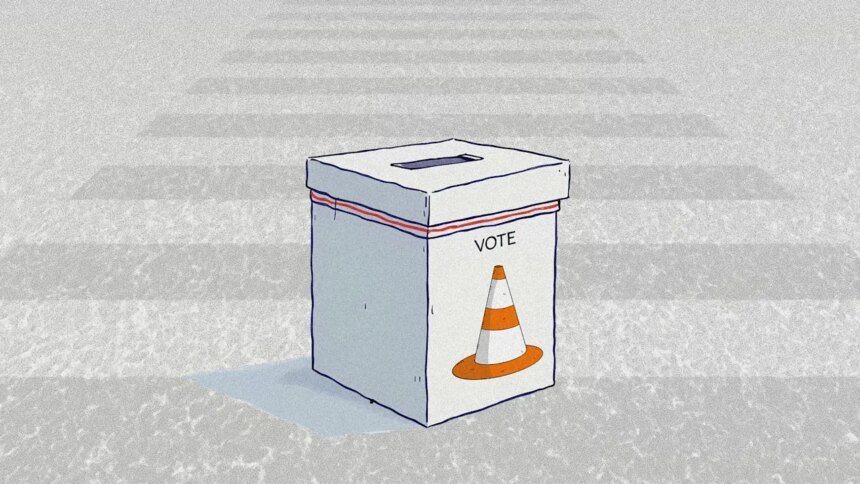
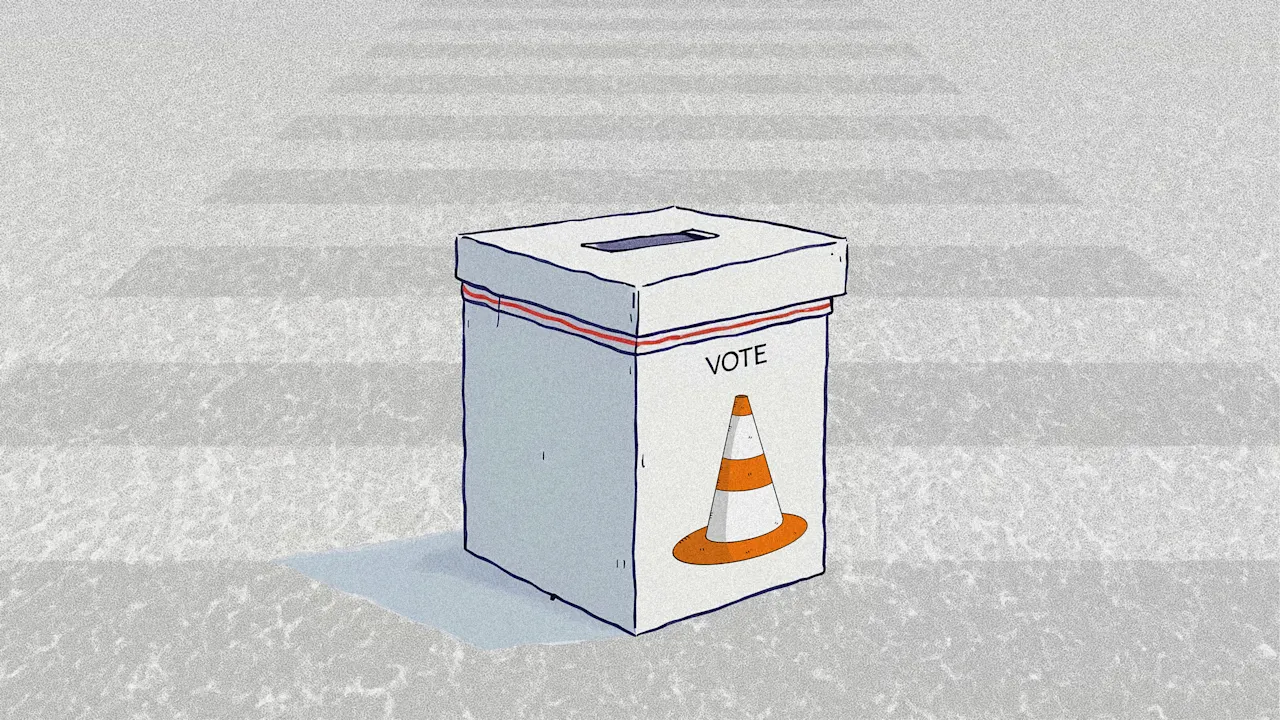
Safety improvements frequently die by popular vote and public pressure. Americans, given the choice between their personal convenience and other people’s safety, have repeatedly chosen convenience. This is the democracy trap: the idea that every engineering decision must survive a public referendum, including decisions that exist specifically to protect human life.
There’s a reflexive response to this argument that goes: “So you want to just override what people want by taking out a lane? That’s anti-democratic.” That framing means your life, your child’s life, your neighbor’s life, my life, are all subject to negotiation. It means a neighborhood miles away gets to weigh in on whether a dangerous intersection near your home gets fixed. It means the people who are most likely to be harmed—pedestrians, cyclists, children walking to school, elderly residents are outvoted by people who are primarily concerned about shaving seconds off their drive no matter the cost to others.
We don’t hold referendums on building codes. We don’t ask neighborhoods to vote on whether restaurants should have to refrigerate meat. Some protections exist precisely because they shouldn’t be contingent on majority sentiment.
The same logic should apply to street design.
Get out the vote
The binary Yes/No vote to allow or forbid safety improvements needs to be tossed out. That doesn’t mean the public should be shut out of transportation decisions, it means the kind of community engagement needs to change.
Right now, transportation agencies and local governments often ask the wrong question: Do you want this safety improvement? That question is almost designed to fail, because most people don’t understand how street design contributes to crashes. They don’t know that wider lanes encourage faster driving. They don’t know that a 20 mph impact is survivable for a pedestrian while a 40 mph impact usually isn’t. They don’t know that on-street parking sometimes makes a street safer and sometimes makes a street more dangerous.
City transportation systems are complicated. When you ask people an uninformed question, you get an uninformed answer.
The better approach is education first, options second. Explain what Vision Zero is. Show people the data on speed and crash severity. Help them understand what road diets, raised crosswalks, curb extensions, signal changes, and what each one accomplishes. Ask for input about the problems they’re experiencing:
- People drive too fast on this street.
- I wish my neighborhood was quieter.
- I can’t see around the corner when I turn.
- Nobody stops their car for me at the crosswalk.
- The light turns red before I can walk across the street.
- There’s no easy way for my kids to ride bikes to school.
- I have to walk 15 minutes to the nearest bus stop.
- If I miss the bus, I have to wait an hour for the next one.
That’s meaningful public engagement. It respects people’s intelligence while also respecting the reality that prioritizing human life is not up for debate.
Culture shift is necessary
In the US alone, tens of thousands are killed in traffic crashes every year. Hundreds of thousands more experience life-altering injuries. The idea that driving fast and without friction is a kind of birthright is woven into our infrastructure, our zoning, our politics, and our sense of personal freedom. Changing safety culture is hard, but it has changed before, in other places, and it can change here.
We don’t ask voters to approve seatbelt laws every few years. We don’t hold referendums on speed limits every time someone complains. Engineers, pilots, air traffic controllers, and ground crews made aviation extraordinarily safe not by polling passengers, but by treating safety as a non-negotiable foundation, and then inviting the public to make choices within that foundation.
That’s the model for reaching Vision Zero. Not a top-down dismissal of community voices, but a reordering of the conversation: safety first, preferences second. Engage people early and help them visualize what’s possible, and for crying out loud, build safer transportation systems.
{“blockType”:”mv-promo-block”,”data”:{“imageDesktopUrl”:”https:\/\/images.fastcompany.com\/image\/upload\/f_webp,q_auto,c_fit\/wp-cms-2\/2025\/12\/speakeasy-desktop.png”,”imageMobileUrl”:”https:\/\/images.fastcompany.com\/image\/upload\/f_webp,q_auto,c_fit\/wp-cms-2\/2025\/12\/speakeasy-mobile.png”,”eyebrow”:””,”headline”:”\u003Cstrong\u003ESubscribe to Urbanism Speakeasy\u003C\/strong\u003E”,”dek”:”Join Andy Boenau as he explores ideas that the infrastructure status quo would rather keep quiet. To learn more, visit \u003Ca href=\u0022http:\/\/urbanismspeakeasy.com\/\u0022\u003Eurbanismspeakeasy.com.\u003C\/a\u003E”,”subhed”:””,”description”:””,”ctaText”:”SIGN UP”,”ctaUrl”:”http:\/\/urbanismspeakeasy.com\/”,”theme”:{“bg”:”#f5f5f5″,”text”:”#000000″,”eyebrow”:”#9aa2aa”,”subhed”:”#ffffff”,”buttonBg”:”#000000″,”buttonHoverBg”:”#3b3f46″,”buttonText”:”#ffffff”},”imageDesktopId”:91453933,”imageMobileId”:91453932,”shareable”:false,”slug”:””,”wpCssClasses”:””}}
Source link

