






After losing an hour of shut-eye thanks to daylight saving time, sleep is on many people’s minds today.
The day after we “spring forward,” people are significantly more tired—and cranky—due to that lost hour of sleep, which disrupts our natural circadian rhythm, increasing the risks of car accidents, strokes and even heart attacks, according to John Hopkins’s Bloomberg School of Health.
In the U.S., optimizing “sleep hygiene” is a popular way to clean up your sleep routine. It’s a hack that comes with all kinds of accoutrements. Black-out curtains? Check. White noise machine? Check. Eye mask? Check—and make it satin, please.
In honor of Sleep Awareness Week—that elusive thing many Americans just don’t get enough of—we thought we would introduce you to a new way to hack your sleep: the Dutch method for getting a good night’s rest.
What is the Dutch method?
If black-out curtains and eye masks sound a bit much to you, consider the Dutch method, which favors a simple, no nonsense approach (like, as some may argue, the Dutch themselves are known for). The method is so simple, it doesn’t require anything—even curtains.
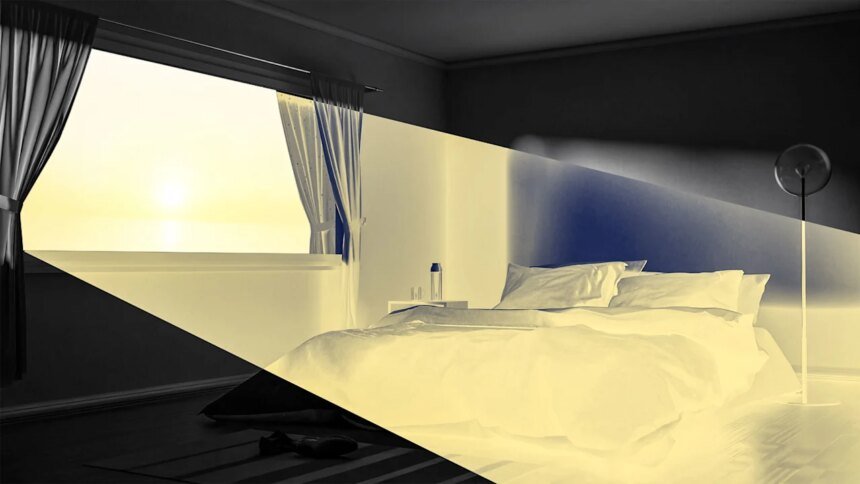
The Dutch method, which is popular even in big cities like Amsterdam, involves sleeping with your curtains wide open, to help the body wake with the sun’s natural light. It’s a way to reset your own body’s clock instead of relying solely on an alarm.
A recent study confirmed this science-based hack, finding that morning sunlight does indeed set our biological clocks, governing when we sleep and wake, and getting that light before 10:00 a.m. actually improves sleep quality.
Is this the same as the Scandinavian method?
Unlike the Dutch method, the “Scandinavian sleep method“—which is also currently having its 15 minutes of fame on social media—focuses on sleep temperature, an important factor in getting a good night’s sleep.
It’s a game-changer for couples who share a bed. Why? It advocates each person should have their own separate blanket—one for each person.
Intrigued? Take a look at this TikTok to see how it works. And, yes, unlike for Americans, it’s common for Scandinavians to sleep this way.

