





Days after a U.S. district court judge ordered the White House to stop construction on its proposed ballroom expansion, a powerful federal commission just granted the project its formal approval.
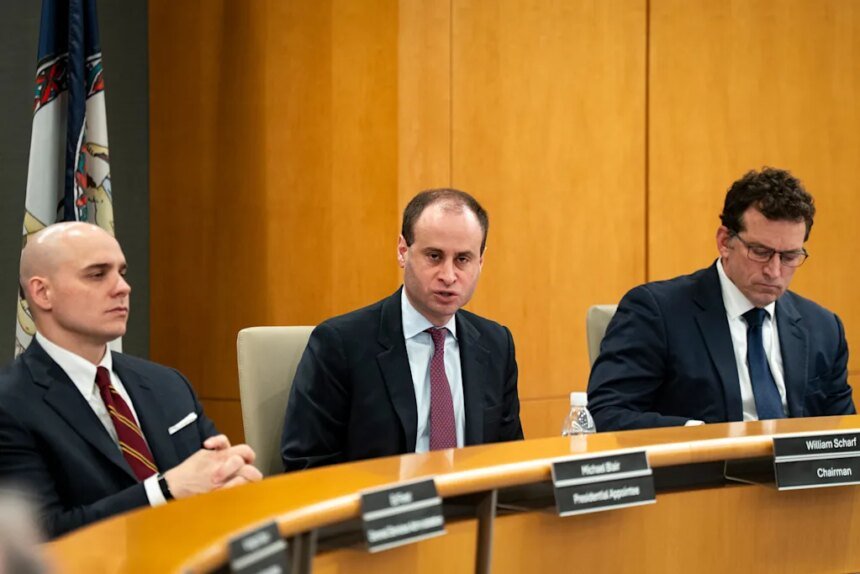
At the April 2 meeting of the National Capital Planning Commission (NCPC), a largely-Trump aligned panel voted with a large majority to support the design of the White House ballroom. Eight of the 11 commissioners at the meeting voted in support. Two commissioners voted “present” and only one, Washington D.C. Council chair Phil Mendelson, voted no.
The vote is a crucial approval for the ballroom, known officially as the East Wing Modernization Project. The NCPC is a federal agency overseeing planning and design for federal land and buildings in the Washington D.C. area. Its approval of the project adds legitimacy to a construction project that many, including the recent court ruling, see as an overreach of power by the president.
All plans and development proposals for federal property are required by law to be submitted to the NCPC for review. Typically this happens at a much earlier stage in a project’s process. The Trump administration did not submit plans for the East Wing’s demolition to the NCPC or any other body, which many have argued makes it, and by extension the ballroom, illegal. The NCPC approval of the ballroom could be used by proponents as proof of the project’s legitimacy.
As soon as the ballroom came up in the agenda, NCPC chair William Scharf, a Trump appointee, dismissed the court order as beyond the commission’s purview. “That order really does not impact our action here today. The NCPC is not a party to that lawsuit. The injunction doesn’t speak to the NCPC review process,” he said. “From my perspective, we have a project before us, we’ve been asked to review it, and that’s really our job here today.”
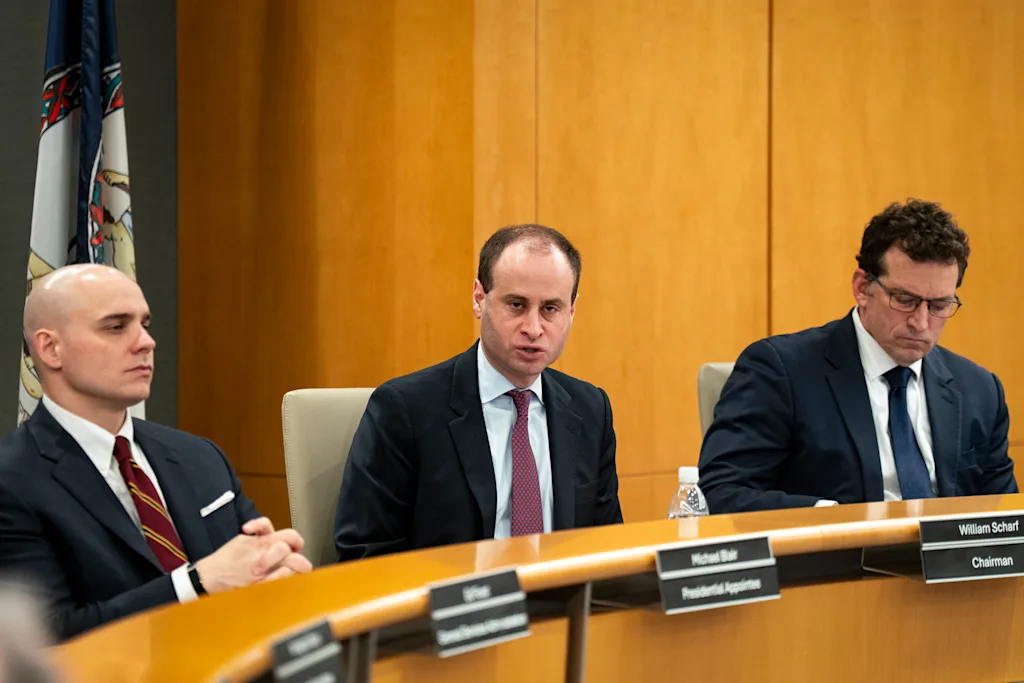
Scharf then walked through an architectural history of the White House, noting the many changes to the complex since it was first envisioned in 1792. He noted that criticism came with many updates to the building—from the addition of porticoes in the early 1800s to the construction of the West Wing in the early 1900s to the Nixon-era construction of a press room. Over time, he argued, these elements have become iconic parts of the White House.
“I believe that in time this ballroom will be considered every bit as much of a national treasure as the other key components of the White House,” he said. “And I believe that in time successive presidents of both parties and all political stripes long into the future will be grateful to President Trump for having initiated and brought this project into being.”
Even beyond its legal challenges, the criticism facing the project is significant. In an analysis of roughly 32,000 comments about the ballroom submitted to the NCPC, the Washington Post found that more than 97% were negative.
Scharf says he read every single comment that was submitted. Many, he said, dealt with issues beyond the scope of the NCPC, including the private funding of the ballroom, its interior decoration, the East Wing’s demolition, and negative opinions on the president himself. “Considering issues of this sort is not within our mandate. We are not some sort of free-ranging ballroom justice commission,” he said.
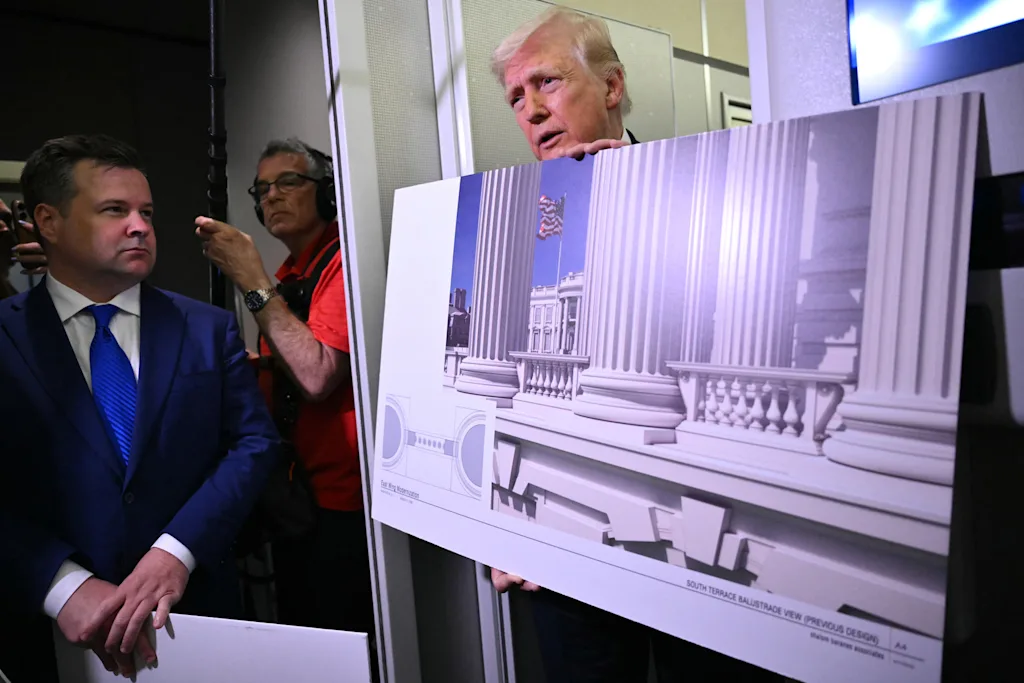
But many legitimate issues have been raised about the ballroom, from the rushed demolition of the East Wing to the size of the ballroom to certain architectural elements on its facade. The NCPC delayed its vote on the project at its March meeting to allow for some changes to be made to the design. Architect Shalom Baranes complied with requests to remove an apparently unnecessary set of stairs leading to the south portico and to reconfigure another staircase.
The overall size of the ballroom, which is estimated to have a capacity of 1,000 and which is far larger than the executive mansion itself, has not been changed.
Commission vice chair Stuart Levenbach, another Trump appointee, argued that the White House is in dire need of such a ceremonial space. He has worked in the Executive Office of the President under three administrations since 2007 and says far too many White House events have had to be held in temporary tents and overcrowded spaces.
“Our responsibility is to ensure the White House campus can support the modern presidency while still respecting the history of the place. And it’s clear from all my experiences at the White House that it is not suited to accommodate the large numbers of guests that are indoors,” he said. “The building is extraordinary, but its ceremonial spaces were designed for a much smaller scale of events than the presidency hosts today.”
Commissioner Ed Forst, administrator of the General Services Administration, echoed the need for such a facility. “We’re going to wonder why we didn’t do it earlier,” he said.
But others argued that focusing on the need for a ballroom overshadows a process that has been rushed. Commissioner Mendelson, the lone “no” vote, argued that more time should have been taken to come up with a solution before barreling ahead and demolishing the East Wing. “The issue to me is not whether there should be a ballroom,” he said. “It’s the design.”
His main criticism is with the building’s size, noting that there had been no analysis made to determine how big the space should be. “I’m trying to be nice here. It’s just too large,” he said.
“I think there’s a lot of value to the iterative process,” Mendelson added. “And we’ve not had that.”
For now, the NCPC’s approval is a matter of record. What happens with the ballroom project next may be up to the courts. In response to the court order halting the project, the Trump administration filed an appeal within hours.

