





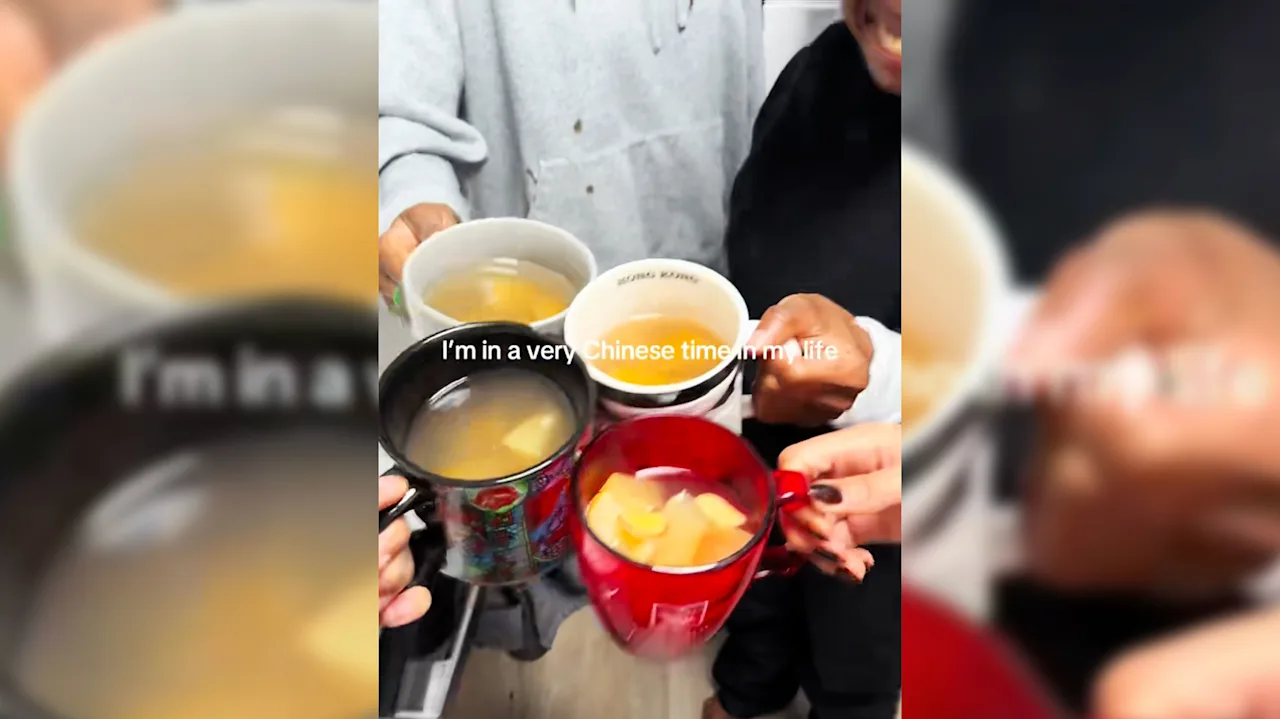
“I see a bunch of Americans drinking hot water with lemon and honey, eating congee, drinking hot pot, drinking more soup, eating Chinese vegetables,” one Chinese creator, Emma Peng, recently shared in a TikTok, currently with over 3 million views. “I just want to say that my culture can be your culture. You’re doing really good hydrating yourself. I’m proud of you.”
The “becoming Chinese” trend is currently everywhere on the app, and while the name might give pause, it’s mostly about adopting lifestyle habits rooted in traditional Chinese medicine.
In the past month or so, Chinese creators have gone viral for espousing the benefits of common Chinese cultural practices,like drinking hot water, wearing house slippers, and trading cold salads and yogurt for hot congee and boiled apples during the colder months. The comment section, meanwhile, is full of Americans diligently taking notes.
Another creator at the forefront of the trend is Chinese American TikToker Sherry Xiiruii. In one viral clip, with 1.4 million views, she announces: “Tomorrow, you’re turning Chinese. I know it sounds intimidating, but there’s no point fighting it now — you are the chosen one.”
Usually, when a trend involves adopting elements from, or “becoming”, another culture, it is met with cries of cultural appropriation. Some users have understandably expressed mixed feelings about the cultural practices they were once made fun of for now being repackaged and sold as a viral trend.
However, in this case the response from Chinese creators is is overwhelmingly positive. It’s perhaps unsurprising a trend rooted in self-improvement has gained traction in the first month of the New year, especially given many of the wellness tips and hacks that go viral online have existed for millennia in Ancient Eastern medicine. As one TikTok creator said: “All I have to say is what took y’all this long to catch on?”
Still, the appetite for Chinese culture is not limited to TikTok’s wellness algorithm. “You met me at a very chinese time in my life,” a viral X post from April 2025 reads, a nod to Fight Club’s iconic one-liner. Meanwhile, posts about ‘chinesemaxxing’—which amounts to smoking cigarettes crouched low to the ground and donning toggle jackets—started cropping up online throughout 2025.
As producer Minh Tran wrote in a recent Substack post titled “My Year of Rest and Chinesemaxxing: “Part of the reason these videos don’t feel like outright mockery is because there’s some kernel of truth and desire in the cosplay. Though things have always been made in China, we are increasingly making ourselves in the image of the Chinese.”
Here, he notes the Labubu mania of 2025. The collectible plush toys, made by Chinese toymaker Pop Mart, were in many ways the standout trend of the year, tripling the company’s profits and sparking a buying frenzy that spanned the globe. Or recall when – for a brief moment—it looked like the Chinese social media platform Rednote would replace TikTok, as users migrated from the platform and bid goodbye to their “personal Chinese spy” ahead of the potential ban (that never came) over national security concerns.
Across tech and other industries, China is the U.S.’s closest competitor and, in many ways, its greatest challenger. At a time where America is more divided than ever, and the country’s politics a source of national embarrassment for many, people are looking beyond the country’s borders for alternative ways of living.
Given the current geopolitical context, the “becoming Chinese” trend is perhaps about more than sipping hot tea and house slippers. As Tran writes: “The threat of the Chinese Century looms over us all.”

