




Mark Cuban has built a reputation as one of the most outspoken and pragmatic entrepreneurs in modern business, but his success extends far beyond bold investments and sharp negotiations. At the core of Cuban’s business philosophy is a simple principle: belief. Not just belief in ideas, but belief in people, products, and, most importantly, trust.
From his early days selling software to building and selling Broadcast.com for billions, Cuban has consistently emphasized that money alone does not create lasting businesses. Instead, he argues that trust is the true currency of long-term success. Customers may be drawn in by innovation or price, but they stay loyal because they believe in the brand behind the product. Without that trust, even the most well-funded venture can fail.
Cuban’s time as an investor on Shark Tank has made this philosophy highly visible. When evaluating startups, he often focuses less on flashy projections and more on whether the founder genuinely understands and believes in their business. He has repeatedly stated that he invests in people first, ideas second. If an entrepreneur lacks conviction or honesty, no amount of potential upside can compensate.
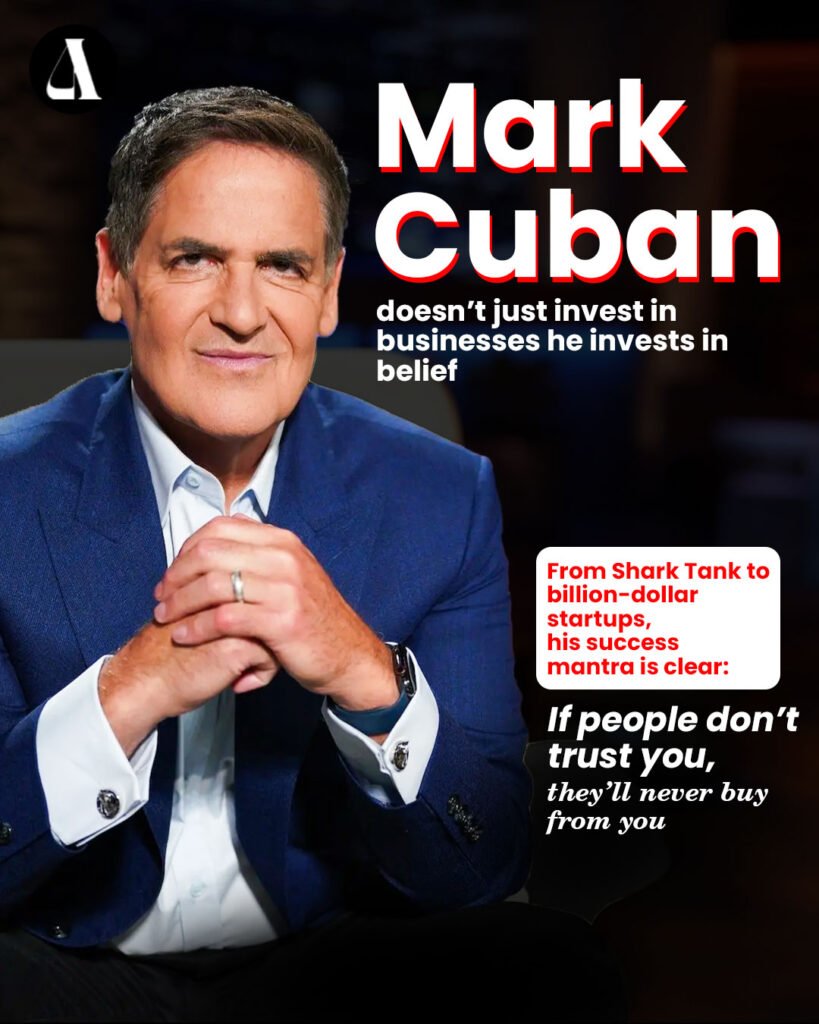
This belief-driven approach also shapes how Cuban views customer relationships. He has famously said that if people don’t trust you, they will never buy from you. In an era of aggressive marketing, influencer promotions, and short-term hype, Cuban’s perspective stands out as refreshingly grounded. He encourages founders to prioritize transparency, even when it is uncomfortable. Admitting mistakes, addressing customer concerns openly, and delivering consistent value are, in his view, non-negotiable.
Trust, however, is not built overnight. Cuban often highlights the importance of consistency. Businesses must deliver on their promises repeatedly, not just once. One great product launch cannot compensate for poor service or misleading claims later on. In today’s digital economy, where customer feedback spreads instantly, a damaged reputation can be nearly impossible to repair.
Cuban’s philosophy also extends to leadership. Internally, he believes that teams perform best when they trust their leaders. Micromanagement, unclear communication, and hidden agendas erode morale and productivity. By contrast, leaders who are direct, fair, and aligned with their values foster loyalty and accountability. Cuban has applied this mindset across his ventures, including sports ownership and media investments.
Importantly, Cuban does not equate belief with blind optimism. He is known for being data-driven, competitive, and unafraid to walk away from deals that do not make sense. Belief, in his view, must be supported by execution. Trust is earned not through words, but through results.
As entrepreneurship becomes increasingly accessible, Cuban’s message feels more relevant than ever. New founders often chase rapid growth, viral attention, or quick exits. Cuban’s career suggests a different path—one built on credibility, long-term thinking, and respect for the customer. While trends and technologies evolve, trust remains a constant.
Ultimately, Mark Cuban’s success is not defined solely by his net worth or high-profile deals. It is defined by a consistent philosophy that places belief and trust at the center of business. In a crowded marketplace, where products can be copied and ideas replicated, trust remains the one advantage that cannot be easily duplicated.

