



If you’re prone to anxiety, chances are you’ve received a lot of frustratingly simple advice over the years.
Go for a walk! Get more sleep! Meditate! To be clear, all of these are good ideas. But when your brain won’t turn off, they’re often not enough. That’s especially the case for high-functioning, high-achieving individuals.
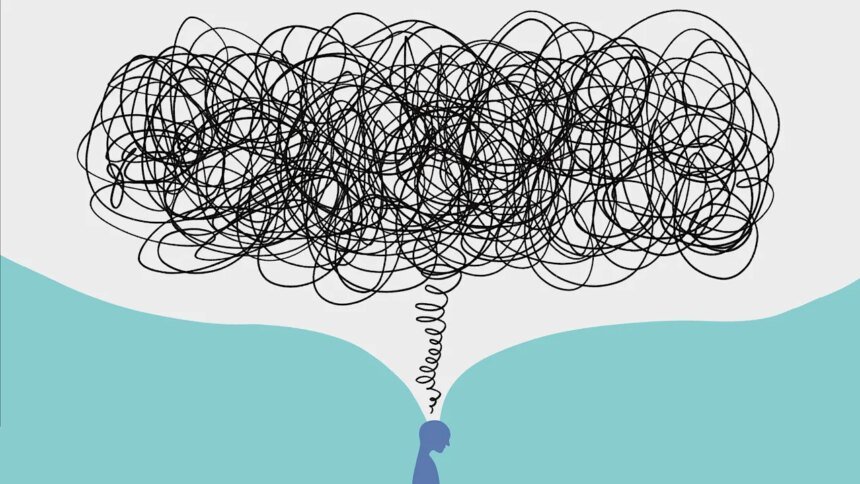
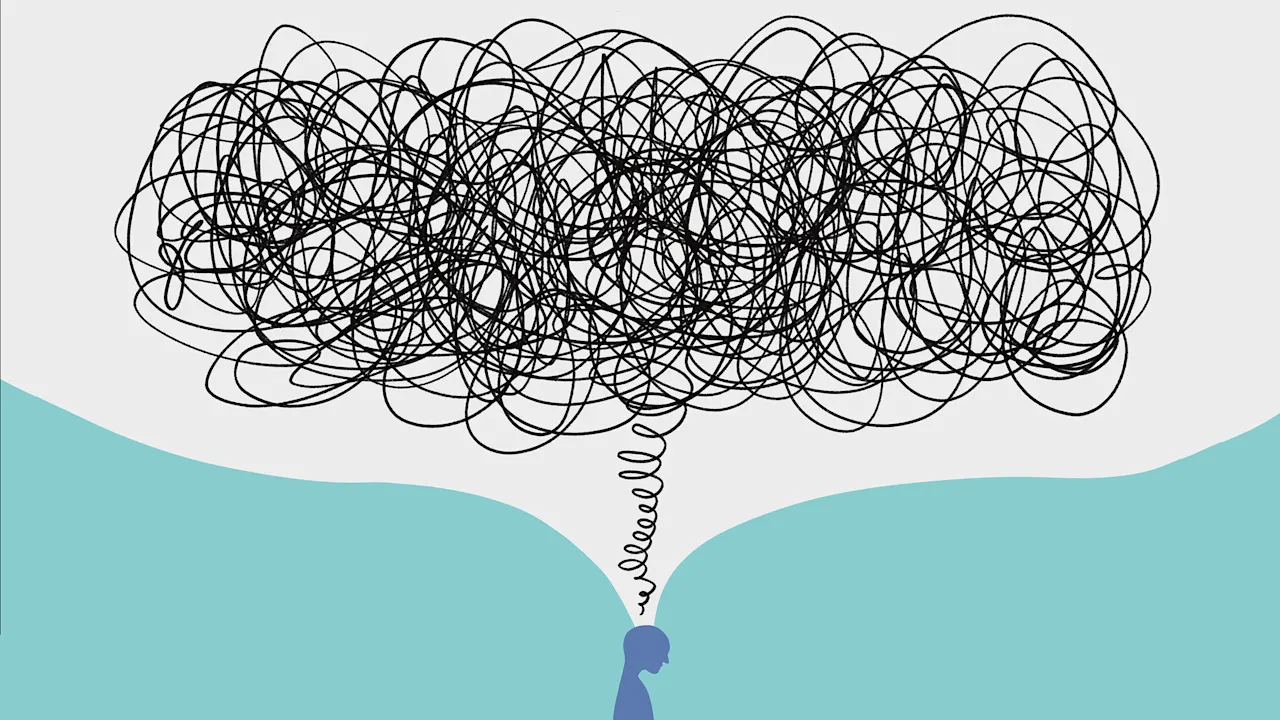
Part of the disconnect might be that we often confuse stress with anxiety. Although the two are related, they’re different problems that demand distinct solutions. While stress is usually circumstantial—a response to external demands—anxiety generally comes from within, and might or might not involve an active trigger. While stress might dissipate once you’ve solved the problem at hand, anxiety can linger, haunting your thoughts as you ruminate in circles. Creativity, motivation and decision-making skills suffer.
If anxiety has hijacked your brain, never fear. Experts outline nine ways to slay your anxiety demons when breathing exercises aren’t even making a dent.
1. Give yourself permission to take a break
Dr. Josh Altman is a psychotherapist who works with high achievers to manage their mental health. He knows from firsthand experience that the health-promoting habits many people skip when overburdened are often the precise behaviors that can help the most: eating well, getting enough sleep, and stepping away from your desk for 20 minutes of exercise.
“Folks who are very performance-oriented are not looking to stop performing,” he says. When someone’s brain is constantly on like that, he makes a business case for truly letting oneself off the clock.
“Taking time away from work will actually improve the quality of work when you get back to it,” Altman says. “If we understand that taking a break is benefiting our cognitive functioning, our focus, our problem solving, it becomes a little bit more palatable.”
2. Start with baby steps
For those of us who tend to put 100% into our work at all times, it can be tempting to bring a similar all-or-nothing mentality to personal habits like exercise and sleep. But Altman says that “if we could do small, measurable interventions—that’s where the change happens.”
“I rarely believe in light-switch game-changers. It’s usually a series of small, consistent efforts that build muscle, including resting,” he says.
Ready to try it out? Here’s an example for those of us who know we need to spend less time on our phones: instead of trying a full-on detox, start by leaving your phone on silent in another room for just 15 minutes. As you become more comfortable, you can increase the duration. It’s a low-lift way to calm your mind.
“That becomes more manageable,” Altman says. “It becomes less anxiety-provoking, and there is an immediate, visceral, neurological nervous system reset.”
3. Externalize your to-do list
Do you obsess over agenda items you still need to finish more than you give yourself credit for the things you’ve already done? We can blame biology for that.
“Our brains are hardwired to remember incomplete tasks better than completed ones,” Altman says.
One technique to counterbalance that is what’s called a “cognitive shut-down ritual.” End each workday by writing down three tasks you need to complete tomorrow. Once you’ve got them down on paper, Altman says, your brain will stop reminding you about them every five minutes.
“Now, because you see it in front of you, and you’re intentionally, explicitly reminding yourself the loops are recorded, you can stop tracking them.”
4. Break each intimidating problem into small, manageable steps
If you’re feeling overwhelmed by the scope of a task or challenge, look for ways to break it into smaller, more digestible parts. “Trying to do the entire thing at once, of course, is overwhelming,” Altman says. “If we could focus on one small task at a time, that adds up.”
5. Try “cyclic sighing”
It’s a breathing technique. Just inhale through your nose, filling your abdomen and then your chest. Then stop for a second and inhale again, expanding your chest all the way out before slowly exhaling through your mouth.
“The key thing to this is the slow exhale,” says Dr. David Spiegel, Willson Professor and Associate Chair of Psychiatry at Stanford University, who adds that this technique is far more effective than the common advice to take a deep breath.
When you take a deep breath without properly exhaling, “you reduce venous return of blood to the heart, so you get a sympathetic arousal,” Spiegel says. In layman’s terms, he explains, “The heart says, ‘Oh, there’s blood coming in. I better pump harder!’” That’s not what you want when it’s already starting to race.
6. Come up with a “third space transition”
Whether you work from home or in an office, it’s important to consciously switch from “work mode” to “home mode”—especially when your anxious mind often gets stuck in the former.
If home is your “first space” and work is your “second space,” your “third space” is where you make the mental shift from one to the other. Start by thinking about how your day went. Remind yourself that you’ve already written down that helpful to-do list for tomorrow. Maybe try some cyclic breathing to calm your system. Then, it’s time to focus on the trip home (or, if you work from your living room, about switching into “home mode”). Pro tip: If you work from home, it can be helpful to take daily walks as a buffer between work time and relaxation time.
“We could intentionally ask ourselves, ‘Who do I want to be when I walk through the front door?’” Altman says. “Or, ‘Who do I want to be when I shut my laptop today?’” The more present you can become with what’s going on at home, the easier it’ll become to tune out work worries.
7. Try self-hypnosis
When we’re feeling stressed or anxious, it can be tempting to lock in and think about the problem endlessly in search of a solution. But according to Spiegel, thinking in circles like this—otherwise known as “ruminating”—can actually make the problem worse.
“When you start to do that, your body starts to react,” Spiegel says. “You get a little tense. You start to sweat. Your muscles tighten. Your heart rate goes up.” That’s the adrenergic system, otherwise known as the “fight or flight system,” hard at work. Instead, we want to dial up the parasympathetic system, also called the “rest and digest system,” which can slow heartbeat and lower blood pressure. According to Spiegel, self-hypnosis can help us do this.
Want to try it out? Imagine you’re floating somewhere calm, like in a bath or a hot tub, or floating in space. Focus on getting your body comfortable, and spend a few minutes in that state until you are totally at peace. Then, you can start figuring out how you want to solve the problem.
“You can picture an imaginary screen,” Spiegel suggests, with “the problem on one side and a possible solution on the other.” This is far more helpful than, as he puts it, “doomscrolling in your brain.”
8. Voice your experience out loud
Talking to yourself might feel awkward, but if you’re stuck in a cycle of stress and anxiety, Altman suggests voicing the thoughts spinning through your head. That can help create distance between you and the worries.
Start by asking yourself how you’re feeling and why. Think about times in the past when you’ve faced similar challenges. How did it go? Did everything turn out okay? Did you learn something that’s reshaped your approach this time? Questions like these will pull you out of the emotion and help you identify negative thought patterns and counteract them with positive feedback.
9. Talk to a peer or friend
Friendship is the key to resilience, both at work and in life. According to Altman, personal relationships are the number-one indicator of resilience. That doesn’t mean you need dozens of friends, he says. Just a strong cluster of people you can connect with—including, ideally, at least one peer at work who is not your boss.
“One of the antidotes to feeling self-critical, feeling isolated, feeling overly ruminative, is to actively reach out to someone you trust and have a conversation,” Altman says.
“It doesn’t even have to be venting about what’s on your mind. It’s really about connecting and reminding yourself that you’re not on an island.”

