



This post was created in partnership with Octagon
Global expansion is rapidly changing how sports leagues, particularly the NFL, operate and how brands connect with international audiences. It’s also creating new opportunities behind the scenes, providing better ways to leverage athlete storytelling and operationalize sponsorships at scale.
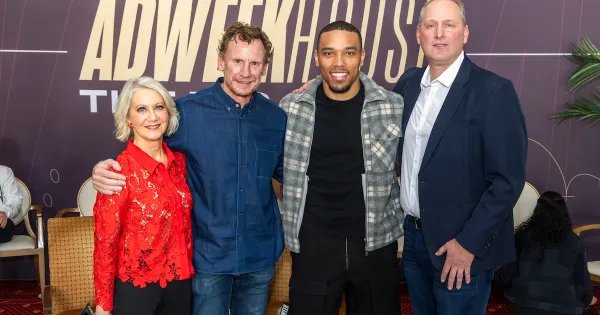
During an ADWEEK House: The Big Game panel co-hosted with Octagon, industry leaders explored how brands can show up authentically for fans across cultures, markets, and moments. By balancing global scale with local resonance, marketers can build lasting relationships with fans in every corner of the world.
Navigating the cultural texture of sport
The session, moderated by Andrea Kremer, chief correspondent for the NFL Network, highlighted that while the game is a commodity, the way it is consumed varies by region. “Global expansion means everything to the NFL,” Kremer shared.
In fact, the NFL recently announced it will stage a record nine international games in 2026.
Of course, international success depends on an understanding of “the cultural texture of sport,” shared Nick Law, creative strategy and experience lead at Accenture. The reasons people become fans are often unexplainable, so brands must identify the local nuances that allow an audience to connect with a foreign game.
“You need to create a surface area where they can care about a team enough that they become fans for life,” Law explained.
The athlete as a cultural bridge
For Lou Kovacs, president of North America at Octagon, the shift is driven by a generation that views sports as borderless. “Sports today are more exportable than they’ve ever been,” Kovacs said. “The NFL, in particular, has really moved from a sporadic international showcase to a global slate of games and opportunity for people to engage.”
Amon-Ra St. Brown, NFL All-Pro wide receiver for the Detroit Lions, shared how his dual citizenship allows him to serve as a bridge. “I never even thought of playing football as a kid in Germany because no one knew what football was. All they knew was soccer,” St. Brown said. “To see how big the sport has become internationally and just in Germany itself—for me, it’s a dream come true.”
Operationalizing strategy at scale
From an agency perspective, the challenge is building the infrastructure to support this growth. Kovacs explained that success requires a combination of robust logistics and creative deal-making.
“If you’re going to try to take advantage of a global partnership, you have to have the client team, an agency team, and a rights holder team that can operationalize that partnership in many different markets and help bring it to life,” Kovacs explained.
Kovacs noted that the best strategies involve securing naturally flexible assets, adding that several factors should be considered. “Do you have the right infrastructure?” he asked. “Are you applying some creativity to the partnership when you’re negotiating with the rights holder to make sure that you get benefits and assets that are global in scale and can be customized at a local level?”

