





Higgsfield is pitching its latest update as a fix for one of generative video’s most persistent problems: consistency.
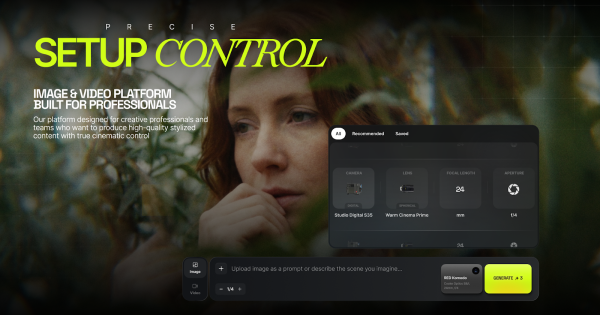
On Thursday, the startup released Cinema Studio 2.0, an update to its AI video platform aimed at creators and ad teams trying to turn quick prompts into something closer to commercial-grade storytelling.
The new version leans heavily into control—over camera movement, scene composition and narrative flow—areas where many generative video tools still fall short. Among the additions is a feature called “what’s next,” which allows the AI to suggest how a scene might progress, enabling creators to iterate on visuals and narrative at the same time.
Alex Mashrabov, Higgsfield’s CEO, likens it to a creative copilot. “[AI] can help complete the story and tell what’s next,” he said.

The update also adds more granular controls, allowing creators to make subtle camera movements or adjustments while preserving the integrity of a scene, aiming to mimic how cinematographers work on set rather than how AI models typically generate outputs.
The update is meant to address a persistent challenge, Mashrabov said: keeping characters and environments consistent even as angles, lighting or framing change. “The core issue with any model on the market [is] if someone wants to take the same scene, the same character, and show it from different angles, the identity gets distorted,” he said.
Higgsfield beta-tested Cinema Studio 2.0 with about 100 external creators since October. The platform is available through a freemium model, with paid plans ranging from $9 per month to $250 for teams managing multiple projects.
Higgsfield, founded in 2023 by Mashrabov, who previously led generative AI efforts at Snap, has quickly scaled alongside that demand. The startup, valued at $1.3 billion, counts roughly 15 million creators and agencies on its platform and has surpassed $250 million in annual recurring revenue, ADWEEK previously reported.
But as creators and marketers increasingly turn to AI tools for production, some users say they are running into limitations. Complaints have ranged from slow generation speeds to inconsistent outputs and constraints on paid plans, highlighting the gap between experimentation and reliable, commercial use.

