






The job search is exhausting: an application, several rounds of interviews, skills assessments, and, increasingly, even a work trial.
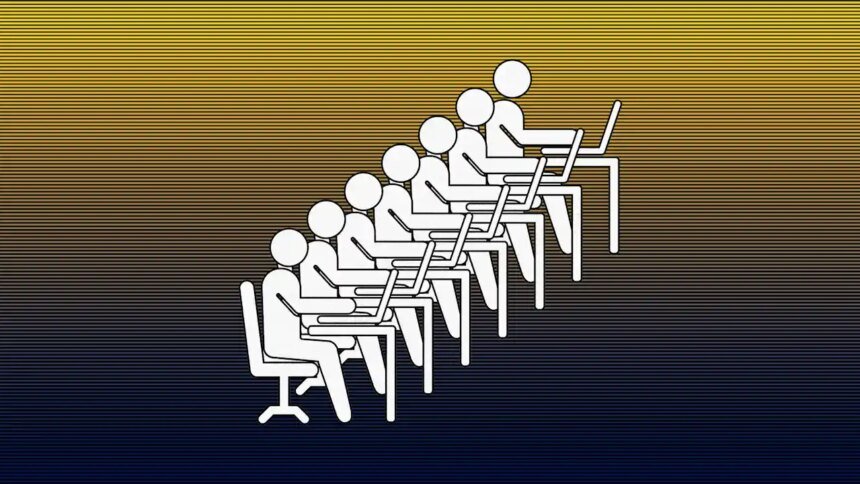
Work trials are when an interviewee is asked to complete job-related tasks over a short period of time—often a few days or up to a week—so an employer can evaluate how they perform in a real working environment before making a hiring decision.
As recruiters and hiring managers sift through a flood of applications that can sound increasingly similar—especially in the age of AI—these trials have emerged as a way to evaluate candidates in real time.
This shift raises important questions: Are work trials a better predictor of success than an interview? Do they risk exploiting candidates’ time and labor? Do both sides benefit? And are longer, more immersive hiring processes here to stay?
When applications start to look the same
“The job market in general is undergoing a larger upheaval—the largest upheaval in modern history—because of the advent of AI,” said Jennifer Dulski, CEO and founder of leadership training platform Rising Team. AI, she explained, has made it far easier to apply to roles at scale, flooding employers with applicants and complicating how hiring managers assess who is qualified—or even a real person versus a bot helping an applicant apply to jobs.
Enter: work trials. They aren’t new, but a 2025 survey by the National Association of Colleges and Employers found that nearly two-thirds of employers now use skill-based hiring for entry-level roles. The shift reflects a broader move away from resume-based screening, and more towards real-world skill.
“For hiring managers, the question is: ‘how do you even determine who’s real and who isn’t?’” Dulski asked. On top of that, does the applicant really have the skills to do the job? As a result, “Work trials have become one of the only real ways to tell what someone will be like in a work setting,” she said.
Pros for the candidate
According to Dulski, one of the clearest benefits of work trials is that they give candidates a real opportunity to show what they can do. “It gives them a chance to really show what they’re capable of,” she said.
She also explained the experience can benefit candidates by offering a clearer view inside a company’s day-to-day environment. Depending on the scope of the trial, participants may interact with teammates, join Slack channels, or sit in meetings—giving them a better sense of whether the role and culture feel like a fit for them.
Pros for the employer
On the company side, Dulski said work trials are largely about reducing the risk of a bad hire. “It’s very expensive to make a bad hire,” she said, pointing to estimates from consulting firm GH Smart, which has suggested the cost of a C-level mis-hire can cost up to 15 times compensation when broader organizational impacts are included. She also noted that the Society of Human Resource Management has put the cost of a bad hire at roughly 50 to 200% of an employee’s salary.
So even a weeklong or extended work trial can help employers make more informed decisions. The goal, she explained, is to avoid hiring based on too little data, and instead observe how someone actually performs before extending an offer.
According to Lucas Botzen, an HR manager and CEO of payroll and HR platform Rivermate, work trials can be beneficial for both parties. “They provide an actual experience of what working together would really feel like for both the employee and the applicant,” he said.
Cons for the employer
For employers, they have “to create a project, have someone manage the project, to have someone there answering a lot of questions, to be doing all the back and forth,” Dulski said. That level of involvement can quickly add up, especially when multiple candidates are going through the process. “It’s almost like a full-time job,” managing them all.
She also pointed to a practical constraint: the process is difficult for employers to automate. “It’s one of the things that can’t really be managed as effectively with AI… this probably needs a human to manage their work projects.” As a result, she said, companies that use work trials effectively tend to reserve them for later-stage candidates. To save time, “put people through a pretty rigorous vetting process before they get to this stage.”
Cons for the candidate
Work trials can also be difficult for candidates who are already employed. A week-long assignment often requires taking time off work, or a vacation from their current job.
“If there is no pay associated with the assessment, this could cause problems related to fairness and ethics,” Botzen said. “The potential exists for candidates to view themselves as being taken advantage of, particularly if they are providing real value but receiving neither payment nor compensation, or if they are asked by several different organizations to perform a similar type of assessment.”
At Botzen’s company, “We favor using short, structured assessments, or paid project-based assessments where the expectations are clear and reasonable in terms of respect for the applicant’s time,” he explained.
“I don’t think you can ask someone to do a week of work and not pay them,” Dulski said.
While not a full week-long work trial, one jobseeker told Fast Company she recently completed an extensive interview assignment that required roughly eight hours of work, followed by an additional hour presenting to a panel. The job seeker who asked to remain anonymous while navigating a tough job market, where online reputation matters, said the work trial wasn’t an easy feat.
“The work wasn’t theoretical,” she said. “It included building workflows, organizing a complex travel itinerary, and thinking through operational scenarios including AI implementation. It felt very close to real work.”
She said she ultimately agreed to the assignment because of the realities of today’s job market. “It doesn’t feel like you have much of a choice. It’s highly competitive.” she explained.
She “was told I performed exceptionally well, only to be rejected the next day with no feedback,” she said. “Evaluation is fair. Unpaid, high-effort assignments without transparency or feedback are not.”
Another anonymous jobseeker described a multi-day hiring assignment that ultimately left him frustrated by the process and expectations. He said he was asked to prepare a 40-minute presentation after a series of interviews, a task that required roughly three days of work.
“I took three days to do this, and you know that was three days that I wasn’t working,” he said.
After what he described as strong feedback, he was still rejected shortly after. “Your presentation was excellent,” he recalled being told—before receiving a rejection the following Monday. He said the process felt like a “bait and switch,” especially given the amount of unpaid time involved. “Three full days, no compensation,” he said.
What makes work trials work
For candidates, they tend to work best when expectations are clearly defined, they are compensated, scope is time-bound, and the exercise reflects real but reasonable job conditions rather than extended production-level work.
For employers, effectiveness comes down to design and discipline: using trials at the right stage of the hiring process, ensuring consistent evaluation standards, and keeping the process efficient enough to manage without overwhelming internal teams.
When those conditions are met, work trials function less like open-ended assignments and more like structured snapshots of how someone thinks, works—and if they’ll make a strong fit on a team.

