





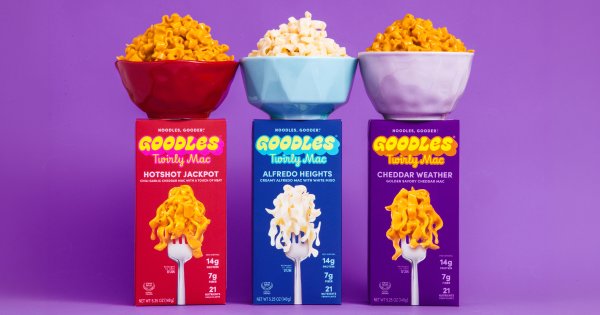

As further confirmation of Americans’ interest in better-for-you food options—and legacy brands’ eagerness to snap up agile upstarts—Barilla has announced its intent to purchase mac and cheese brand Goodles. Financial terms were not disclosed.
In a statement, Barilla Group chairman Guido Barilla said that he’d “been following Goodles closely for some time” and has been “impressed by the strength of the brand, the quality of its products, and the momentum behind its growth.”
Goodles’ parent Gooder Foods is a six-year-old company founded by entrepreneurs Jen Zeszut and Paul Earle. (Wonder Woman star Gal Gadot and husband Jaron Varsano are also co-founders.) Starting off as a direct-to-consumer brand before securing shelf space at Target, Walmart and Costco, Goodles has taken aim at a category that, while indisputably big (mac and cheese is a $5.5 billion market in America), is not known for innovation.
While perhaps not “healthy” as such, Goodles positions itself as a more attractive alternative to established box brands by being higher in protein and fiber, and offering more interesting flavors thanks to ingredients like black tuffles, pesto, and hatch chiles.
Goodles is pricey compared to Kraft Mac & Cheese ($3.79 vs. $1.39 at Target) and represents a premium in a category where store brands have been stealing market share and rock-bottom prices are the norm. According to research from Innova Market Insights, historically, American consumers are not willing to pay premium prices for pasta.
However, the mac and cheese segment is growing by 4.5% yearly, according to data from Insight Partners, and Goodles claims it’s “proving that mac and cheese is not just for kids anymore and is driving significant incrementality for all of its retail partners.”
One wild card remains GLP-1s, whose ability to curb appetites is bad news for convenience foods, but possibly good news for Goodles, which boasts 21 plant-based nutrients.
Founded in 1877, privately held Barilla is the largest pasta producer in the world, with 2025 revenues of $5.6 billion.

