






This post was created in partnership with Brandwatch
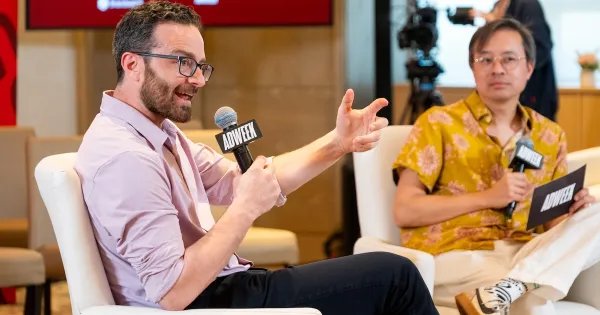
AI answer engines like ChatGPT are jolting an already fragmented customer journey. During an ADWEEK House Possible fireside co-hosted with Brandwatch, ADWEEK Editor in Chief Ryan Joe sat down in conversation with Eric deLima Rubb, Brandwatch’s VP of customer success and insights, to explore how marketers can evolve their strategies amid shifting search behavior.
The evolution of search
Rubb began by noting that both traditional search and AI search are expanding. “I think the overall stats suggest 26% year-on-year growth in search across the board,” he said.
He then brought up social search, like when a car shopper asks a community for help evaluating one vehicle over another, and explained how social search impacts AI search.
“A lot of what AI engines are being trained on is what we’re going to social and talking about, what we’re asking,” Rubb explained. “These context-rich platforms like Reddit or forums that have a lot of this evaluation behavior start feeding back as citation or training data to the AI.”
Ways to influence AI results
Marketers need to treat AI as another stakeholder, Rubb said. “AI is reading reviews, it’s consuming information, it’s choosing what to cite about your brand, whether negative or positive,” he explained. “So, we need to pay attention to what it’s reading, who it’s listening to, what it’s vacuuming up. And where the places are that we can influence, we need to be creating sustained messaging, sustained campaigns to try to influence that.”
Marketers can use Reddit to get cited, Rubb shared, but being a helper instead of a seller is critical. “Reddit users are super, super savvy and feel an injustice when they’re being marketed to, so Reddit’s really about showing up authentically,” he said
As for Pinterest, Rubb views the platform as an undervalued entity for AI engines that will explode in the next 12 months or so.
“The entire way that Pinterest works as this visually rich, context-driven platform is ripe for the way that AI searches, indexes, and cites information,” he said. “It’s just not getting indexed right now; it’s just not showing up. So, if you can get out in front of that before your competitors do, you’re going to have a real competitive advantage.”
As for a YouTube strategy, Rubb said brands need to design good, helpful content, but he noted that it’s not about measuring the performance of that content. “It’s really about measuring the conversation that happens in the comment section, in the threads afterwards, where people are really deciding whether or not they believe what you’re pushing,” he explained.

