



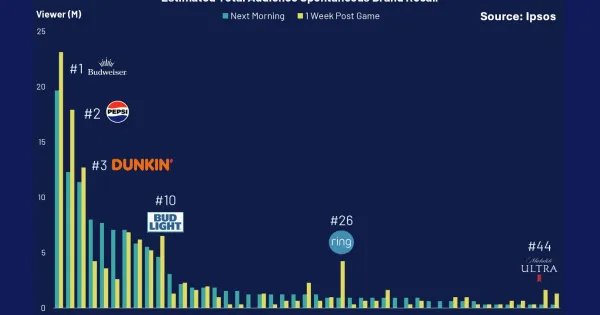

Dunkin finished third at 11 million, Ben Affleck’s star spangled sitcom parody was exactly what all good advertising should be: emotionally engaging, distinctively coded, impossible to misattribute.
These three brands make a compelling case that the Super Bowl advertising works. Spend well, follow your strategy, and put your name into millions of minds and leave it there for a week. Factor in a hundred million viewers, the additional coverage, social amplification, and the required $8 million investment looks seriously worth it—particularly in the fragmented, chaotic media landscape we now inhabit.
Then there is the Patriots’ side of the chart.
More than half the brands in the Ipsos data effectively wasted their investment, gaining less than a percentage point of recall a day after their ad ran. Each spent what most companies deploy as an entire year’s marketing budget. Each one has very little to show for it.
Ring managed 26th place with less than one million viewers recalling the brand the next day—a 20th of Budweiser’s number. Recall numbers picked up in the subsequent days, likely from the outcry surrounding the unwelcome AI narrative contained in its message.
Michelob Ultra came 44th out of 45 brands, after running a glossy, star-studded spot featuring Kurt Russell, Chloe Kim, and T.J. Oshie. It cost a packet to produce, north of $8 million to air, and was instantly forgotten by almost every viewer of the big game. While recall picked up a week later that was most likely from “ghost recall” from its other significant ad spend around the Olympics.
It’s perhaps unfair to single out these two brands when almost two thirds of those advertising during the Super Bowl failed so miserably to reach even the lowest bar in the persuasion hierarchy.

