





The creator economy began long before it had a name. Early architects saw the potential of social platforms to act as publishers, moving from simple text to a multi-modal world of images and video.
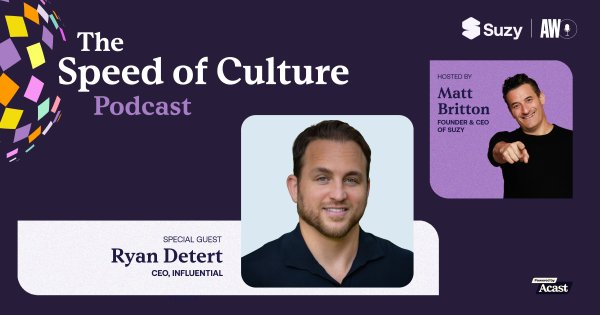
In this conversation on The Speed of Culture podcast, Matt Britton talks with Ryan Detert, founder and CEO of Influential, a company that now works with over 60% of the Fortune 500 and was recently acquired by Publicis Groupe.
Ryan details his path from running parody accounts with 30 million followers to building the largest influencer marketing company by revenue.
He talks about how data and measurement turned a novelty into an enterprise media channel, the realities of bots and AI slop, and his experience of building a business with your closest friends and family.
He shares how he moved influencer marketing from small PR budgets into the massive pool of media dollars by focusing on measurable outcomes like offline sales and foot traffic.
About the guest:
Ryan Detert is the founder and CEO of Influential, a global leader in influencer marketing and a preferred partner for major social media platforms. He began his career as an influencer with 30 million followers across Twitter and Instagram, running niche accounts focused on travel, fashion, and automotive.
Seeing a gap in how brands and agencies accessed talent, he built Influential into a data-driven platform that matches audiences with creators to drive ROI. Under his leadership, the company became a household name in the creator economy before its acquisition by Publicis Groupe.
He resides in Los Angeles, where he continues to lead the business alongside a team built on trust and long-standing relationships.
Key takeaways:
[01:47] The Origin of Niche Publishing on Social Media — Ryan details his early career as an influencer sixteen years ago, managing accounts with millions of followers. He describes a time when content creation was less about individual personality and more about publisher-style alignment with specific topics like travel or fashion. This era provided the first signs that social media could drive conversation at a scale that overshadowed traditional major events. It was this experience that highlighted the need for a professionalized marketplace that could offer brand safety and reliable measurement for agencies.
[06:22] Moving from PR Buckets to Media Dollars — One of the largest hurdles in the early years was changing how enterprise brands viewed creators. Ryan explains how the industry initially categorized influencer marketing as a PR or sponsorship expense, which limited budgets to small, experimental projects. He details the evolution that occurred around 2016 when the combination of native content and paid media amplification allowed these campaigns to compete for much larger media budgets.

