





Generative AI has done something strange to the economics of knowledge work: it has dramatically lowered the cost of generating ideas.
Any reasonably capable professional with a chatbot can now produce a dozen plausible strategies, memos, product concepts, or marketing plans before lunch. In some cases, AI lowers the cost of execution too—but not nearly as far or as fast. Shipping even one of those ideas still takes weeks, months, or years.
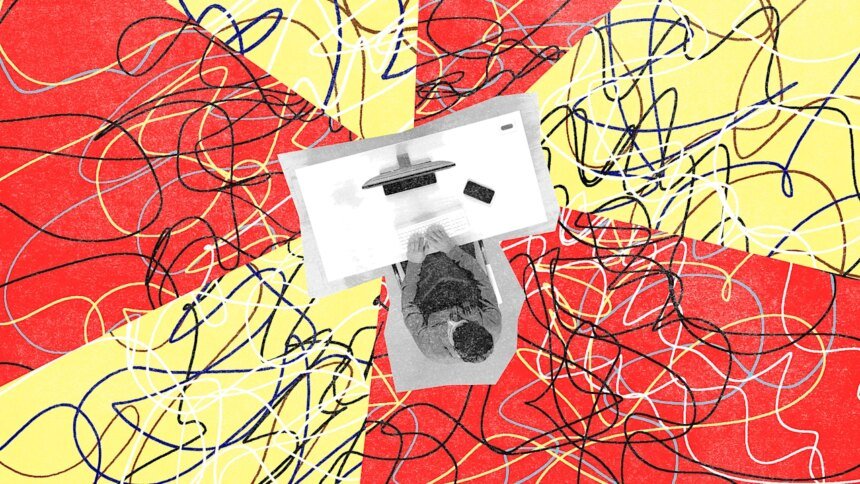
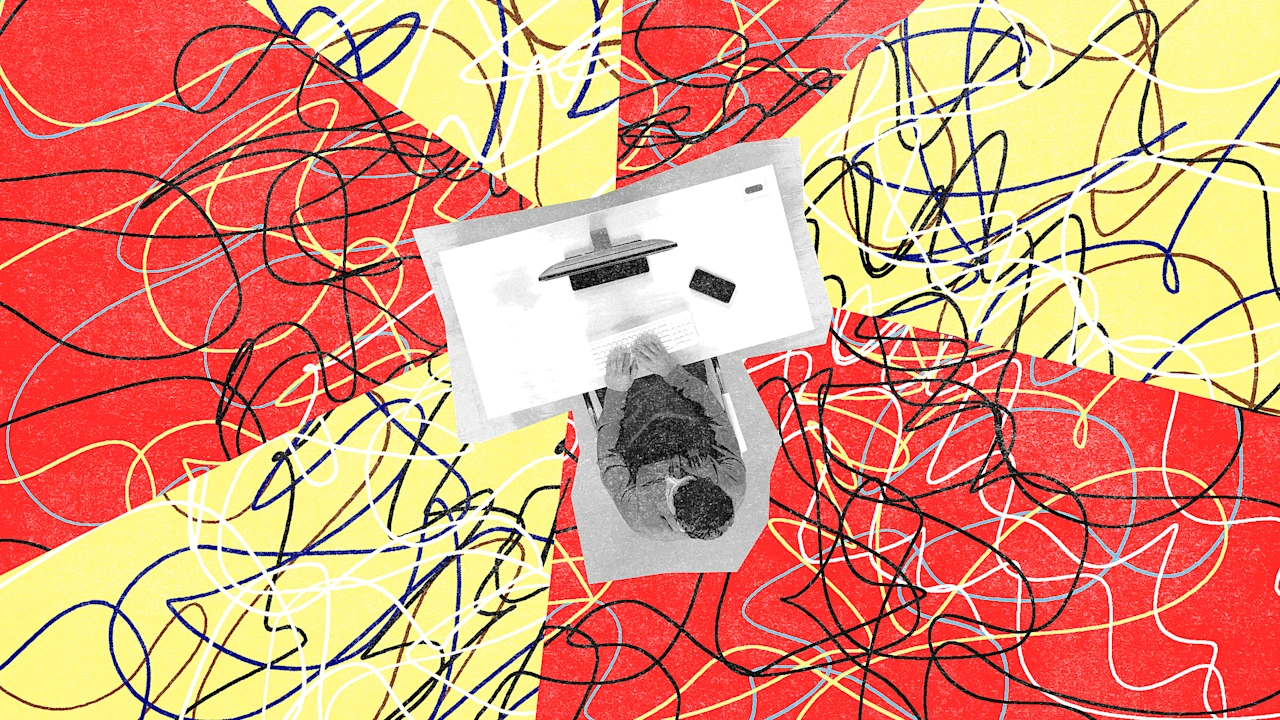
The result is already showing up across workplaces: more initiatives than teams can carry, more tools than anyone can learn, and more priorities than any reasonable person can hold in their head. Leaders keep layering on new work because the cost of imagining new work has fallen close to zero. But the cost of actually doing it hasn’t.
This creates a new management challenge: in an AI-saturated workplace, the bottleneck is no longer ideas. It’s execution.
A cutting-edge genomics lab solved this problem about a decade ago—twice.
The Broad Institute’s lesson in doing less to get more done
The Broad Institute, an MIT-Harvard biomedical research center, experienced one of the fastest cost collapses in modern technological history. When the first human genome was sequenced in 2003, it took more than a decade and cost roughly $3 billion. Today, sequencing a human genome can take hours and cost under $200.
That collapse created obvious opportunities, but also two separate crises at Broad.
The first was operational. As sequencing became faster, samples moved through the pipeline more quickly than downstream teams could process them. Work piled up at bottlenecks. The lab became so overloaded that technicians started losing samples.
The fix was to move from a “push” system—where each stage sends work downstream as fast as possible—to a “pull” system, where each stage only takes on new work when it has capacity.
Then came a second crisis, one that looks a lot like the AI workplace problem.
Once sequencing itself became cheap and routine, the Broad’s innovation team faced an explosion of ideas. New projects were started constantly. Few were ever finished. As an MIT case study put it, the group was “losing the technology leadership position it had worked so hard to gain.”
The solution was the same discipline applied to ideas.
The team created a visual map—literally Post-it notes on a wall—of every active project and tracked where each sat in the development funnel. The exercise made two things obvious: some projects were redundant, and there were at least twice as many underway as the team could realistically handle.
They created a project funnel on the wall, and added a “hopper” before it—a holding area where ideas waited until capacity opened up in the funnel.
In two years, the team cut active projects by more than half and increased the number of projects that actually got done.
Why leaders keep adding work
The Broad’s fix seems obvious in hindsight. It rarely happens in practice because humans are biased toward addition.
A 2021 Nature study led by researchers at the University of Virginia found that when people are asked to improve a design, document, or process, they systematically default to adding rather than subtracting.
In the workplace, that bias compounds.
A new tool gets rolled out, but the old ones stay.
A new priority is announced, but old priorities aren’t retired.
More meetings. More dashboards. Longer strategy decks.
Most organizational complexity is the sediment of individually reasonable additions made without subtraction.
AI accelerates this dramatically.
It’s now trivial to generate a seventeenth strategic priority, a fourth product line, or a third dashboard. The bottleneck is no longer imagination. It’s the humans being asked to execute.
What high-performing teams do differently
The companies adapting best to this shift are applying some version of the Broad’s discipline.
Make active work visible
You can’t manage what you can’t see. Put every in-process initiative on one shared surface—a wall, a dashboard, or a single document. Visibility forces triage.
Stop starting and start finishing
In operations research, limiting work in progress is one of the simplest ways to improve throughput. New work waits until something else is finished.
Define “done” before you begin
Before a project starts, define success clearly.
Tony Fadell, who led the design of the iPod and co-founded Nest, told me his most important advice to startup founders is to write the press release before starting the project. It forces teams to clarify priorities and define the goal line upfront.
None of this is about accomplishing less. It’s about actually finishing the work that matters.
In an AI-saturated economy, ideas are becoming a commodity. The advantage will go to organizations that can decide which ideas are worth doing, and which are worth ignoring.
Adapted from INSIDE THE BOX: How Constraints Make Us Better, by David Epstein. Copyright © 2026 by David Epstein. Published by Riverhead Books, an imprint of Penguin Publishing Group, a division of Penguin Random House LLC.

