





The soccer coach had blocked himself from sportsbooks by the time he found prediction markets.
The tax accountant said he “got the same high” on those platforms that he got from gambling. “That was how I relapsed — with Kalshi and Polymarket. I lost a bunch of money.”
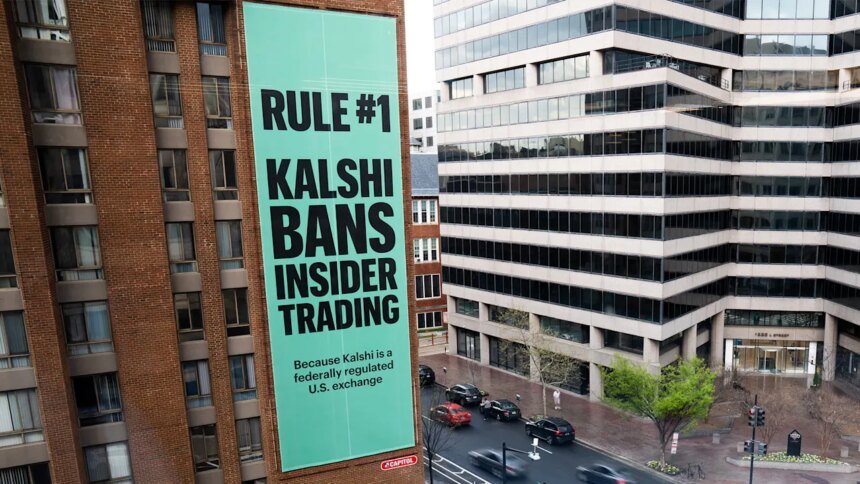
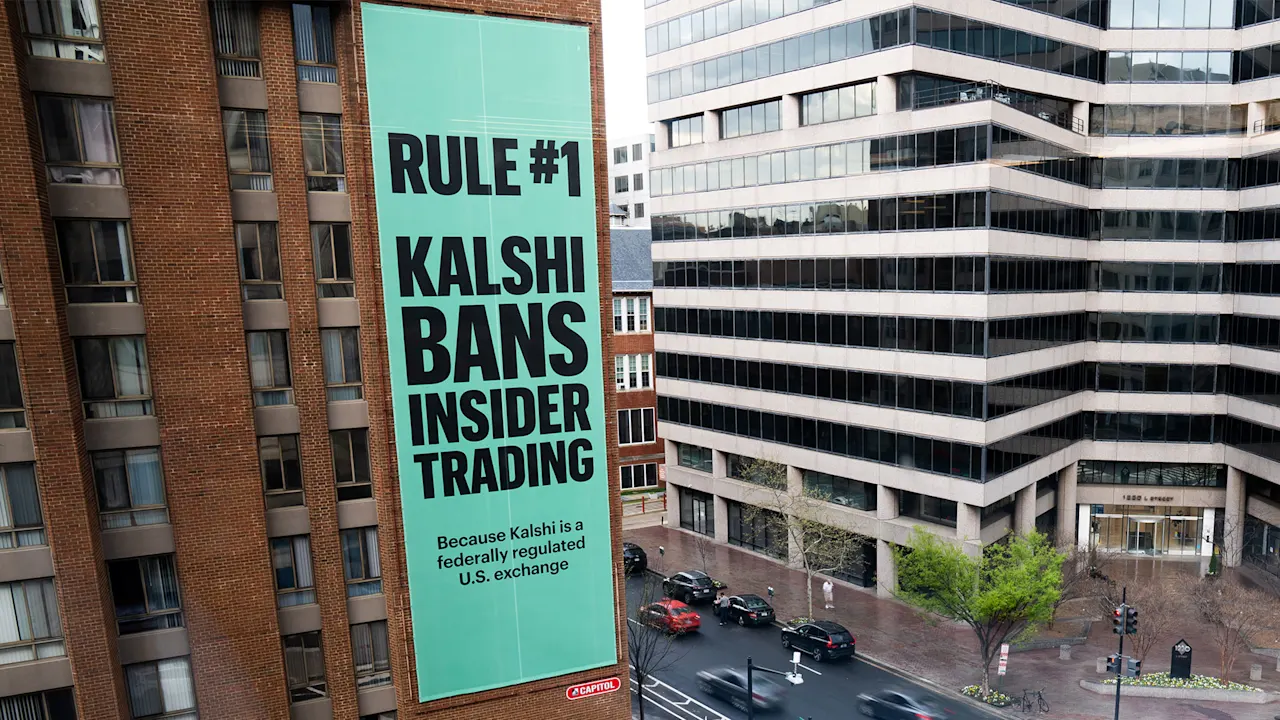
The rapid growth of prediction markets has sparked a high-stakes debate that is playing out in courts and legislatures all over the country. Operators of those companies believe they should be regulated like the stock exchange because of federal law and their customer-to-customer structure, while sportsbooks and state officials think they should be supervised the same way as sports gambling platforms.
While that argument continues with no sign of resolution, the clinicians who treat gambling disorders are more concerned about what they are seeing with their patients. In their spaces, when it comes to sports gambling and prediction markets, the end result is virtually the same.
Two gambling addicts who spoke to The Associated Press — the soccer coach and tax accountant — say they had relapses on prediction markets after they took legal action to protect themselves from the allure of sports betting. They are being identified by their occupations because of the sensitivity of their situations.
Their stories reflect what experts say they see with some of their clients.
“There may be real differences in how these products are defined or regulated, but in the therapy room, we are often seeing the same cycle of anticipation, action and reaction play out again and again,” said Dr. Cynthia Grant, the vice president of clinical for Birches Health, which operates a national network of providers for treating gambling addiction.
“I sometimes think of it like different doors into the same room. The label on the door may change, but once someone’s inside, the experience can feel very familiar.”
The road from sportsbooks to prediction markets
Sportsbooks and prediction markets offer a lot of similar options. Wagers on games, individual performances and other possibilities. But the format is different.
Sportsbooks have in-house experts who set odds that dictate payouts for winning bets. It’s the house versus the gamblers. Traders on predictions markets swap contracts of yes-or-no questions, and profits and losses are dictated by the market. Win a “yes” holding on an event contract where most of the market guessed “no,” and the payout is bigger. Prediction markets generally make money through fees on contracts.
For addicts, they are two paths to the same result.
The soccer coach who spoke to the AP started gambling when he was 16. Small bets against friends in his New York neighborhood, everything from cards to basketball and tennis. When he turned 18, he started going to casinos and making bets at sportsbooks. Amid mounting losses, he turned to prediction markets.
“I would be in all this debt and get a paycheck for $2,000 on a Friday and it would be gone by Saturday or Sunday,” said the coach, 21. “I wouldn’t have money to fill up my gas tank.”
He was struggling with loans and maxed-out credit cards while working and going to college before he stepped away in January to confront his addiction problems, which also included smoking marijuana.
He joined Gamblers Anonymous, and he was told he had to stop associating with people who gamble.
“For a younger crowd, that’s difficult because it’s everywhere,” the coach said. “My friends from childhood — most of them all gamble.”
The coach and the tax accountant had formally self-excluded from sportsbooks before they started trading on prediction markets. Self-exclusion programs provide an opportunity for gamblers to ban themselves from gambling facilities and betting apps. They are offered in many states as part of gambling regulations, but there is no widely adopted national system.
The landscape for self-exclusion programs becomes even more fragmented when predictions markets are included. Kalshi started a voluntary opt-out program when it launched a customer protection hub in March 2025, and it’s one of several platforms — including Polymarket — collaborating on a national self-exclusion program for prediction markets. But it’s not clear if that program would ever overlap with the systems used by state gambling regulators.
The accountant, 33, said his gambling problems started after New York launched legalized mobile sports betting in January 2022. He had “a boatload of debt” in August 2023 when he told his then-fiancée about what was going on with him.
She married him anyway. Looking to save money after the wedding, they moved into a rental house owned by his parents. He self-excluded from sportsbooks. Then, after the couple lost their first pregnancy, the accountant started day-trading before signing up for Kalshi.
“Prediction markets are the same thing packaged in a different way,” the accountant said. “It’s a dangerous loophole. … How can you do all that and say you’re not a sportsbook?”
Tennis was his go-to sport — he liked the speed of the matches — before he went to rehab in Virginia last year.
He had a relapse in December when he downloaded Polymarket and made a free $10 wager. He was confronted by his wife, who had his email connected to her phone and reached out to his sponsor.
While there has been no substantive research into the effect of prediction markets on sports gambling addiction, the experiences of the coach and the accountant are not uncommon for treatment experts.
“You’re seeing a lot of the same behaviors, whether it’s a prediction market or it’s gambling,” said Jody Bechtold, the CEO of The Better Institute, a Pennsylvania practice that works with people impacted by gambling disorders. “You’re seeing, you know, wagering more and more. Chasing losses, so ‘Oh, today was a bad day, I have to work tomorrow at the prediction markets to get my money back.’ … The lies, the secrecy, and that it’s impacting everyday life.”
Kalshi spokeswoman Elisabeth Diana highlighted its programs for responsible trading — such as trading breaks and self-limits — and said it’s working on other measures to further facilitate healthy trading behavior.
Compared to casinos, Diana said, Kalshi is “fairer, more transparent, and less predatory.”
“There is no house that wins when customers lose,” she said. “This means that Kalshi doesn’t hook losers and penalize winners.”
A message was left seeking comment from Polymarket.
Event contracts are increasingly popular on prediction markets
Sports have become a major category for prediction markets. Kalshi had more than $2 billion in total trading volume on this year’s NCAA men’s basketball tournament, according to Diana. Michigan’s 69-63 victory over Connecticut in the championship had $10.6 million in volume on Polymarket.
The U.S. market for sports-focused event contracts could grow to approximately $1.1 trillion in annual volume, according to a Bank of America report.
“A year ago, if you said prediction markets, I mean I don’t know what that is, I don’t see it,” said Dr. Timothy Fong, the co-director of the UCLA Gambling Studies Program. “Now we’re starting to see it more and more in our patients that come into the clinic. And it’s usually not one, it’s multiple platforms they’re betting on, right? … When you have something that’s available, that’s accessible, that’s anonymous, is super easy to use, multiple times in a day, of course that’s going to raise the risk of addiction for any human on Earth.”
There are multiple ongoing lawsuits involving states and prediction markets, and the ramifications of the legal dispute are being felt on a variety of levels.
Marlene Warner, the CEO of the Massachusetts Council on Gaming and Health — a private nonprofit health organization that provides educational programs on gambling along with other services — said the situation with prediction markets “feels a bit like the wild, wild west right now.”
“We’re very used to like going to our state regulator or, you know, seeing a process go through where all of a sudden now you’re like, ‘OK, a piece of legislation has outlined what is appropriate for a licensed sports betting operator to do,’” Warner said. “And then you see the regulation come into place. And so you can track it. But right now, nobody knows kind of what the limits are.”
In most states with legal sports gambling, it is limited to ages 21 and older, while prediction markets are open for 18- to 20-year-olds with some exceptions. Prediction markets also have a presence in states where sports betting is illegal, including Texas and California.
“I don’t know enough frankly, we don’t know enough, nothing’s been studied about them, I can’t tell you whether they’re more less or exactly the same in terms of risk level,” Warner said. “But what I do know is they’re in a very gray, unregulated space and that alone makes it difficult.”
Prediction markets fall under the jurisdiction of the federal Commodity Futures Trading Commission, which has a regulation that prohibits an event contract “that involves, relates to, or references terrorism, assassination, war, gaming, or an activity that is unlawful under any state or federal law.”
CFTC chairman Michael Selig is backing prediction markets in their legal proceedings against several states, asserting the commission’s “exclusive jurisdiction over these markets.”
While that argument continues, the soccer coach and tax accountant are rebuilding their lives — while doing their best to stay vigilant with their addictions.
“You have to face this stuff or it just keeps getting worse,” the coach said.
AP sports: https://apnews.com/sports
The Associated Press receives support from Charles Schwab Foundation for educational and explanatory reporting to improve financial literacy. The independent foundation is separate from Charles Schwab and Co. Inc. The AP is solely responsible for its journalism.
—Jay Cohen and Cora Lewis, Associated Press

