






Key Takeaways
- Mullin seized the opportunity to focus on plant-based options and sustainable initiatives at Little Saint.
- She says its seven-day-a-week operations help it serve the community as a rare third place.
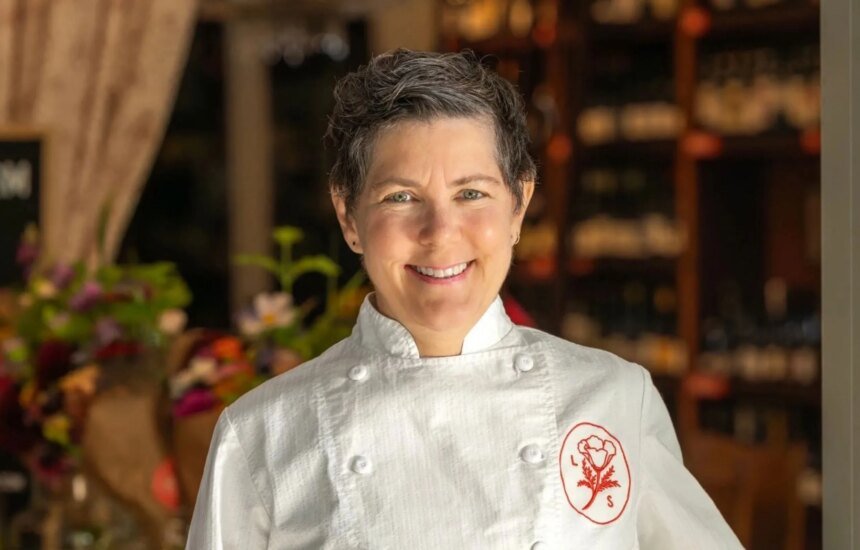
“Food was very central to my life growing up,” Deborah Mullin, director of culinary at Little Saint, a plant-based restaurant in Healdsburg, California, says.
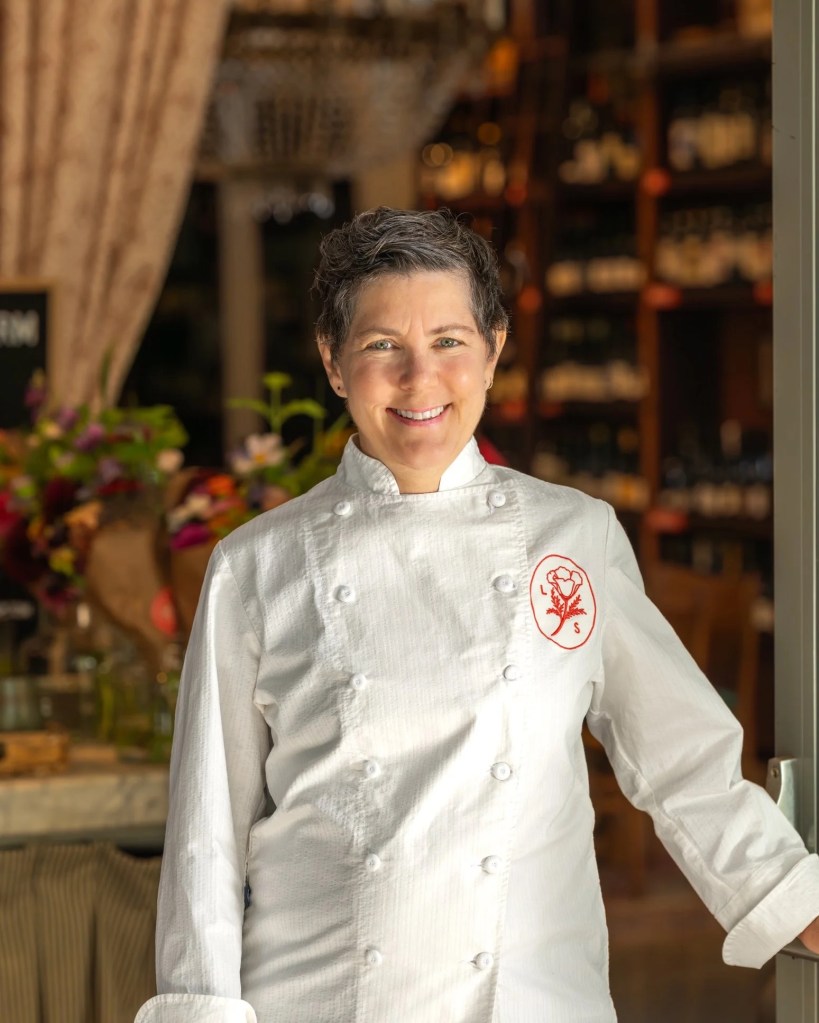
Mullin’s paternal grandfather owned and operated a restaurant in a small town in the Hudson Valley in New York. Her maternal grandparents were first-generation Americans with Italian heritage; her grandmother often prepared meals authentic to central Italy. And Mullin’s parents, now in their 80s, are avid gardeners to this day.
Throughout college, Mullin worked in restaurants, both in front-of and back-of-house capacities, to supplement her income.
“ From the very beginning, I’ve kind of been tapped as the team leader, the manager,” Mullin says. “So learning how to operate food businesses has been, from very early on, a part of my career.”
Mullin graduated with a communications degree, but mid-career, she enrolled in the Culinary Institute of America in Hyde Park — the last piece of formal training she felt she needed to round out her skill set. The experience helped her translate what she already knew about food to shape menus on another level, she says.
A “needle-in-a-haystack” opportunity at Little Saint
Over the past decade of her career, during which she most recently served as the executive chef at The Culinary Institute of America at Copia in Napa, Mullin became increasingly interested in plant-based options and sustainable initiatives. The role at Little Saint offered a rare chance to focus on both.
“ This part of California is already known for its long growing seasons, lots of produce and the farm-to-table mentality,” Mullin explains. “But to take it to the next level and create an experience and a menu that is wholly dependent on those elements was kind of a needle in a haystack.”
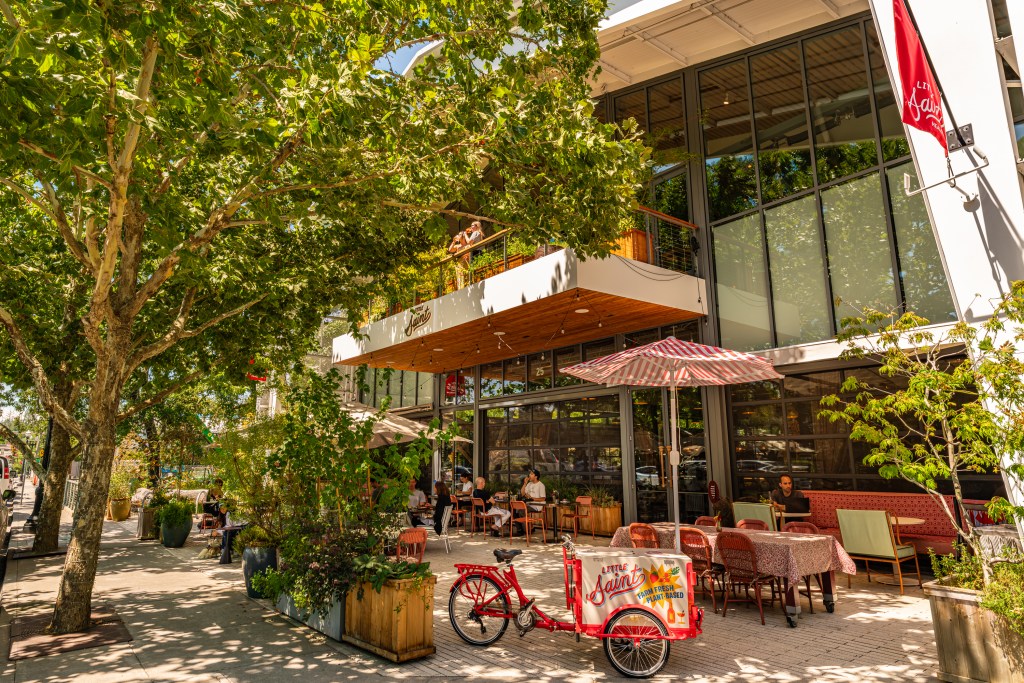
Healdsburg locals Laurie and Jeff Ubben opened Little Saint’s doors in 2022. The founders collaborated with executive director Jenny Hess and creative director Ken Fulk to transform a two-story, roughly 10,000-square-foot property known as the “SHED” into a multi-use space housing their fully plant-based restaurant, bakery, coffee bar, wine shop, cocktail bar and events venue.
The Ubbens also acquired an eight-acre property two-and-a-half miles from Little Saint. They turned the former vineyard into the regenerative Little Saint Farm, which supplies the produce behind the restaurant’s seasonal menus. Additionally, the couple opened the Cottages at Little Saint, also designed by Fulk and situated in downtown Healdsburg, earlier this year.
Entrepreneur sat down with Mullin to learn more about what goes into fostering community within Little Saint’s unique brick-and-mortar space — and keeps it all running smoothly.
Building community at a restaurant and venue like Little Saint boils down to one essential ingredient, Mullin says: being hospitable.
But it’s not enough just to strive for hospitality excellence — it has to come from a genuine place. “We want people to explore and be excited by the space, and feel welcome,” Mullin explains.
To that end, Little Saint is open and available to the community seven days a week from 8 a.m. to 9 p.m.
The goal is to make Little Saint as accessible as possible to the widest audience possible. Essentially, there’s something for everyone: Stop by in the morning for coffee and a pastry, in the afternoon for a grab-and-go lunch, or in the evening for a multi-course dinner or live music.
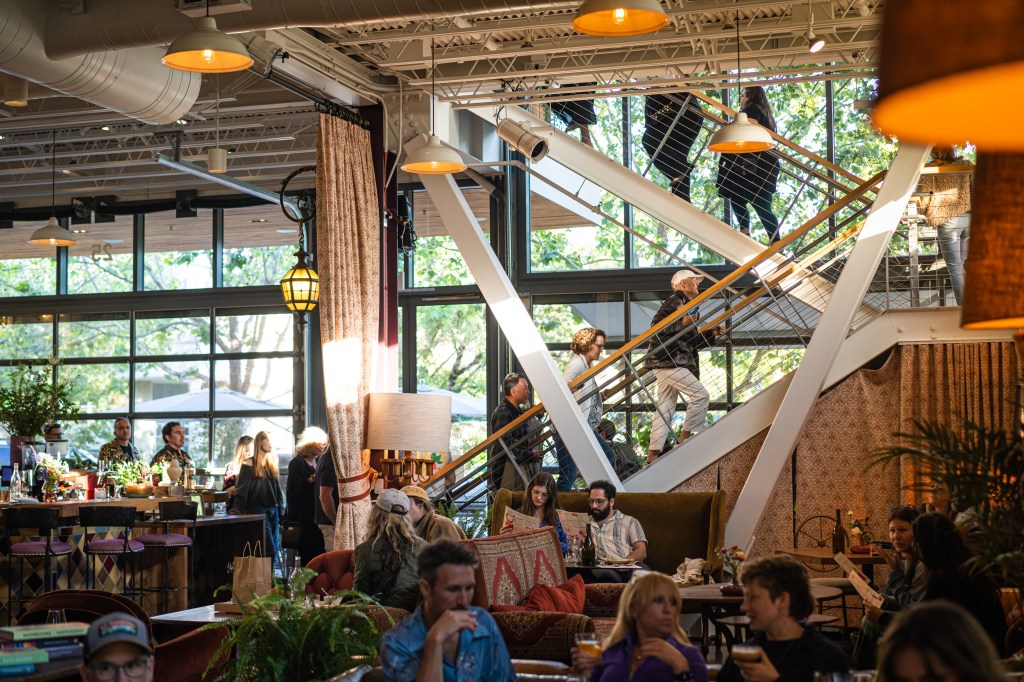
Little Saint’s flexible, multi-use format allows it to function as a “third place,” Mullin says.
A term coined by sociologist Ray Oldenburg in his 1989 book The Great Good Place, “third places” refer to public gathering places outside of the home and work. And they’ve become fewer and farther between over the years, in part a response to economic pressures and digital shifts.
Centering community, committing to surprise and delight
At Little Saint, however, community remains paramount, and drives operations. Little Saint takes seriously what Mullin calls “the element of friendliness”: a commitment to being a place people can depend on, starting with the food.
Yet as important as it is to serve food that remains consistent from visit to visit, it’s also necessary to surprise and delight. Little Saint complements its year-round items, such as its sunflower caesar salad, with others that change across seasons, and even microseasons.
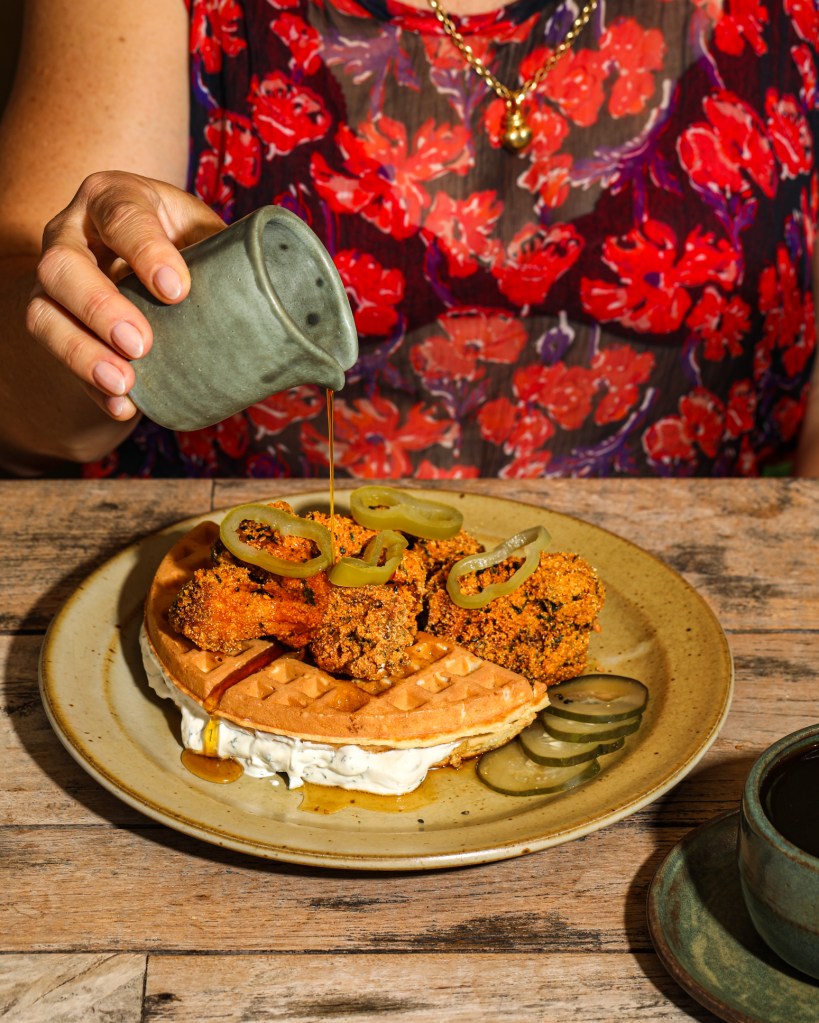
Those microseasons allow the culinary team to explore certain items in more depth than they might otherwise, Mullin says.
For example, last August, Little Saint hosted its Tomato Sagra dinner, a one-night-only, tomato-focused feast in collaboration with Michelin-recognized restaurant A16. The tomato varieties, grown on Little Saint Farm, went into dishes like Neopolitan pizza and melon-basil sorbet.
Managing a multi-faceted business that looks effortless
So much goes into running such a complex, multi-faceted business, and guests might not realize all that’s happening in the background, Mullin says. But that’s the point: to create a succinct, balanced and inviting experience that feels seamless.
“ In order to support all of the plates spinning in the air, we have culinary managers who run the teams,” Mullin says. “And I’m basically, kind of the visionary who has set the structure and developed how those teams break out, who leads them.”
Building a great place to work, and developing the next generation of industry professionals, is as important to Mullin as achieving excellence in food.
In addition to navigating the operational logistics, Mullin prioritizes coaching people on how to better understand and incorporate those business elements into the culinary side, she says.

It’s key that everyone on the team understands their job and has the support they need to do it well, which means setting up a strong feedback loop with constant communication, Mullin notes.
At Little Saint, she aims to create an environment where everyone has clarity on the business’s mission and their role within it — so they always understand the path to progression.
Needless to say, a lot happens under one roof at Little Saint, but community continues to serve as one of its pillars, right alongside its inventive plant-based food.
“ I’m excited to show how Little Saint as a business model demonstrates that a restaurant can be much more than just a place to eat,” Mullin says. “That it is a true third space, where people can gather and connect and celebrate.”
Key Takeaways
- Mullin seized the opportunity to focus on plant-based options and sustainable initiatives at Little Saint.
- She says its seven-day-a-week operations help it serve the community as a rare third place.
“Food was very central to my life growing up,” Deborah Mullin, director of culinary at Little Saint, a plant-based restaurant in Healdsburg, California, says.
Mullin’s paternal grandfather owned and operated a restaurant in a small town in the Hudson Valley in New York. Her maternal grandparents were first-generation Americans with Italian heritage; her grandmother often prepared meals authentic to central Italy. And Mullin’s parents, now in their 80s, are avid gardeners to this day.
Throughout college, Mullin worked in restaurants, both in front-of and back-of-house capacities, to supplement her income.

