







Key Takeaways
- Hudick began to explore her passion for design at a jewelry-making class in 2006.
- She honed her craft over the years, and friends suggested she start to sell her pieces.
- Now retired as an engineer, she’s focusing on the business and teaching workshops.
In 2024, Anna Hudick, then 58 years old, retired from a decades-long engineering career to go all-in on her hobby turned business: handmade jewelry line Inside My Locket.

Hudick, who lives in Harrisonburg, Virginia, always had a creative side, but when she was a young adult considering careers, having a comfortable income was top of mind.
With an aptitude for math, Hudick studied mechanical engineering in college, then launched her career. She was a certified lighting designer and focused on building systems — from designing homes to small-scale industrial commercial buildings.
However, Hudick’s interest in jewelry, which began at eight years old when she tagged along with her mother and a friend to gem and jewelry shows, never waned. In 2006, Hudick reignited the spark during Las Vegas Jewelry Week at a jewelry-making class.
“[The instructor] was beading jewelry with freshwater pearls and custom focal beads made of hand-blown glass,” Hudick tells Entrepreneur, “so that was my first design.”
The next year, Hudick took another class with the same instructor. Then she started taking classes in different mediums. More than a decade into her creative hobby, in 2018, Hudick had settled on her favorite design mode: traditional metalsmithing.
Selling her jewelry designs and teaching craft classes
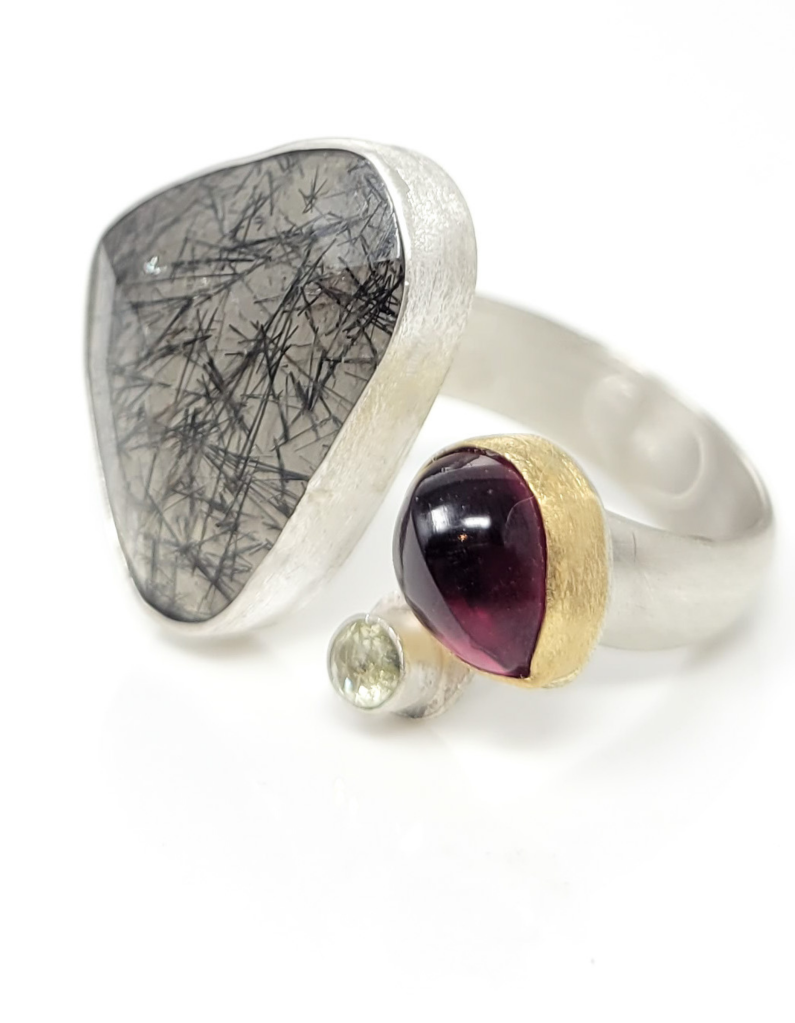
Along the way, friends encouraged Hudick to sell her jewelry designs. Hudick began selling some of those pieces, and by the time she felt ready to retire as an engineer, she was excited to focus on the business full-time.
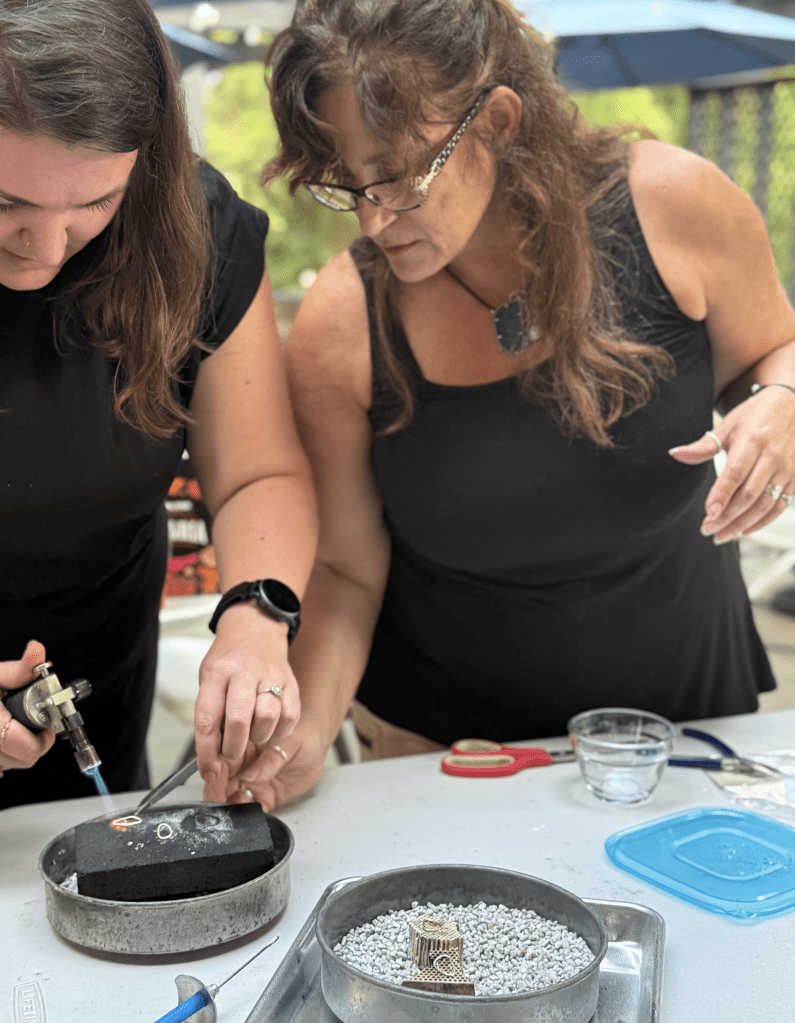
About a year and a half ago, Hudick also started teaching jewelry-making classes, which she has hosted at a local vineyard and coffee shop.
“ That’s been a lot of fun,” Hudick says, “because you get to watch people change. They’re coming in after work, stressed, and they have two hours where they aren’t tied to their phone or email. They just relax. Then by the time they’re done, they’re so happy with what they’ve made. It’s really fulfilling.”
The cost of growing a handmade jewelry business
When Hudick retired from engineering, her annual salary was $89,900.
“ I have no regrets about retiring,” Hudick says, “other than having to dip into my retirement account. That’s what it was there for, but being too young to really take advantage and not get penalized [would be] my only regret.” Most retirement accounts allow penalty-free withdrawals beginning at age 591⁄2.
In 2025, Hudick’s first year as a full-time artist, her sales were roughly $23,000. She funneled those earnings back into the business to pay for supplies, classes and other expenses.
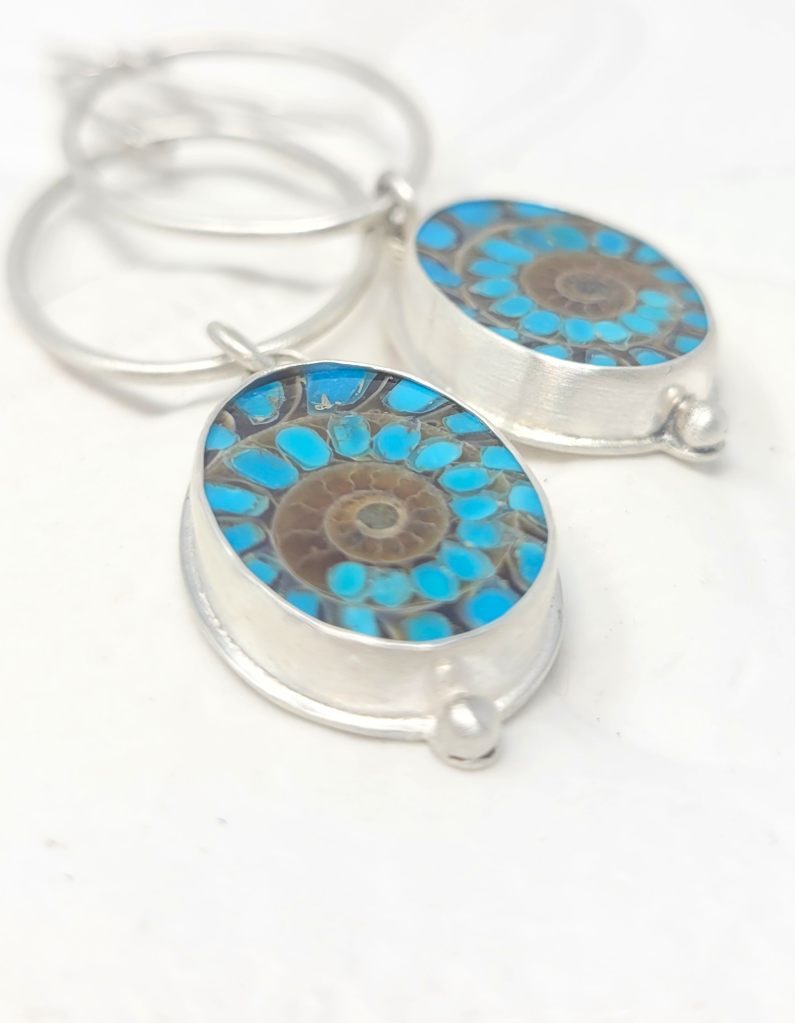
Most of Hudick’s designs are in sterling silver; she primarily sources from Rio Grande, one of the largest silver suppliers.
Unfortunately, tariffs have driven up the cost of materials. In 2024, Hudick recalls paying about $33 per troy ounce for silver. That price crept up last year, reaching the $70 to $80 range — then hitting $100 this past March, she notes.
“So it’s making it a little challenging to buy new materials,” Hudick says. “I’ve been trying to work with what I have and reuse a lot of my scraps.”
The challenge of setting prices
Setting prices for her designs can be challenging, Hudick says. A traditional formula might include the cost of materials and time, typically an hourly rate applied to how long it takes to create the piece, multiplied by a factor of three or four.
“That can be very expensive,” Hudick says. “I can spend eight hours easily on a piece. So am I $50 an hour? I don’t know. But is that what I want to charge somebody? I’m not competing with a big jewelry empire. Everything is handmade, and I do want that quality craftsmanship to show through. But it can be uncomfortable to charge that price.”
Hudick has charged between $65 and $75 per person for her jewelry-making workshops.
Hudick used sterling silver in the first classes she taught, then expanded into brass and copper, which allows for a more affordable price point.
Building an email list and larger audience
In the beginning, when Hudick first started selling her pieces, she used a “Tupperware party”-style approach to gain traction. Essentially, she gave a host a discount for inviting their friends over to peruse her pieces. That’s also how Hudick built her initial email list.
From there, Hudick started attending art shows — indoor only to avoid the difficulties of unpredictable weather.
She also has a website and social media pages, though those aren’t primary revenue drivers currently. Hudick hopes her classes will continue to increase awareness for her business and generate more sales.
Although “sales have been a little soft” so far this year, Hudick is adding more events, including a recent pop-up at a gallery, to her rotation to put herself out there and in front of more customers.
“ I know my customers are aging at the same rate that I am,” Hudick says. “They’re going to retire too, and they’re going to say, ‘But Anna, I don’t wear jewelry anymore.’ And I’m going to be like, ‘Okay, but what about your daughter or your granddaughter?’ So, yeah, it’s a little difficult. I’m more of an introvert, maybe from all of the years of engineering.”
Applying engineering skills to jewelry design and business
But Hudick’s engineering career also instilled her with skills that have come in handy while building the business, she notes.
Hudick learned how to stay organized and navigate the jewelry-crafting process, which is not necessarily intuitive. It takes practice and consistency. “Like when you’re building a house, you have to have the foundation, then build the walls, and then you have the decorative things, like painting,” she explains.
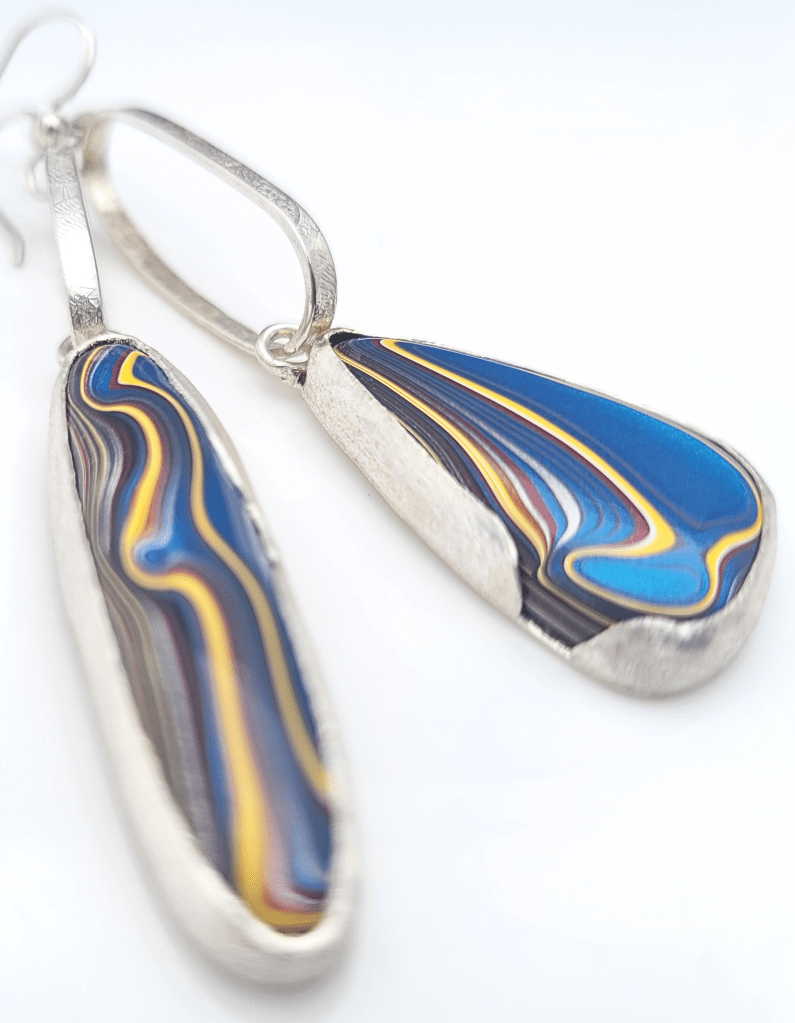
Hudick works out of a 500-square-foot studio located on her boyfriend’s farm. Every design starts with a particular gemstone. She creates custom bezels to hold each stone, then solders it to a silver back plate.
“ A lot of times I’ll have sketched out a design ahead of time, but — and this sounds a little woo-woo — sometimes it takes a little time for the stone to tell me what it wants to be,” Hudick says.
For example, with her beach-inspired collection, she’s been working with fossils inlaid with mother of pearl. A recent piece features a turquoise stone, which she went back and forth over placing horizontally or vertically, with fused scrap silver around it, a newer technique in her repertoire.
I would have regretted not taking the chance on myself.
Like all entrepreneurs, Hudick has had to face hurdles as they arise and learn on the job.
She cites the example of honing her photography skills; it can take hours to get the right shots, then edit them and list them on the website and social media pages.
Through it all, though, Hudick says her support system of family and friends, and even former co-workers when Inside My Locket was still a weekend hobby, has helped the business become what it is today.
Hudick encourages other retirees who want to make the leap to entrepreneurship to tap into their own support network — then go for it.
“Just do it,” Hudick says. “I would have regretted not taking the chance on myself.”
Key Takeaways
- Hudick began to explore her passion for design at a jewelry-making class in 2006.
- She honed her craft over the years, and friends suggested she start to sell her pieces.
- Now retired as an engineer, she’s focusing on the business and teaching workshops.
In 2024, Anna Hudick, then 58 years old, retired from a decades-long engineering career to go all-in on her hobby turned business: handmade jewelry line Inside My Locket.
Hudick, who lives in Harrisonburg, Virginia, always had a creative side, but when she was a young adult considering careers, having a comfortable income was top of mind.
With an aptitude for math, Hudick studied mechanical engineering in college, then launched her career. She was a certified lighting designer and focused on building systems — from designing homes to small-scale industrial commercial buildings.

