



Key Takeaways
- Southwest Airlines CEO Bob Jordan recently revealed that he rejected a top candidate for a senior position because they were rude to the receptionist.
- Jordan described Southwest’s culture as one that prizes people who are “low ego” and who “seek to serve others before they serve themselves.”
- Other CEOs, like United Airlines CEO Scott Kirby and Duolingo CEO Luis von Ahn, have their own unwritten hiring tests.
Treating everyone well, from the cab driver to the receptionist, could be the secret that helps you land your next job.
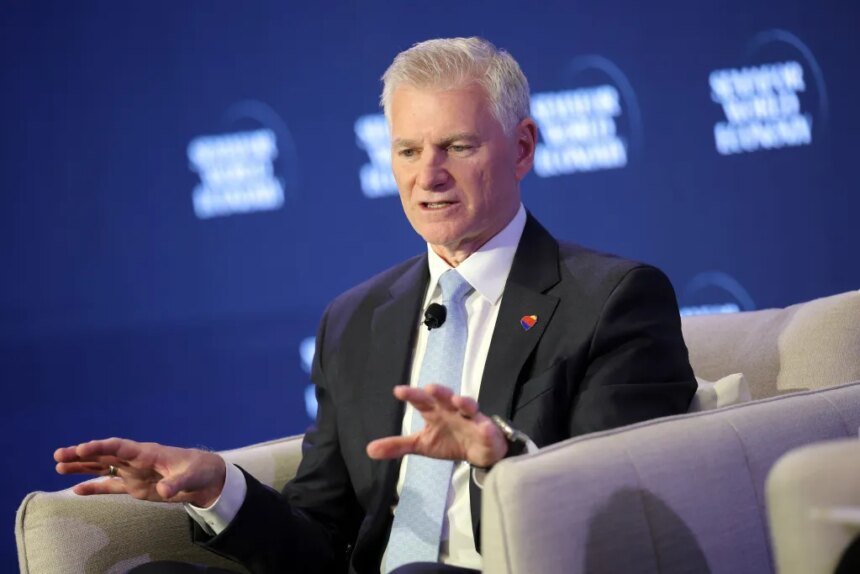
At the Semafor World Economy Summit earlier this week, Southwest Airlines CEO Bob Jordan described interviewing someone for a “very senior position” who nailed the formal conversations with executives. On paper and in the room, the candidate looked like a clear frontrunner.
But after the interview, Jordan’s team compared notes on how the candidate behaved with everyone they encountered. The team discovered that while the person treated executives well, they were dismissive and rude to the receptionist in Southwest’s building. That single data point was enough for the airline to pass on the candidate.
“They did not get the job because they treated one group of folks one way, and they treated that receptionist another way,” Jordan said.
Why Southwest cares so much about culture fit
Jordan described Southwest’s culture as one that prizes people who are “low ego” and who “seek to serve others before they serve themselves.” In his view, those traits eventually reveal themselves in how a person treats everyone, not just the people they think matter.
“You can tell when somebody is not a fit,” he said, emphasizing that the hiring process is designed to surface these moments.
Southwest is famously selective. Even before the pandemic, it hired fewer than 2% of applicants, according to the Harvard Business Review.
Executives at the airline have framed culture as a competitive advantage, arguing that employees who genuinely embody its values are what make Southwest a place people want to work and fly.
Jordan also connected culture to business outcomes. He said Southwest “go[es] overboard treating our employees like family,” because that’s the only way to ensure the same spirit flows down to passengers.
Other unwritten hiring tests
Earlier this month, United Airlines CEO Scott Kirby revealed his new way to determine if job candidates are a good cultural fit for the airline. In a podcast interview with McKinsey chief Bob Sternfels, Kirby explained that he asks a handpicked group of pilots to shadow candidates all day and decide if they would want to spend a four-day trip with them. The pilots get veto power when it comes to hiring, even over technically qualified candidates.
Another CEO relies on the opinions of cab drivers for hiring decisions. Duolingo CEO Luis von Ahn told The Burnouts podcast in February that he pays taxi drivers extra to share how a job candidate treated them on the ride to the interview. The driver’s opinion can make or break an offer.
Yet another CEO uses the breakfast table as a testing ground. Former Charles Schwab CEO Walt Bettinger once told The New York Times that he would take candidates out to breakfast and secretly ask the staff to mess up their order, just to see how they handled it. He wanted to watch their real-time reaction to an annoying setback and see how they dealt with inconveniences.
“It’s just another way to get a look inside their heart rather than their head,” Bettinger told the Times.
Key Takeaways
- Southwest Airlines CEO Bob Jordan recently revealed that he rejected a top candidate for a senior position because they were rude to the receptionist.
- Jordan described Southwest’s culture as one that prizes people who are “low ego” and who “seek to serve others before they serve themselves.”
- Other CEOs, like United Airlines CEO Scott Kirby and Duolingo CEO Luis von Ahn, have their own unwritten hiring tests.
Treating everyone well, from the cab driver to the receptionist, could be the secret that helps you land your next job.
At the Semafor World Economy Summit earlier this week, Southwest Airlines CEO Bob Jordan described interviewing someone for a “very senior position” who nailed the formal conversations with executives. On paper and in the room, the candidate looked like a clear frontrunner.
But after the interview, Jordan’s team compared notes on how the candidate behaved with everyone they encountered. The team discovered that while the person treated executives well, they were dismissive and rude to the receptionist in Southwest’s building. That single data point was enough for the airline to pass on the candidate.

