




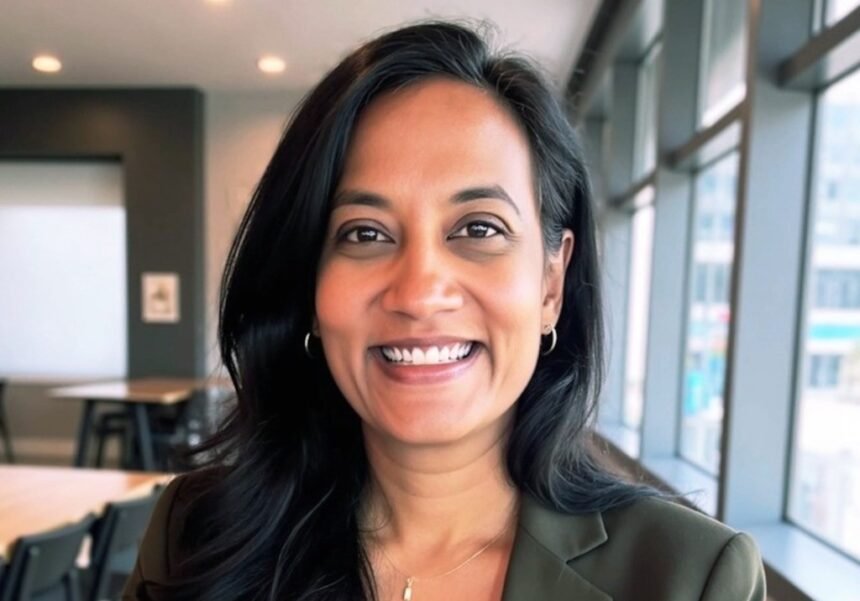

Shaolee Sen gets hit up for startup advice a lot. She grew up watching her mom build a small business in New York City, later ran her own NYC culinary social enterprise, and now spends her days hunting for the gaps in America’s small-business ecosystem and writing checks.
Sen runs small-business philanthropy at JP Morgan Chase & Co., working with nonprofit partners and community leaders to expand access to capital and information for entrepreneurs. One of her current programs aims to answer a big question for founders: what city should I start a company in?
The answer to that question lies in the Advancing Regional Innovation Economies report, a multi-year study from the Nasdaq Entrepreneurial Center, which JPMorganChase supported with Nasdaq.
Here are the top five cities the study found:
- Albany–Schenectady–Troy, NY
- Austin–Round Rock, TX
- San Diego–Carlsbad, CA
- San Francisco–Oakland–Hayward, CA
- Pittsburgh, PA
Sen sat down with Entrepreneur to explain what separates the top cities for entrepreneurship, the value for businesses in having a relationship with local colleges, the trend of small and mid-size companies giving a stake in the companies, and why everyone needs a business mantra.
What have you learned about the top geographies in the U.S. for entrepreneurs?
The most entrepreneurial cities make it easy for entrepreneurs to access real estate, talent, capital, and customers. The Advancing Regional Innovation Economies (ARIE) report highlights places like Columbus, New Orleans, and Minneapolis–St. Paul, where strong public-private partnerships and easily accessible resources drive business success. Columbus in particular stands out in the report for its deeply aligned entrepreneurial ecosystem anchored by Ohio State’s research “gravity” and a diversified industry customer base. This alignment is paired with capital access partners who focus on “hot handoffs” that help entrepreneurs navigate capital and support without getting stuck in redundant programming.
Great cities and states for funding are proactive – they build strong local investor communities and connect founders to capital at every stage, from early angel investors to community lenders and growth capital. We’ve seen this firsthand through our work in cities like Detroit and San Francisco.
What advice do you have for people looking to start a company?
Get feedback early and often. Reach out to local networks and support organizations, find a mentor, and build relationships with potential customers and capital providers early. Take advantage of coaching and technical assistance programs and connect with local community lenders and business consultants — they can provide valuable insights and support that make a big difference.
Also, funding isn’t limited to new dollars. It can mean technical assistance to help improve margins, shared back-office services, or advice on structuring capital to support growth. In other words, the best environments offer a holistic approach, helping entrepreneurs strengthen their balance sheets and build sustainable businesses.
What is the key to finding good talent when building a company?
An amazing talent unlock is to build strong relationships with local schools and be open to a wide range of academic backgrounds. Our research shows that connecting research universities, community colleges, and hands-on learning programs directly to employers creates a steady pipeline of skilled, motivated hires. Successful regions invest in both traditional and nontraditional pathways — such as apprenticeships and workforce development programs — so companies can find the right people to help them grow.
Increasingly, we are seeing the growth of ownership models for small and mid-size firms that give employees a stake in the company’s growth. Talent isn’t just about a hire; it’s about long-term regional and employer investment that allows everyone in a community to participate in the economy. Entrepreneurship through acquisition and employee ownership are also gaining momentum, as retiring business owners look for ways to keep companies local and build generational wealth.
What’s something small, like a daily routine or mindset shift, that changed the way you lead or perform?
There are hundreds of pings each day demanding our attention, which can lead to paralysis or exhaustion. Focus is key. Someone gave me a card once that said, “Do What Matters Most,” and it was filed away in my memory for years until recently. Now I repeat that phrase to myself several times a day—and use it for a range of activities, from making tough decisions to pursuing goals or prioritizing routine tasks. Any repeatable phrase, ritual, or movement that has meaning to you can help restore focus.
Shaolee Sen gets hit up for startup advice a lot. She grew up watching her mom build a small business in New York City, later ran her own NYC culinary social enterprise, and now spends her days hunting for the gaps in America’s small-business ecosystem and writing checks.
Sen runs small-business philanthropy at JP Morgan Chase & Co., working with nonprofit partners and community leaders to expand access to capital and information for entrepreneurs. One of her current programs aims to answer a big question for founders: what city should I start a company in?
The answer to that question lies in the Advancing Regional Innovation Economies report, a multi-year study from the Nasdaq Entrepreneurial Center, which JPMorganChase supported with Nasdaq.

