




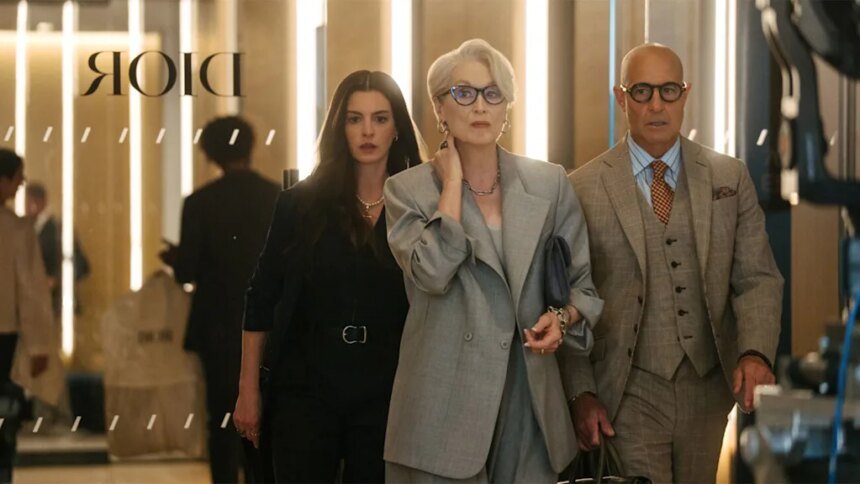

If you haven’t been living under a rock, you’ve probably seen the marketing for The Devil Wears Prada 2, whether it’s a glamorous outfit from Anne Hathaway or Meryl Streep all over social media or a Diet Coke can plastered with the signature double-spiked red heel.
The global press tour, which spanned cities such as Mexico City, Tokyo, Seoul, and Shanghai, culminated at the movie’s star-studded world premiere at New York City’s Lincoln Center earlier this month with Hathaway, Streep, Emily Blunt, and Stanley Tucci present.
As studios promote trailers for upcoming releases, it’s no surprise that they’re also using premieres as massive marketing vehicles as well.
In the first movie, Hathaway’s Andrea Sachs is an aspiring journalist and fish-out-of-water who scores a job at a fictional fashion magazine called Runway, only to butt heads with its icy and manipulative editor-in-chief, Miranda Priestly.
Released in 2006, it was set during a time when legacy media was still relatively nearer to its prime.
In the sequel, Miranda and the rest of the Runway world are grappling with the transition from print to digital media, declining advertising revenue, leadership changes, and the fight for attention in an algorithm-driven online world.
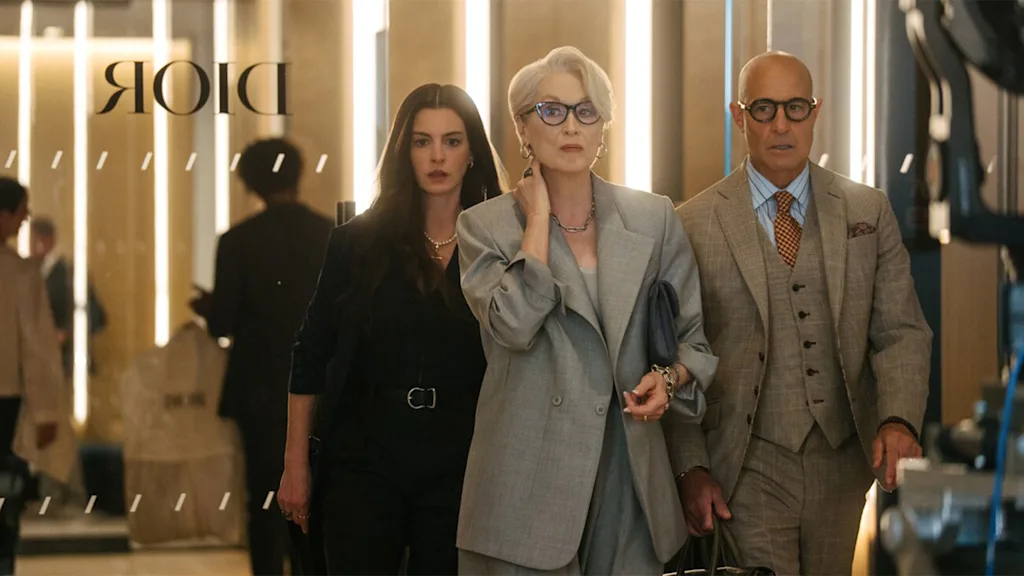
Martha Morrison, head of marketing at Disney Entertainment, Studios, said that when the team was planning the premiere, hosting it in New York felt like a full-circle moment since the movies are set in the city.
“It felt like it was natural to extend the celebration of these characters coming back to New York,” Morrison told Fast Company. “We wanted it to feel like it was a celebration, but we also wanted to feel like it was sort of an experience.”
The premiere (produced by 15|40 Productions) was bigger and flashier than the original, with not only the main cast, but several influencers, fashion journalists, and even Anna Wintour in attendance—a red carpet fit for Runway itself.
What was also prominent at the premiere were brand activations across the beauty, fashion, technology, hospitality, and food and beverage categories. These included:
- A L’Oreal Paris photo booth where guests could pose for their own Runway cover.
- A Runway-branded elevator door sponsored by Zillow, where attendees could recreate their own strut and catwalk.
- A Waldorf Astoria table where guests could get their own custom fashion illustrations drawn by an artist.
- An interactive Runway closet where guests could virtually try on clothes using Google Shopping AI technology.
Other brands Disney and 20th Century Studios partnered with include Dior, Lancôme, TRESemmé, Tweezerman, and Grey Goose for various commercials and branded products.
Morrison said the credit goes to Lylle Breier, who leads Disney’s global marketing partnerships.
“Their goal was to make sure we had a powerhouse collective of all of the best in class partners and brands and culture defining collabs that we possibly could,” Morrison said. “It makes it all feel really special and really in-world and elegant.”
“Something tactile and special”
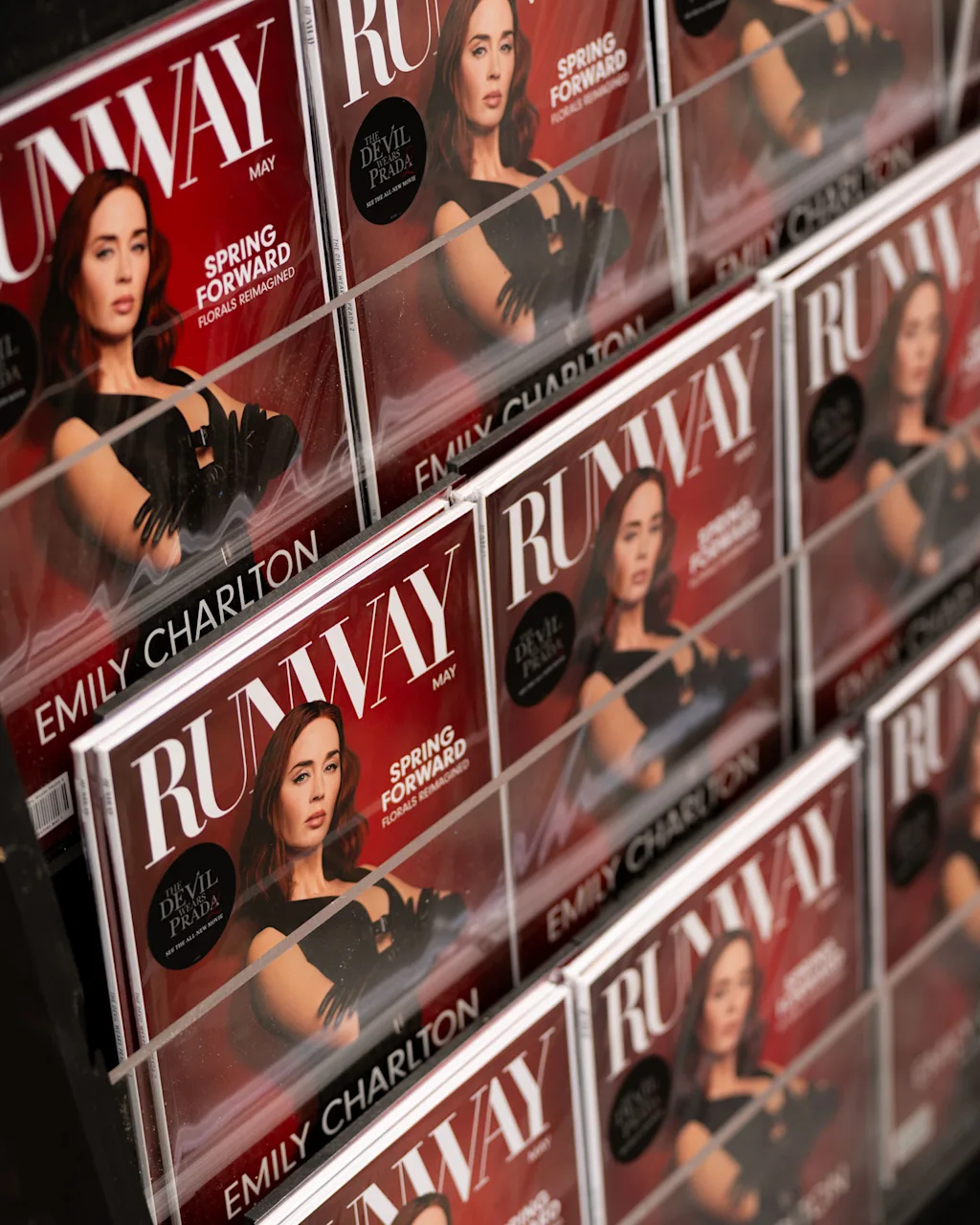
But perhaps one of the biggest marketing stunts from the campaign is the limited-edition fictional Runway magazine the team created that was handed out not only at the premiere, but at the various L’Oreal Paris, Grey Goose, and other branded pop-up newsstands in Los Angeles and New York.
The magazine—which features Blunt’s Emily Charlton on the cover—is full of editorial features, ads promoting the brand partnerships, and fashion taken from the sequel.
There’s even an “editor’s letter” from Miranda and articles written by Andrea, but all the contributors are actual fashion designers, artists, and creators the studio partnered with. (Disney declined to disclose the marketing budget for the sequel.)
“It felt like we had to meet the mark as we were going to make our own Runway magazine,” Morrison said. “A lot of effort and care was put into making sure that it matched what people’s expectations are of what they would get if they had a real Runway magazine in their hands.”
Morrison noted that while so much of the promotion of the film lives digitally, she said it was important that they gave fans something physical as a keepsake.
“In a world where we have a lot of things happening in our campaign that are living online, living in digital, there’s also something great about having something tactile and special you can have in your hands and feel like you’ve got something that feels really exclusive,” Morrison said. “There’s a real power in that as well.”
Ultimately, everything in the campaign goes back to celebrating the fans and their love for the movies and its characters, according to Morrison.
“Nostalgia is very hot,” she said, even as the movie very clearly depicts how people are impacted by the passage of time.
“[The characters] have evolved and changed, and there’s a reason for everybody to come back together,” Morrison said, adding that the team’s goal was to “make this feel like an undeniable cultural moment that is really firmly in the zeitgeist.”

