






Key Takeaways
- Eddie Smith Jr., the 83-year-old owner of Grady-White Boats, turned down a $400 million sale and instead committed the company’s future profits to charity.
- Smith has kept full control of the company since buying it in 1968 and growing it into a leading producer of high-end recreational fishing boats.
- Under the new structure, Smith will remain at the company as chief executive emeritus and draw an annual salary of undisclosed value.
In 1968, Eddie Smith Jr.’s path was far from guaranteed success or riches. That year, he took a gamble on a struggling boat company in Greenville, North Carolina, buying the company even though it was barely staying afloat.
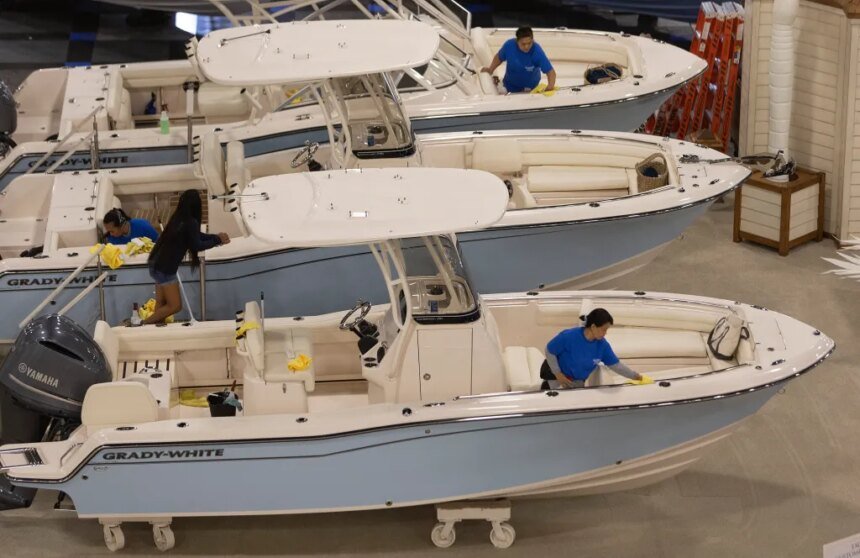
Smith managed to steer the company to success, initially putting in 100-hour weeks to turn things around. Over the years, he rebuilt the business, called Grady-White Boats, into a powerhouse known for its high-end recreational fishing boats. Today, Grady-White generates hundreds of millions of dollars in annual revenue and has been profitable for 50 years.
Notably, Smith did it all on his own terms, never bringing in outside investors or taking the company public. He said in a recent interview with The New York Times that he “had a burning desire” to prove that he could do something on his own.
Now, at age 83, Smith has made his boldest decision yet. He has walked away from a potential $400 million sale and committed all of Grady-White’s future profits to charity, according to the Times.
“God has really blessed me to put me in a position to give away the vast majority of my net worth,” he said. “I don’t need a 200-foot yacht or to spend the winters in the Mediterranean. I’m really happy here in eastern North Carolina.”
His inspiration
Smith said Patagonia founder Yvon Chouinard inspired his decision. In 2022, instead of selling Patagonia or taking it public, Chouinard transferred ownership of the company into two new entities designed to serve a mission rather than investors.
The entities were the Patagonia Purpose Trust, which holds all the voting stock and ensures that the company stays aligned with its environmental values, and the Holdfast Collective, a nonprofit that owns the non-voting shares and receives the company’s profits.
This structure enables Patagonia to keep running as a for-profit company. At the same time, it directs its annual profits, estimated at $100 million a year, toward supporting environmental causes.
Smith has recently moved down a similar path
In recent weeks, Smith has quietly shifted control of Grady-White into a new structure. He moved the company’s voting shares into a purpose trust. That trust will hold the shares permanently, ensuring that the company stays independent, can’t be sold and continues to follow his principles, including sharing profits with its 350 employees.
Smith transferred the rest of the shares, which don’t carry voting power, to a new nonprofit. Together, the trust and the nonprofit will oversee the company through independent boards, without Smith’s direct involvement.
Each year, Grady-White will set aside tens of millions of dollars in profits. These funds aren’t needed to run or grow the business. The company will send that money to its nonprofit arm. From there, the nonprofit will direct the funds to causes like conservation, healthcare and education.
Smith will remain connected to the business as chief executive emeritus and will receive an annual salary of undisclosed value. The company informed employees of the expected change last week, per the Times.
Key Takeaways
- Eddie Smith Jr., the 83-year-old owner of Grady-White Boats, turned down a $400 million sale and instead committed the company’s future profits to charity.
- Smith has kept full control of the company since buying it in 1968 and growing it into a leading producer of high-end recreational fishing boats.
- Under the new structure, Smith will remain at the company as chief executive emeritus and draw an annual salary of undisclosed value.
In 1968, Eddie Smith Jr.’s path was far from guaranteed success or riches. That year, he took a gamble on a struggling boat company in Greenville, North Carolina, buying the company even though it was barely staying afloat.
Smith managed to steer the company to success, initially putting in 100-hour weeks to turn things around. Over the years, he rebuilt the business, called Grady-White Boats, into a powerhouse known for its high-end recreational fishing boats. Today, Grady-White generates hundreds of millions of dollars in annual revenue and has been profitable for 50 years.
Notably, Smith did it all on his own terms, never bringing in outside investors or taking the company public. He said in a recent interview with The New York Times that he “had a burning desire” to prove that he could do something on his own.

