




Hello and welcome to Modern CEO! I’m Stephanie Mehta, CEO and chief content officer of Mansueto Ventures. Each week this newsletter explores inclusive approaches to leadership drawn from conversations with executives and entrepreneurs, and from the pages of Inc. and Fast Company. If you received this newsletter from a friend, you can sign up to get it yourself every Monday morning.
These are difficult times for elite universities. Controversies over the handling of pro-Palestine protests on campus cost several school presidents their jobs; under the Trump administration, federal research grants have plunged; and just 42% of Americans polled by Gallup in 2025 reported confidence in higher ed, down from 57% in 2015, the first year the poll was conducted. Just this month, Yale University released a report acknowledging prestigious schools’ role in losing the public’s trust.
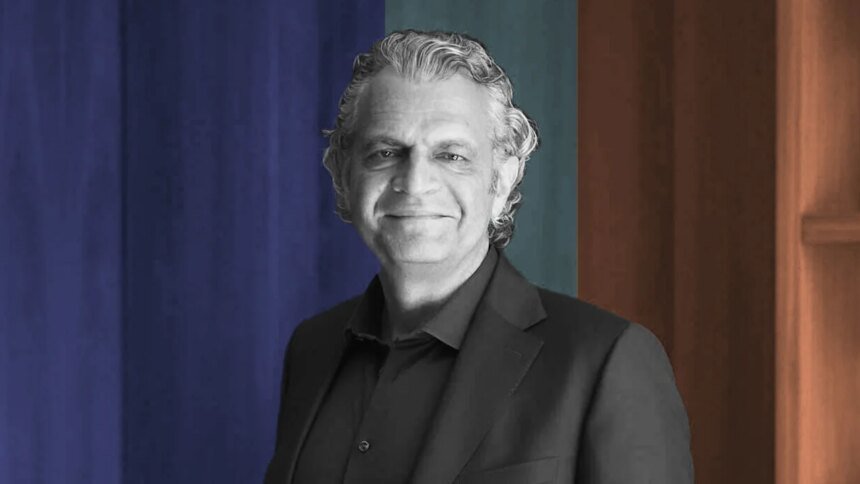
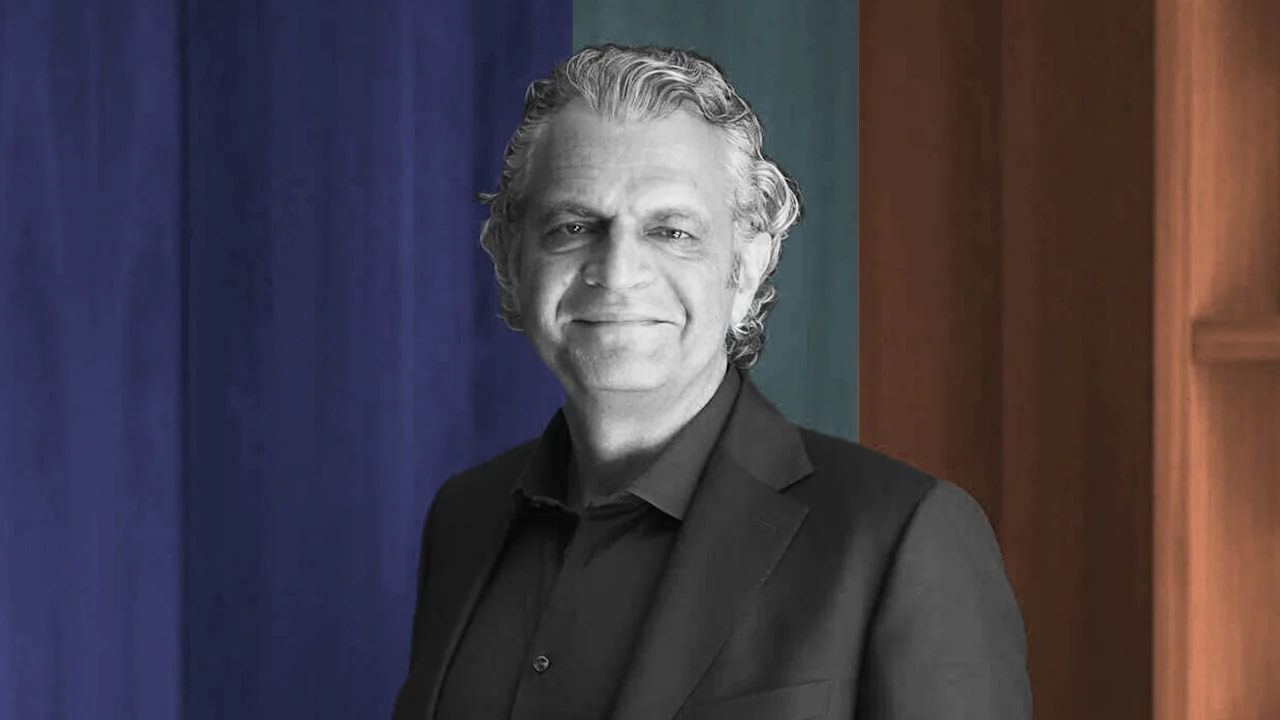
So why is Daniel Diermeier, the chancellor of Vanderbilt University, thoroughly enjoying a role that has frustrated or felled many of his peers? Diermeier, who became chancellor (the equivalent of a CEO) in 2020, believes he’s cracked the code to leading unwieldy institutions: Avoid politicization and stick to one’s core purpose. And those are lessons he thinks corporate leaders should apply to running businesses.
By many measures, Diermeier’s approach is working. Undergraduate applications rose 12.6% in 2025, and the school saw a 20% jump in early-decision applicants—a metric of a school’s desirability. Indeed, Vanderbilt now admits just 4.7% of applicants, making it more selective than Cornell or Dartmouth. Under Diermeier’s direction, the Nashville-based school is expanding, with a new campus opening in New York City and campuses planned in West Palm Beach, Florida; Chattanooga, Tennessee; and San Francisco.
Diermeier also has his detractors. A February Chronicle of Higher Education feature called him the sector’s “most divisive” chancellor, noting that Diermeier’s embrace of institutional neutrality has been seen by critics as a capitulation to “bad-faith critiques” of universities.
Before arriving at Vanderbilt, Diermeier was provost at the University of Chicago, whose “Chicago Principles” on freedom of expression mirror Vanderbilt’s Statement of Principles. Prior to becoming provost, he was a University of Chicago dean and professor, where he taught and researched crisis and reputation management.
I sat down with Diermeier to talk about how he thinks about leadership in a polarized moment—and what his experience running a major research university might mean for CEOs facing the same turbulent terrain. Edited excerpts follow:
MODERN CEO: Every generation feels like it’s living in extraordinary times. How would you characterize the current environment in which you’re operating?
DIERMEIER: There are [some] big forces shaping our lives. One, we’re living in an age of rapidly accelerating technology. Of course, AI is on everyone’s mind, but the next big thing is right around the corner with quantum [computing], and that is transforming sectors and industries. Number two, the changing geopolitical environment has shifted dramatically. I remember an important CEO saying, maybe 10 or 15 years ago, that the great challenge for our generation was to “get globalization right,” and now people are talking about decoupling. The third one is the erosion of trust in major institutions, accompanied by a tremendous polarization of society, which is maybe the fourth—those are the three or four things that are shaping the leadership environment, whether you’re in business, a university, or government.
MODERN CEO: Trust is a big topic. How do you think about trust as a leader, and what are some of the things you’re working on to restore trust in higher education?
DIERMEIER: There’s a global erosion of trust across the board, and that’s one of the big findings from the Edelman Trust Barometer.
The erosion of trust in universities has been more pronounced than in most other institutions. People on the left worry about inequality and that universities are enhancing inequality. The main concern is that we’re politically biased to the left and that we’re “woke machines.” And then everybody is worried about affordability. My sense is you have to address these concerns head-on and ask yourself: Is this a communication problem or a real [systemic] problem?
Universities are a large segment with different flavors, but at leading research universities, there has been a dramatic increase in financial aid. The net cost for families has actually gone down over the last 10 to 15 years, especially for families at lower income levels. If you go to Vanderbilt and your family makes less than $150,000 [a year], it’s free. So that’s a perception problem.
On inequality, people who graduate from our universities who come from the lowest income segment and those who come from the highest income segment, if they both have an economics undergraduate degree, they have the same expected lifetime income. There’s a high correlation between kids’ income and parents’ income, but if you graduate from a selective, large research university, your lifetime income and the lifetime income of somebody from a very different background is the same. So, the question is, “How do you get in?” We have debates on admissions, but inequality in education doesn’t start at age 18. The problem for us is how do we make sure that we get qualified applicants from across the spectrum to apply.
On the political bias question—there, I think we have a real problem. I think universities have drifted toward one side of the political spectrum, and I think there has been mission drift. The willingness for universities to take sides in political battles has clearly increased during the last 10 years, and it has really hurt them. You need to be clear about what your purpose and your values are—and don’t be dragged into other things that are really beyond the purpose of what you do.
MODERN CEO: At a research university, how do you navigate an environment where [accepted science] on vaccines or climate change are politicized?
DIERMEIER: It’s really critical to be very clear and explicit about the values and the purpose that you’re engaged in. I’ll give you a different example that shows how we’re thinking about it. We’re in the business of generating knowledge and then conveying it to the next generation of students and to the public. We are not in the business of telling people how to think. Not in the business of taking sides on political or policy issues as an institution. Our job is to encourage debate, not to settle it.
So, let’s take an example. The Dobbs [Supreme Court] decision on abortion rights in the United States [that overturned Roe v. Wade]: Some universities issued statements saying the Dobbs decision was inconsistent with the values of the university. But in my law school, I have faculty who believe Dobbs was badly argued, and I have faculty who believe Roe v. Wade was incorrectly decided on jurisprudential grounds—even if, from a policy standpoint, they’d agree that access to abortion should be legal and safe. And we have people who say we need a compromise in the middle. The university needs to be a place where those views can be debated freely.
We are a platform where questions on climate change can be freely debated and where faculty can do the work and provide decision makers with information and knowledge.
MODERN CEO: You’ve said operating in hyper-polarized environments is increasingly the reality for CEOs broadly. What’s your advice to them?
DIERMEIER: Be clear about who you are, your purpose, your values, and your positioning—you have to embrace that part. [Beyond] leading people and execution capabilities, managing your board—things that typically are seen as being part of the CEO’s toolkit—the ability now to operate in hyper-polarized and politicized environments is really critical.
MODERN CEO: Last question: You once wrote that being a university chancellor is the best job in the world. Do you still feel that way?
DIERMEIER: One hundred percent! You have to be an academic leader. Then you’re basically the CEO of a mid-sized enterprise, and it’s a pretty complicated business. It has a research and education mission, then you have an asset management component, which is the endowment. We also have a $3.5 billion real estate portfolio. On top of that, you have college athletics, which is a whole other thing. And the third piece is you really have to be a politician. You have to connect with your [municipal] mayor, with the council, with the local council, with the state, with the governor, with the federal government. These are entirely different skill sets, and makes this job challenging.
Read more: the ABCs of leadership
- Ignition Schools drive entrepreneurship and innovation
- Be a better leader in today’s challenging environment
- How to build a leadership legacy

