





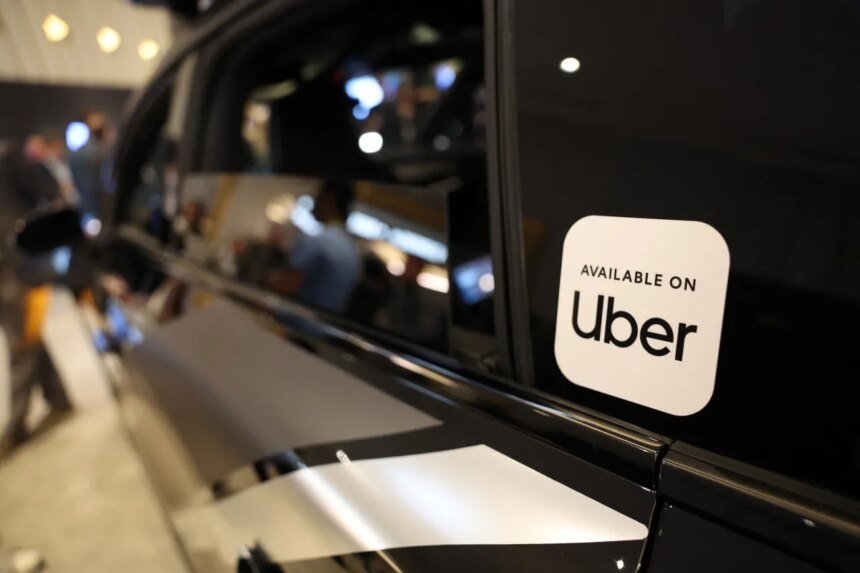

Uber has partnered with — and in some cases made direct investments in — more than 30 autonomous vehicle companies over the past two years. And it’s taking a global approach.
Here, TechCrunch tracks every one of those moves in one place. But first, a bit of history.
Uber was, at one time, developing and testing its own autonomous vehicle (AV) technology. The company, then led by Travis Kalanick, created Uber Advanced Technologies Group (ATG) in 2014 and recruited dozens of researchers from Carnegie Mellon University’s robotics program.
Two years later, Uber acquired Otto, a self-driving truck company founded by former Google self-driving engineer Anthony Levandowski, Lior Ron, Don Burnette (who has since gone on to found Kodiak AI), and Claire Delaunay. Uber also began testing its AVs on public streets in 2016 across California, Pittsburgh, and Arizona.
All of that progress unraveled across three defining moments: Waymo’s trade secrets lawsuit against Uber, the resignation of Kalanick in 2017, and a fatal crash in Tempe, Arizona, in 2018 involving its self-driving Volvo XC90, which struck and killed a pedestrian. (The vehicle was in autonomous mode, and a human safety operator behind the wheel at the time wasn’t paying attention.) Uber suspended its testing and reorganized the program, although it never truly returned to its mission.
After Dara Khosrowshahi took the wheel at Uber, the company went through a reset.
In 2020, Uber walked away from all of its moonshots, including autonomous vehicles, to focus on its core businesses of ride-hailing and delivery using human-driven vehicles. Uber sold Uber ATG to Aurora, Jump to Lime, and Elevate to Joby Aviation. It didn’t completely divest, though. Uber kept equity stakes in all of them.
Just two years later, Uber crept back in and started making AV deals. The deal flow picked up in earnest in 2024. Below is the full list, which TechCrunch will keep updated as Uber makes new moves.
Aurora

Uber has been connected with Aurora since 2020 when, as mentioned above, it sold its Uber ATG unit to the company. Uber received equity in Aurora as part of that deal and still owns that stake. As of this past April, Uber, through its holding company Neben Holdings, owns 325.97 million Aurora Class A shares, representing a 19.7% Class A equity stake and 6.9% voting power, according to SEC filings.
Uber Freight, the logistics business spun out of Uber in 2018, announced in June 2024 a multi-year collaboration with Aurora that expanded upon an existing pilot program. In May 2025, the companies said Aurora’s self-driving trucks had been completing roundtrip hauls between Dallas and Houston via the Uber Freight platform.
Autobrains
In June 2026, the companies announced plans to launch a robotaxi program in Munich, pending regulatory approval. The partnership lacks some details, such as what vehicle will be used. The companies pitched this as an OEM-agnostic model. Vehicles will be equipped with Israel-based Autobrains’ agentic AI driving system, which runs on Nvidia’s Drive Hyperion platform. The robotaxis will be available via Uber’s app.
Avomo
Avomo, a European company that was previously known as Moove Cars, is an autonomous fleet operator partner. Uber actually took a 30% stake in Avomo in 2021.
And while Avomo might not have the same name recognition as other players, it is embedded in Uber’s AV business. For instance, it is the company responsible for managing fleet services such as vehicle cleaning, maintenance, inspections, charging, and depot operations for the Waymo-Uber partnership in Austin. Avomo also handles fleet operations for Uber as part of its robotaxi service agreement with WeRide in Madrid, which was announced in June 2026.
Important note: don’t mistake Avomo (formerly Moove Cars), for Moove, an African company that manages Waymo’s AV fleet in Phoenix.
Avride

Avride, the Yandex spinout now under parent company Nebius Group, announced a multi-year deal with Uber in October 2024 to bring Avride’s sidewalk delivery robots and autonomous vehicles to both Uber’s delivery unit, Uber Eats, and Uber’s ride-hailing app.
In February 2025, Uber shared in its fourth-quarter earnings that Uber Eats orders in Austin and Dallas were being delivered via autonomous sidewalk robots in partnership with Avride. Avride disclosed in fall 2025 that it had secured strategic investments and commercial commitments worth $375 million from Uber and Nebius. Neither company provided details on the investment and how much was capital.
By the end of 2025, Avride robotaxis — built on Hyundai IONIQ 5s outfitted with Avride’s self-driving system — were available on the Uber app in Dallas. The National Highway Traffic Safety Administration opened an investigation into Avride in May 2026 after identifying more than a dozen crashes and one minor injury.
As of this past June, these were not driverless and still had a human safety operator behind the wheel.
Baidu
Uber announced a multi-year strategic partnership with the Chinese tech giant in July 2025. Under the agreement, thousands of Baidu’s Apollo Go autonomous vehicles will be deployed on the Uber platform in multiple markets outside the U.S. and mainland China. Those deployments were set to start in Asia and the Middle East later in 2025, the companies said at the time.
In late 2025, Baidu said it would start testing Apollo Go robotaxis in London in the first half of 2026 through its partnership with Uber. As of June, those tests had not begun.
Cartken
The sidewalk delivery robot company started working with Uber in 2022, announcing a partnership to deliver food in Miami, with plans to add more cities in 2023. The two companies expanded to commercial deliveries in Fairfax, Virginia that same year and, in February 2025, announced that they were delivering food in Osaka, Japan, using Cartken robots.
Cartken shifted its focus to industrial robots by summer 2025. The company said it would maintain its food and consumer last-mile delivery business, but had no plans to expand it.
Coco

In 2024, the two companies announced a partnership to use Coco’s sidewalk robots to deliver food for Uber Eats customers, starting in Los Angeles. The partnership expanded to neighborhoods in Miami in April 2025.
Cruise
Uber and GM’s Cruise announced a strategic partnership in August 2024 to bring Cruise’s robotaxis onto the Uber app in 2025. That announcement was notable for Cruise, which had gone through a major overhaul, including layoffs and the resignation of its co-founders after one of its robotaxis struck a pedestrian in October 2023.
The Cruise reboot never got off the ground; in December 2024, citing high costs and mounting competition, GM pulled the plug on Cruise’s robotaxi business entirely and folded the unit into its broader engineering operations.
The partnership no longer exists because — welp — Cruise itself doesn’t, at least not as a robotaxi company. But at one time, the two companies had struck a deal.
Flytrex
Uber announced in September 2025 a partnership with drone delivery company Flytrex. The partnership also included a small investment in Flytrex, although the amount was not disclosed.
Hertz
Hertz isn’t developing autonomous vehicle tech, but it’s still worth including the rental car company here. In April of this year, Uber formed strategic fleet partnerships with Hertz and its affiliated operating company Oro Mobility.
This deal is part of Uber’s plans to launch a premium robotaxi service using Lucid vehicles equipped with Nuro’s self-driving system. Hertz has been tasked with day-to-day fleet management, including charging, maintenance, repairs, cleaning, and depot staffing.
Lucid

Uber has put real money behind EV maker Lucid Motors. Uber announced plans in 2025 to launch a premium robotaxi service using robotaxi-ready vehicles from Lucid. Initially, Uber said it would invest $300 million into Lucid and separately buy at least 20,000 of its Lucid Gravity SUVs over six years. The vehicles will be equipped with Nuro’s self-driving system.
In April, Uber upped its order and investment. Lucid received another $200 million from Uber, which also increased its minimum order to 35,000 vehicles. The order includes Lucid’s upcoming mid-sized platform. Uber now owns more than 11% of Lucid as part of investments it has made alongside the vehicle orders.
May Mobility

The Michigan-based autonomous vehicle startup reached an agreement with Uber in May 2025 to deploy its AVs through the app by the end of that year, starting in Arlington, Texas.
Uber and May Mobility announced plans at the time to expand to other U.S. markets in 2026 and “deploy thousands of AVs” over “the next few years,” according to the startup.
As of June, Arlington, Texas, remains the only market where customers using the Uber app can hail a May Mobility vehicle.
Mercedes
In January of this year, Mercedes-Benz announced it was collaborating with Nvidia to create a robotaxi ecosystem using self-driving S-Class sedans that would be on the Uber ride-hailing platform. No specific cities have been announced.
Momenta
The Chinese autonomous driving tech company reached an agreement with Uber in May 2025 to add its robotaxis to the app, starting in Europe in early 2026, with safety operators on board.
A few months later in September 2025, the Beijing-based company and Uber said they would start testing robotaxis in Munich, Germany in 2026.
Motional

Motional, a subsidiary of Hyundai, has been working with Uber in some form since 2021 when the companies announced plans to launch autonomous deliveries in Santa Monica. This was considered a pilot and never became a commercial program or used fully driverless vehicles.
The companies expanded the partnership in October 2022 with a 10-year operating agreement that will eventually roll out to major cities across North America; Las Vegas and Los Angeles were among the first named cities. While Motional and Uber remain partners, a commercial driverless service (meaning no human safety operator behind the wheel) has yet to materialize.
Motional went through a reboot in 2024, taking a new AI-centric approach to its self-driving system. In March 2026, Motional’s self-driving Hyundai Ioniq 5 vehicles were added to the Uber app in Las Vegas for autonomous rides to and from five areas of the city. Human safety monitors are still riding along
New Horizon
New Horizon is a fleet management company involved in Uber’s agreement with Baidu to bring the Chinese company’s Apollo Go autonomous ride-hailing service to Dubai.
Nissan
Nissan is part of Uber’s partnership agreement with Wayve. In March of this year, Uber announced plans to add self-driving Nissan Leaf EVs to its network in Tokyo, powered by Wayve’s tech. (See the Wayve entry below for more.)
Nuro

The self-driving tech startup has been tied to Uber since at least 2022, but the relationship has changed. Initially, Nuro was developing a custom-built delivery vehicle designed for the roadway. Uber and Nuro announced a 10-year partnership in 2022 to launch autonomous deliveries in Mountain View, California, and Houston starting that fall.
Nuro pivoted away from the delivery vehicle and decided to focus on licensing its self-driving tech to automakers and robotaxi operators. Uber stuck with Nuro and in 2025 announced a landmark deal to launch a premium robotaxi service using Lucid Gravity SUVs equipped with the startup’s self-driving system.
San Francisco will be the first market. In June of this year, the companies announced the second market will be Houston. Uber has also invested in Nuro. Sources familiar with the financial terms have told TechCrunch that Uber’s total commitment to Nuro, which includes its participation in the startup’s Series E round in 2025 and future milestone-based investments, is about $500 million.
Nvidia
Uber first publicly talked about Nvidia in January 2018, a different era for both companies. Uber picked Nvidia to provide AI computing for its autonomous software. With Uber’s in-house AV program sold off in 2020, that deal ended.
Fast forward to CES 2025, when Uber said it would use Nvidia’s generative world model simulation tool, Cosmos, and cloud-based AI supercomputing platform, DGX Cloud, to support the development of AV tech. Uber didn’t share many details at the time about how it planned to use these Nvidia tools.
In October 2025, Uber and Nvidia announced plans to use Nvidia’s Hyperion autonomous platform to accelerate Uber’s robotaxi program. As part of that announcement, Stellantis committed to delivering at least 5,000 Nvidia Drive-powered vehicles to Uber for robotaxi operations in the U.S. and internationally — one of the first automakers to do so.
In March of this year, the companies expanded the partnership and announced plans to launch a global fleet of entirely Nvidia software-driven autonomous vehicles, starting in Los Angeles and San Francisco in the first half of 2027 and scaling across 28 cities globally by 2028. The companies said the vehicles will run Nvidia’s Drive Hyperion platform and use Alpamayo, Nvidia’s family of open-source AI models, datasets, and simulation tools designed to handle complex driving situations.
Pony.ai

The Guangzhou, China-based company and Uber announced a partnership in May 2025 with an eye on the Middle East. The companies planned to launch a pilot that year that would make
Pony.ai’s robotaxis (with a safety operator on board) available on the Uber app.
In March 2026, Uber, Pony.ai, and Croatian company Verne announced plans to launch a commercial robotaxi service in Europe, starting in Zagreb, Croatia. Pony.ai will supply the autonomous driving system and a robotaxi called the Arcfox Alpha T5 that was developed with Chinese automaker BAIC. Verne will own and operate the fleet, and Uber will provide its vast ride-hailing network.
Rivian
This unexpected deal, which was announced in March 2026, could be worth up to $1.25 billion for Rivian. Under the agreement, Rivian will build thousands of robotaxis based on its new R2 SUV and will be equipped with the EV maker’s self-driving system, which is still under development.
Uber made an initial $300 million investment in Rivian and is “expected to purchase 10,000 fully autonomous R2 robotaxis” ahead of a planned rollout in San Francisco and Miami in 2028. The two companies said at the time they plan to launch the robotaxis in “25 cities in the U.S., Canada, and Europe by the end of 2031.” The fleet will be exclusively available on Uber’s network.
Serve Robotics

The sidewalk delivery robot startup is rooted in Uber, sort of. In 2020, Uber acquired on-demand delivery startup Postmates. The following year, the robotics division known as Postmates X spun out as an independent company called Serve Robotics.
Uber also invested in Serve, which went public in 2024 through a merger with a blank-check company.
Uber Eats has used Serve Robotics’ robots for a few years in the United States.
Starship Technologies
Sidewalk delivery robot company Starship Technologies struck a deal with Uber’s delivery unit Eats in November 2025. Under the deal, Starship robots will deliver food orders via the Uber Eats app in multiple European countries in 2026 and eventually expand to the U.S. in 2027.
Stellantis
The automaker announced in June 2026 a deal with self-driving startup Wayve, and Uber to jointly develop and deploy driverless robotaxis. Stellantis and Wayve, which Uber has invested in, were already working together. This deal brings all of the components together: automaker, self-driving tech, and ride-hailing network.
The companies have agreed to work together on vehicle integration, testing, and validation before Stellantis-made vehicles equipped with Wayve’s tech are deployed in the real world, and specifically across Europe and North America.
Tawasul
The UAE-based Tawasul is another operator andpartnered with Uber in 2024 to provide fleet management services for Uber’s WeRide robotaxi service in Abu Dhabi.
Torc Robotics
Uber Freight, the logistics company that spun out of Uber in 2018, announced a partnership in late December with Torc Robotics, a self-driving trucks company that was acquired by Daimler in 2019. The partnership has largely focused on data.
Torc has used Uber Freight to analyze volume patterns, shippers’ networks, and other data that will help it identify the most effective lanes and most suitable commercial applications for autonomous trucking deployment.
Verne
Uber’s relationship with Verne is pretty fresh. The company, formed by Rimac Group founder Mate Rimac, reached an agreement in March 2026 to launch a commercial robotaxi service in Europe, starting in Zagreb, Croatia. Pony.ai, the third partner, is supplying the self-driving system. Verne will own and operate the fleet of vehicles made by Chinese automaker BAIC.
Uber also planned to invest in Verne, although the terms have not been disclosed.
Volkswagen/MOIA

Volkswagen’s subsidiary MOIA America and Uber announced plans in 2025 to launch a commercial robotaxi service using autonomous versions of Volkswagen’s electric ID. Buzz minivan. The companies said robotaxis will launch in multiple U.S. cities over the next decade. Los Angeles is the first city.
The companies, which have set up a joint facility in Los Angeles for day-to-day fleet operations, said in April 2026 that a robotaxi service would launch later in the year, with a human safety operator on board. Driverless operations are expected to begin in 2027.
Volvo Autonomous Solutions
Uber Freight, which connects companies that need to ship goods with truck drivers and fleet carriers, first partnered with Volvo Autonomous Solutions in 2023. Two years later, the companies said the partnership was moving “out of the planning stage and delivering tangible results.”
Volvo’s VNL Autonomous truck, which was built with redundancies to support self-driving tech developed by Aurora Innovation, began delivering loads for Uber Freight customers between Dallas and Houston. Those routes have since expanded.
Waabi
The Uber and Waabi relationship is also a deep cut. The founder and CEO, Raquel Urtasun, previously worked at Uber as chief scientist at its autonomous vehicle division, Uber ATG, which Uber sold to self-driving trucking firm Aurora Innovation in 2020.
Urtasun founded Waabi in 2021 with an initial focus on self-driving trucks. Uber was among the investors that participated in its $83.5 million Series A round. Waabi and Uber got a lot closer in 2026. In January, Waabi raised $1 billion — $750 million in a Series C round and about$250 million in milestone-based capital from Uber to support the deployment of robotaxis equipped with Waabi’s self-driving system.
Waymo

The Alphabet-owned company first partnered with Uber in May 2023, when it agreed to bring some of its robotaxis on the Uber platform, starting in Phoenix. The relationship in Phoenix is limited since Waymo customers can also directly hail a robotaxi using the company’s own app.
The following year, the companies announced an expansion to Austin and Atlanta, although this time the Waymo robotaxis could only be accessed via the Uber app. The Austin service launched in March 2025, followed by Atlanta by June 2025.
The relationship has not expanded since; it has actually shrunk. The companies ended their Phoenix partnership in last month, in July. Waymo is now working to get out of its contract with Uber, which doesn’t end until May 2028.
Wayve

The buzzy UK self-driving startup has both partnered with and received capital from Uber. In February 2026, Wayve raised $1.2 billion in a round that included returning backers Microsoft, Nvidia, and Uber. The total raise could reach $1.5 billion thanks to another $300 million from Uber contingent on deploying robotaxis, beginning in London.
In March 2026, Uber announced plans to add self-driving Nissan Leaf EVs to its network in Tokyo, powered by Wayve’s tech. A pilot has been scheduled for late 2026. Under the deal, Wayve will integrate its AI-powered, self-driving software into a Nissan Leaf, which will be available on Uber’s ride-hail network in Japan.
WeRide

The Chinese robotaxi company is one of Uber’s more prolific partners. It publicly disclosed the partnership in September 2024 and shared plans to bring WeRide robotaxis to the Uber platform, starting in Abu Dhabi. The service launched in December 2024 with human safety operators and went driverless in November 2025. WeRide robotaxis launched on the Uber app in Dubai in late 2025.
Uber expanded the partnership to bring WeRide’s AVs to 15 more cities by 2030, including in Europe. In these cities, WeRide’s robotaxis will be available through the Uber app, and Uber will be responsible for fleet operations. As part of the expansion, Uber increased its investment into WeRide by $100 million. Uber has since revealed some of those cities, including Madrid and Zurich.
In February 2026, the partnership expanded again with the companies agreeing to deploy at least 1,200 robotaxis across the Middle East. The deployment, which will span Abu Dhabi, Dubai, and Riyadh, Saudi Arabia is expected to be completed as soon as 2027.
Zoox
The Amazon-owned company is an Uber latecomer. The companies announced a strategic partnership in March 2026 to deploy Zoox robotaxis on the Uber app in Las Vegas this year and in Los Angeles in 2027.
When you purchase through links in our articles, we may earn a small commission. This doesn’t affect our editorial independence.

