




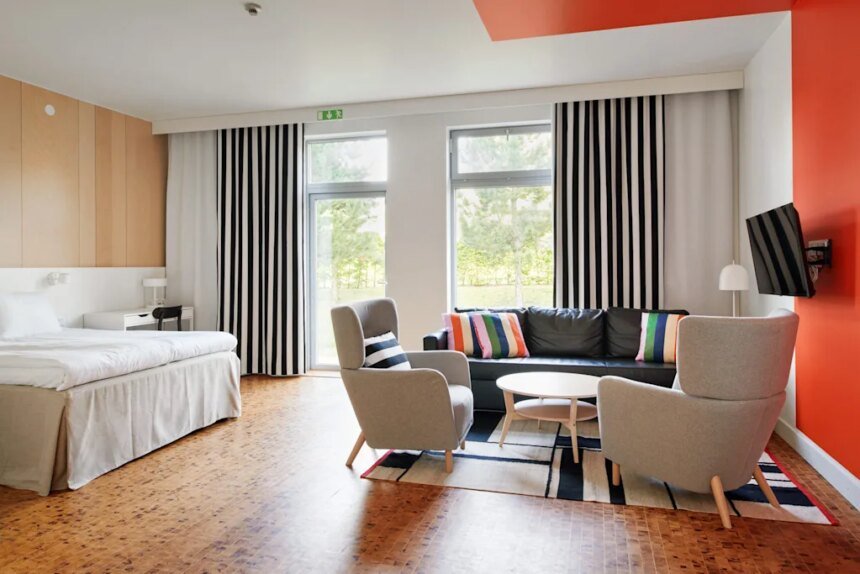

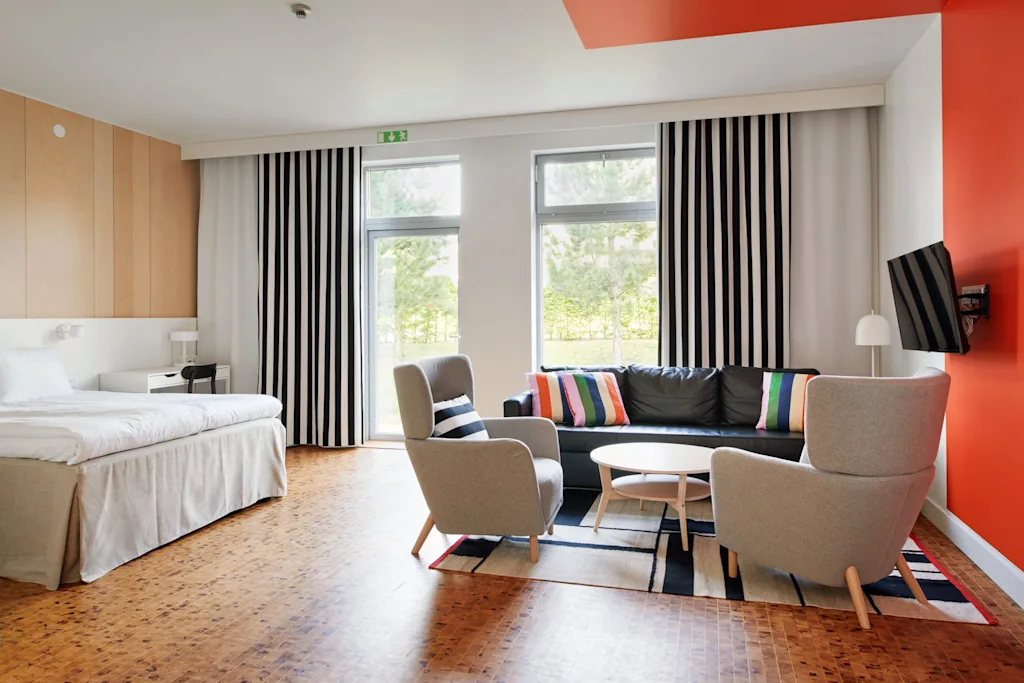
Ikea bed, Ikea sheets, Ikea towels, Ikea desk, Ikea chairs, Ikea curtains, Ikea light fixtures, Ikea trashcans, Ikea clothes hangers, Ikea side tables, Ikea throw pillow, Ikea clock. This is the rough inventory of a room in the world’s only Ikea hotel—the Ikea Hotell in its Swedish spelling—located in Älmhult, Sweden, the same small town where Ikea was founded in the 1940s and where its headquarters still sits. I stayed a night in this very Ikea hotel recently during a reporting trip to Älmhult for a story about (surprise, surprise) Ikea.
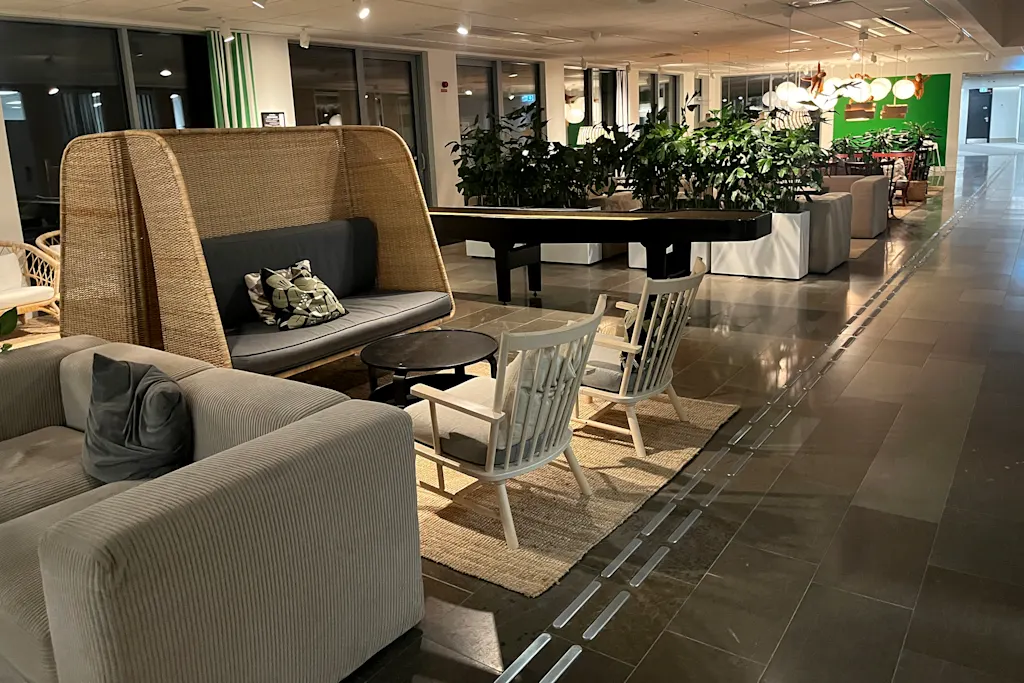
As one would expect, the lobby, amenity spaces, and hotel rooms themselves are outfitted entirely with Ikea furnishings—Fröset chairs in the lobby, the Alex desk in the rooms, and the basic duvets on the beds. Stepping into my hotel room was like entering one of the meticulously furnished mock bedrooms on an Ikea store’s showroom floor, but with only a quarter the amount of stuff and the spatial efficiency one would expect from a company built around affordability. You can insert your own joke here about having to build the bed before you sleep in it. But you actually do have to use an Allen key wrench to open the hotel room door. (Kidding!)
One night in Ikea’s hotel
I was in Älmhult for an exclusive daylong visit at Ikea headquarters in early April. Ikea invited me as the first journalist to see its secretive prototype lab, the space where its conceptual designs get molded and refined into the roughly 2,000 new products introduced to Ikea stores every year.
For my one-night stay in Älmhult, the Ikea Hotell offered full immersion into the brand before my tour. Ikea items and branding were everywhere in the lobby and amenity spaces, and the hotel room itself serves as a try-before-you-buy retail experience.
It’s also the most convenient—and affordable—hotel near Ikea’s domineering headquarters in this provincial Swedish village of about 17,000, many of whom are employed by the global home furnishings behemoth. Älmhult sits an 80-minute train ride from Malmö, where a few thousand of its workers live. (The hourly direct trains leaving Älmhult station in the afternoons are standing-room only.) Throw a stone in Älmhult and you’ll hit some piece of the Ikea universe. Venture farther and you’re back out in the Swedish countryside.
Designed out of necessity
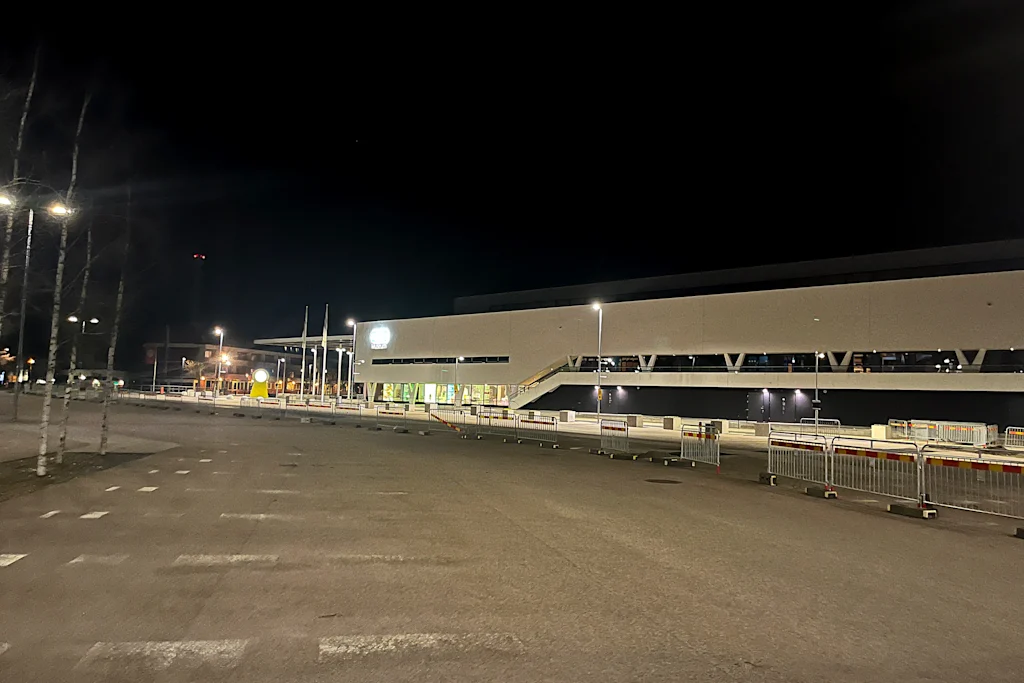
The hotel itself is deeply tied to Ikea’s history in the town. It’s located across a wide parking lot from a warehouse-sized building that was Ikea’s first purpose-built furniture showroom. Opened in 1958 with a modernist concrete design, it became national news and a magnet for customers. Initially created to simply display Ikea’s furniture, it was soon adapted into the first Ikea store, drawing budget-conscious shoppers from across Sweden. It stayed in operation for more than 50 years.
The store reopened in 2015 as the Ikea Museum, with three floors of exhibition space packed with historic furnishings and paraphernalia, plus a cafeteria and a gift shop. Guests at the hotel are given a card upon check-in that grants free admission.
The hotel exists because of the showroom turned museum. During its days as the first Ikea store, its allure drew customers from far and wide, including many who traveled so far they needed to stay overnight in Älmhult before driving back home with a carload of flat-packed furniture. Ikea founder Ingvar Kamprad saw an opportunity, and in 1962 commissioned an architect to design an American-influenced roadside motel, with 25 rooms and, in a rarity for this part of Sweden, a heated pool.
Construction took longer than expected due to the area’s persistently muddy soil, but the motel began receiving guests in the summer of 1963 with rooms filled with Ikea’s own furnishings. It took another year for the hotly anticipated pool to open, and only then was there an official grand opening of Motell Ikea.
Over the years, the motel hosted annual showcases for new furniture ranges, as well as guests traveling for shopping or business with the increasingly global company. Expansions and renovations have since been completed, and the rebranded Ikea Hotell now has 254 rooms. The pool, however, has been lost to time, filled in to become a courtyard for hotel guests.
It was a bit too cold to head out there the night I arrived at the hotel, just off a two-hour, late-night train ride from Copenhagen. Inside, the spare check-in desk stands before an extended lobby/lounge/Ikea showroom packed with easy chairs, couches, dining tables, lamps, and a small play area for kids. The hotel has its share of well-known Ikea pieces, from puffy Jättebo couches to a children’s play kitchen to a keyhole-shaped clock first released in 1995. One was on the wall in my hotel room and the other, an oversized version, was on display in the lobby. Both, curiously, were set to the wrong time.
‘Democratic,’ not luxurious design
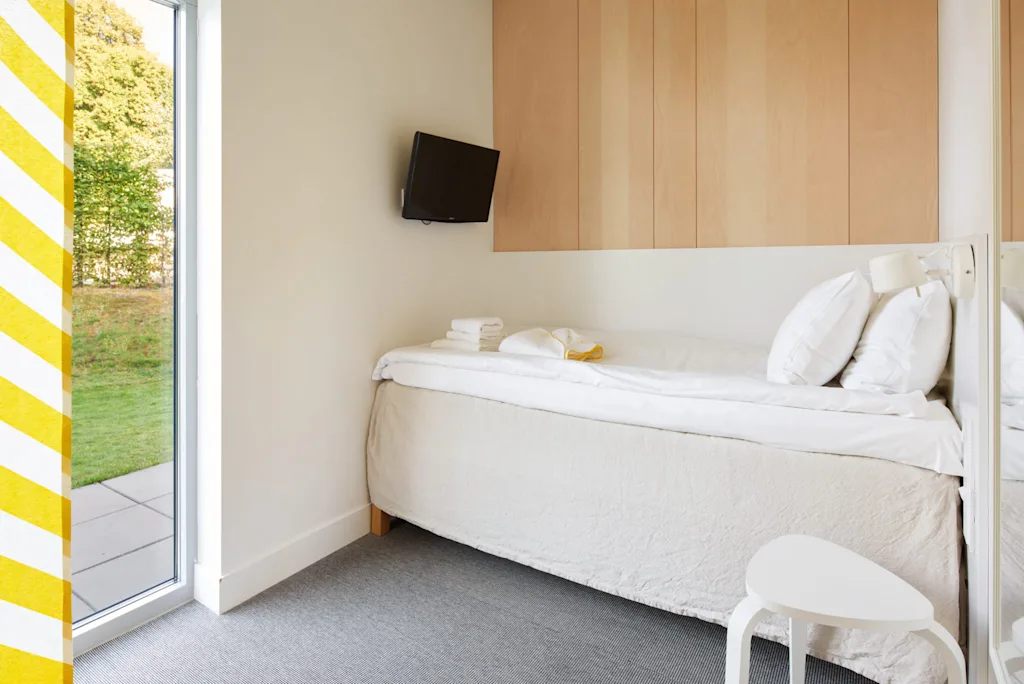
In line with Ikea’s guiding principles of affordability and “democratic design,” this is not a luxury hotel. There are three room options available, with prices starting as low as $60 per night. The most economical is referred to as a cabin and is just 45 square feet. It has a twin bed, a TV mounted on the wall, a rack to hold a suitcase, and a shared bathroom outside.
I stayed in the slightly bigger Double room, which goes for about $90 to $150 per night depending on the day. It’s outfitted with a double bed and a private bathroom, but few other amenities. A family-sized option is also available, consisting of two sets of bunk beds, also with a private bathroom. (There is also one wheelchair accessible room, with more space and extra furniture.) Some rooms open out onto the courtyard. My third-floor room, as I discovered in the morning light, looked out over a local church and its graveyard.
As a place to sleep, the Ikea Hotell is sufficient. Free breakfast in the nearby restaurant, Grillen, was better than expected, given hotel’s spartan offerings. This being Sweden, there was pickled herring. This being Ikea, there were also meatless meatballs.
One downside, especially for a traveler shaking off a 6-hour time zone change, is the lack of a coffee maker in the hotel room. But for the prepared and well-stocked guest, each floor in the hotel is outfitted with a shared kitchen space and “common living room.” The spaces are, of course, Ikea’d to the max, and wouldn’t look out of place in the showroom of a typical Ikea store.
A predecessor to branded hospitality
While the entire space could have easily ventured into captive audience commercialism, the Ikea Hotell is not actively selling Ikea furnishings. I was somewhat surprised to not see a single product label or pricetag in the hotel room, nor anywhere in the common areas. It’s like a soft-sell predecessor to the current trend of branded hospitality, where everything is for sale, and aggressively so. Ikea was there first, but the approach is hardly pushy. In fact, I was also maybe a bit underwhelmed by how the space was furnished. Aside from some of the common areas, most of the hotel seemed merely populated with Ikea stuff, not intentionally designed to show it off.
That may be changing, though. Signs in the hotel noted that renovations are currently underway, with a big refresh expected to open in 2028. The renovation will bring the room count to nearly 300, add more conference space, and create a new lobby and restaurant. The project will also revive one of the hotel’s original features by adding a new indoor pool.
Maybe not enough reason to venture all the way back to Älmhult, at least for me. But for anyone visiting the home of Ikea, it’s hard to imagine a more appropriate place to spend a night.

